Clear Sky Science · en
Environmental DNA metabarcoding facilitates integrative conservation assessments and species rediscoveries in tropical biodiversity hotspots
Listening to Life in Mountain Waters
High in the tropical Andes, many frog species have slipped from sight, leaving scientists unsure whether they still survive. This matters not only to amphibian fans: frogs are key to healthy streams and mountain forests that supply water to millions of people. This study shows how a new genetic “listening device” called environmental DNA can quickly reveal which species still linger in these remote habitats—and which hidden threats they face—without needing to catch or even see the animals themselves. 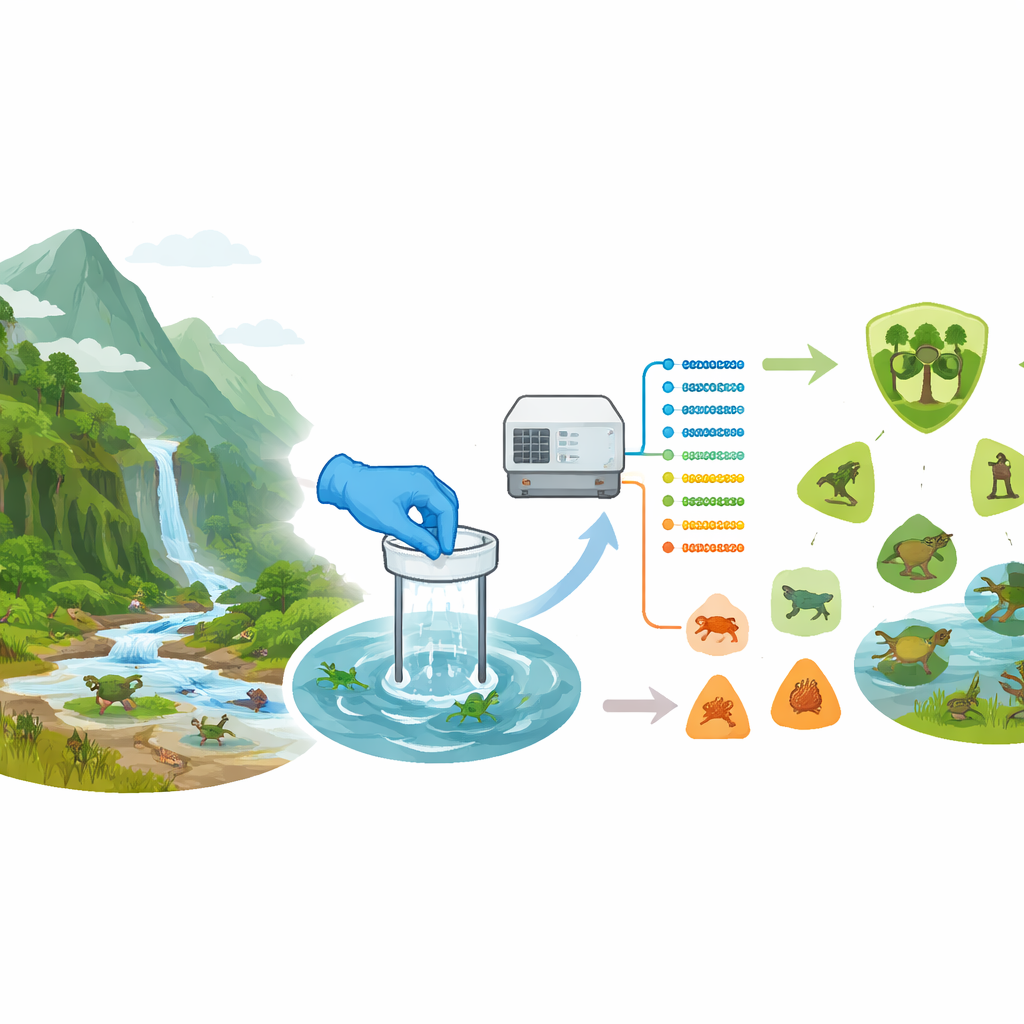
Tiny Traces, Big Clues
All animals constantly shed bits of genetic material into their surroundings through skin cells, waste, or mucus. In this work, researchers collected water from streams and lakes at 52 sites across the Ecuadorean Andes, focusing on places where rare or long-unseen frogs were once recorded. Instead of relying on teams of experts to search at night with headlamps, they filtered these water samples to capture loose DNA. Back in the lab, they used high‑throughput sequencing to read short barcode-like fragments and compare them with existing genetic reference libraries, allowing them to identify many species from a single mixed sample.
Finding Lost Frogs Again
The central goal was to check whether some of the Andes’ most threatened amphibians still persist. The team detected genetic signatures of at least 54 frog and toad species, 22 of which are officially listed as threatened. Among the most dramatic findings were signals from harlequin toads, a group devastated by disease and habitat change. DNA traces matching several critically endangered species were found in historic or previously unknown localities, suggesting that some populations have quietly survived despite decades of declines. In a few cases, the scientists also heard calling males or found tadpoles at the same sites, confirming that the genetic clues reflected living frogs and not just stray traces washed in from afar. 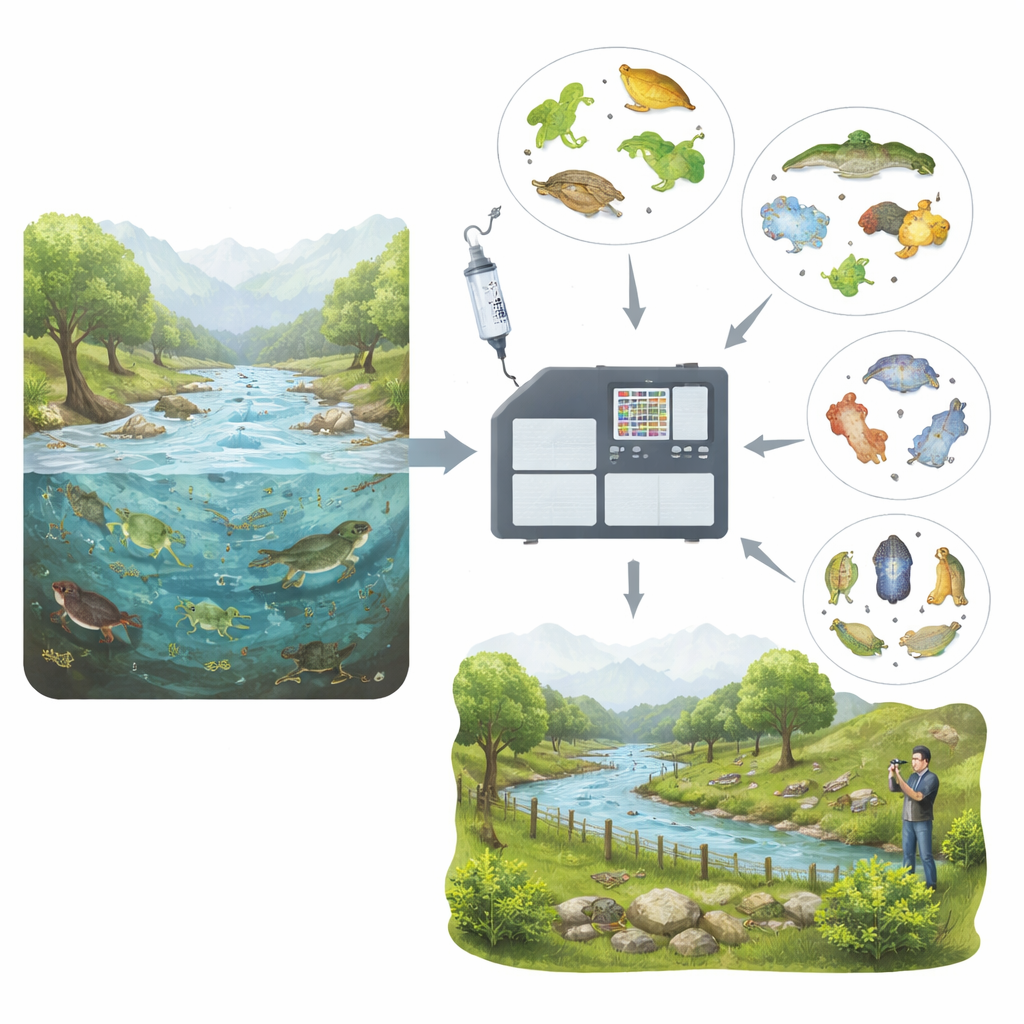
Hidden Dangers in the Water
Because the method sequences all vertebrate DNA present, it also captured an unintended but valuable “bycatch” of non‑target species. The water samples revealed widespread presence of non‑native trout, which are known to prey on tadpoles and disrupt mountain stream food webs; at least one trout species appeared in about half of the surveyed sites. DNA from livestock such as cattle hinted at grazing and agriculture encroaching on stream edges. The researchers also ran a sensitive test for the amphibian chytrid fungus, a lethal pathogen tied to mass die‑offs worldwide, and detected it in more than a third of locations. At the same time, the bycatch included iconic birds and mammals—such as mountain tapirs, bears, and showy Andean birds—that can serve as conservation flagships and help rally support for protecting broader habitats.
What This Means for Protecting Nature
By combining fast species detection with information on disease, invasive fish, and land use, this approach offers a powerful snapshot of ecosystem health from just a few liters of water. The authors argue that environmental DNA surveys should be used alongside traditional fieldwork: genetic tools are ideal for rapid, wide‑ranging screening, while on‑the‑ground observations still provide details about numbers, behavior, and breeding. Gaps in genetic reference data—especially for little‑studied Andean fishes—remain a challenge, but ongoing efforts to build better DNA libraries and portable sequencing tools are quickly improving the situation.
A New Ally for Vanishing Amphibians
In plain terms, this study shows that scientists can now “read” the life of a mountain stream without netting every frog or fish. Environmental DNA metabarcoding helped rediscover populations of frogs thought to be gone, highlighted where invasive trout and deadly fungus are most concerning, and pointed to river systems that should be conservation priorities. For tropical biodiversity hotspots where money, time, and expertise are limited, this method offers a fast, non‑invasive way to guide action before more species vanish unnoticed.
Citation: Plewnia, A., Hildwein, T., Quezada Riera, A.B. et al. Environmental DNA metabarcoding facilitates integrative conservation assessments and species rediscoveries in tropical biodiversity hotspots. Sci Rep 16, 8150 (2026). https://doi.org/10.1038/s41598-026-41937-x
Keywords: environmental DNA, amphibian conservation, tropical Andes, biodiversity monitoring, invasive species