Clear Sky Science · en
Wear resistance, microhardness and compressive strength of high filled flowable composite resins
Why This Matters for Your Teeth
Modern tooth-colored fillings promise both a natural look and long-lasting performance, but not all of them stand up to chewing forces in the same way. This study asks a practical question that concerns anyone with composite fillings: can the newer, easier-to-place "injectable" or highly flowable white fillings truly match the toughness of the more traditional, thicker pastes used in back teeth? By testing how different materials wear down, resist surface dents, and withstand squeezing forces, the researchers provide clues that can help dentists choose fillings that look good and last under everyday biting and grinding.
New Tooth Fillings That Flow Like Honey
Traditional composite fillings are thicker, paste-like materials that require careful layering and shaping. In recent years, manufacturers have introduced high-filled flowable, or injectable, composites that are more fluid, spread easily into cavities, and save time during treatment. These new materials contain a high amount of tiny glass or ceramic particles, designed to boost strength while keeping the material easy to inject. Because more and more dentists are using these flowable options even in back teeth that take heavy chewing loads, it has become important to compare their real mechanical performance with a well-known, conventional microhybrid composite that serves as a benchmark.
How the Materials Were Put to the Test
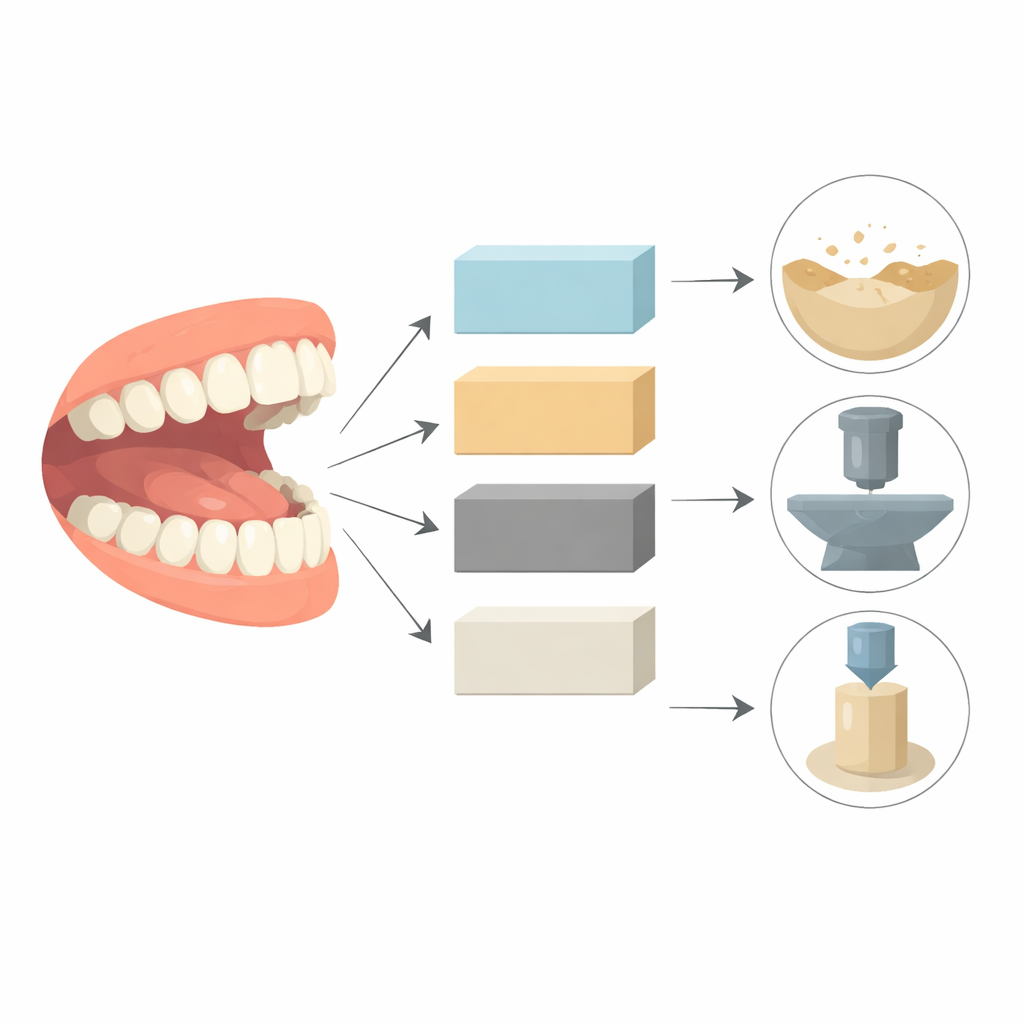
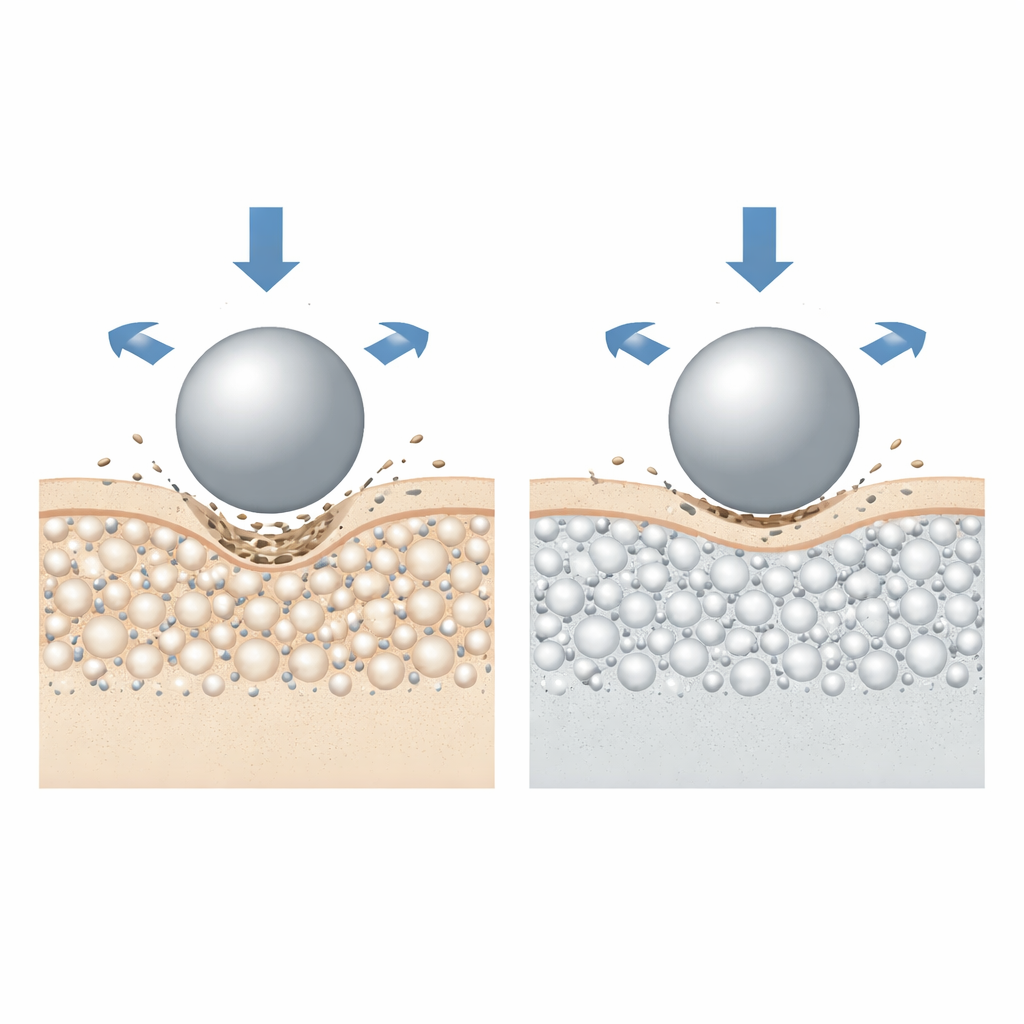
The researchers examined seven resin-based filling materials: six high-filled flowable composites from different companies and one widely used conventional microhybrid composite. They created standardized samples and tested three key properties. First, they measured wear by sliding a hard ceramic ball back and forth across each material thousands of times, then used 3D imaging to calculate how much volume was lost and how deep the wear tracks became. Second, they evaluated compressive strength by squeezing cylindrical samples until they fractured, mimicking the heavy vertical forces teeth experience during biting. Third, they checked surface microhardness using a tiny diamond-shaped indenter to see how resistant each material was to permanent surface dents.
What Happened Under Chewing-Like Stress
When it came to wear, not all flowable composites behaved the same. Three of the flowable materials—Estelite Universal Flow High, Vittra Unique Flow, and Omnichroma Flow—lost more material than the conventional microhybrid composite, indicating that they may wear down faster in demanding areas such as the biting surfaces of molars. Other flowables, however, had wear performance similar to the conventional material, showing that formulation details such as filler amount, particle size, and how evenly those particles are distributed can make a big difference. Interestingly, the overall depth of the wear grooves did not differ significantly among the groups, suggesting that the pattern of wear can be subtle and multifactorial.
Hard Surfaces and Hidden Strength
The conventional microhybrid composite clearly outperformed all of the high-filled flowable materials in surface microhardness. In simple terms, its outer surface was more resistant to scratching and permanent indentation. Since harder surfaces often, but not always, relate to better wear resistance, this result supports its reputation as a durable option. However, microhardness alone did not fully predict wear behavior, as some flowable materials with lower hardness still showed acceptable wear volumes. By contrast, compressive strength—the ability to resist being crushed—was broadly similar between the conventional composite and all of the flowable materials. One flowable, Omnichroma Flow, even showed significantly higher compressive strength than one of its flowable counterparts, indicating that these newer materials can indeed withstand chewing forces when properly formulated.
What This Means for Everyday Dental Care
Overall, the study suggests that today’s high-filled flowable composites can match traditional paste composites in their ability to bear chewing forces, but they generally offer softer surfaces and can wear more quickly, depending on the brand and formulation. For patients, this means that while injectable fillings can simplify and speed up treatment—and still be strong enough to function—they may not always be the best choice in areas that experience heavy grinding and long-term wear. Dentists should weigh ease of use against differences in wear resistance and hardness when choosing materials, especially for back teeth. With more research, including real-world clinical trials, these data will help refine which flowable composites are safest bets for long-lasting, attractive fillings.
Citation: Ozdemir, S.B., Ozdemir, B. Wear resistance, microhardness and compressive strength of high filled flowable composite resins. Sci Rep 16, 9217 (2026). https://doi.org/10.1038/s41598-026-41928-y
Keywords: dental composites, flowable fillings, tooth wear, microhardness, compressive strength