Clear Sky Science · en
Development and validation and risk factor analysis of the colorectal cancer psychosocial distress scale
Why feelings matter after cancer treatment
Colorectal cancer is often talked about in terms of surgery, chemotherapy, and survival rates, but far less attention is paid to how people feel once the hospital visits slow down. Many patients live with hidden worries, shame, and loneliness that can quietly erode their quality of life. This study set out to give doctors and nurses a simple, reliable way to spot that emotional suffering early, so patients are not left to struggle alone with what the authors call a “second disease” of psychosocial distress.
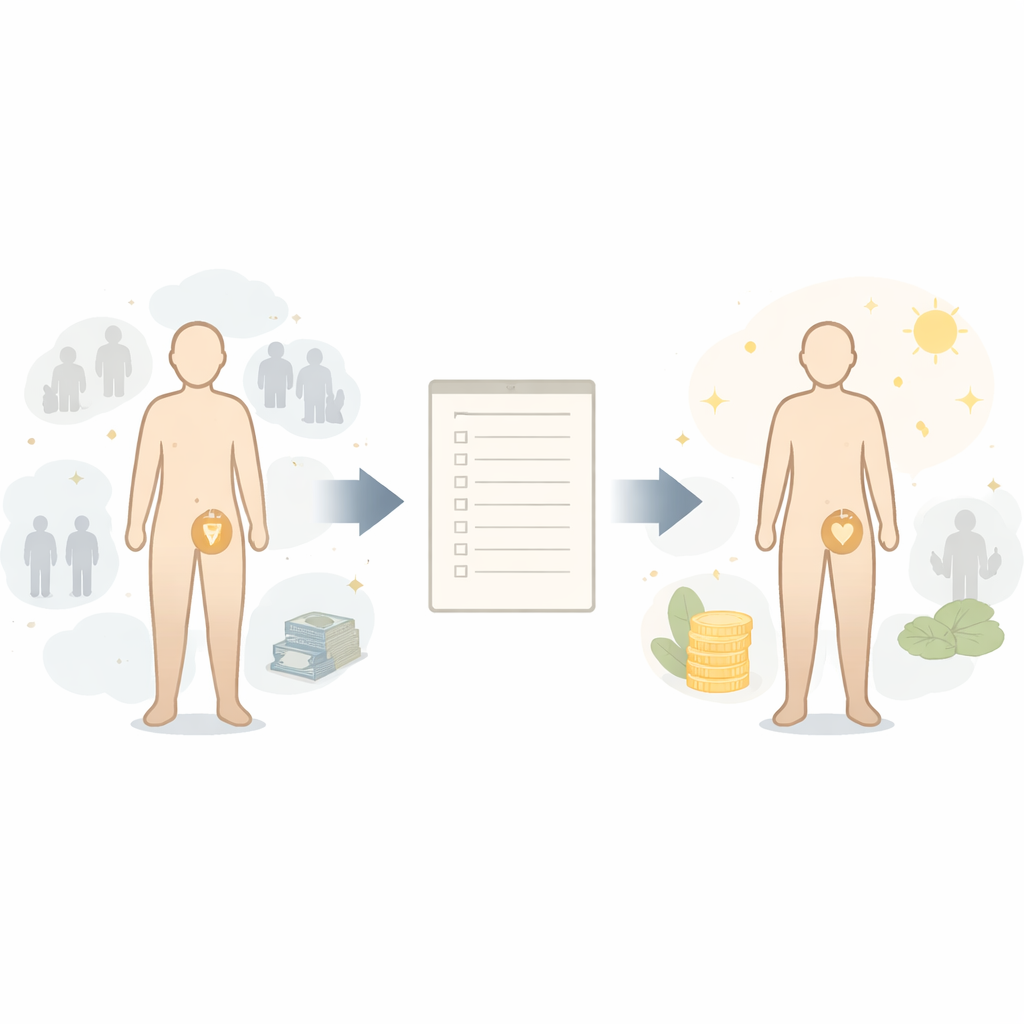
Hidden burdens behind a common cancer
Colorectal cancer is one of the most common cancers worldwide and a leading cause of cancer deaths. Treatments can be life‑saving, but they often leave lasting changes to bowel habits, sexual function, and body image. For many patients who undergo a colostomy, living with an ostomy pouch on the abdomen becomes a daily reminder of illness. Beyond physical discomfort, people may fear unpleasant smells, leaks, or rejection by partners and friends. At the same time, long treatment courses and high medical bills create heavy financial pressure. All of this can trigger powerful feelings of shame, self‑blame, and a desire to withdraw from others, which standard anxiety or depression checklists do not fully capture.
Building a scale from real patient voices
To understand this distress from the ground up, the researchers interviewed 25 colorectal cancer patients at five hospitals in China. They asked open questions about how patients felt during diagnosis and treatment, how their daily lives had changed, and whether they had faced unfair treatment. Careful analysis of the interview transcripts revealed three recurring themes: stigma surrounding the ostomy pouch, harsh judgment turned inward (self‑deprecation), and social isolation. Using these themes, plus prior research, the team drafted 14 short statements and asked hundreds of patients to rate how strongly they agreed with each. Experts in psychology, oncology, statistics, and public health refined the wording to make items clear and culturally appropriate, while additional patients confirmed that each item was easy to understand.
Testing if the tool truly measures what matters
With responses from 441 patients, the authors used statistical techniques to see whether the 14 questions really formed the three intended groups. Their analyses showed a strong three‑part structure matching ostomy pouch stigma, social isolation, and self‑deprecation. The scale behaved consistently: people who scored high on one part tended to score high on related items, and scores were stable when a smaller group of patients completed the scale again two weeks later. When compared with an older cancer stigma questionnaire and with a widely used cancer quality‑of‑life survey, scores on the new scale lined up in meaningful ways, suggesting it is both precise and relevant to patients’ everyday functioning.

Who is most at risk and why it matters
The study also revealed which patients carried the heaviest emotional load. Younger patients under 60, those with low income or strong financial strain, people who had undergone an enterostomy, and those who described themselves as introverted all showed higher distress scores. In other words, the patients expected to be most active at work and in family life were often the ones feeling most ashamed, isolated, and overwhelmed. Importantly, higher distress scores were linked with worse cancer‑related quality of life: more symptoms, more difficulty with daily roles, and poorer overall health ratings. These findings suggest that unrecognized distress does not just cause emotional pain; it may also interfere with recovery and even long‑term survival.
Turning measurement into better care
The authors conclude that their Colorectal Cancer Psychosocial Distress Scale offers a practical way for clinics to screen for emotional and social suffering that might otherwise go unnoticed. By asking 14 focused questions, care teams can quickly identify patients who feel stigmatized by their ostomy pouch, cut off from others, or weighed down by guilt and fear. That information can guide referrals to counseling, support groups, targeted health education, and financial or social services. In simple terms, the study shows that measuring these hidden struggles is both possible and reliable—and that doing so could help many colorectal cancer patients regain not just years of life, but life that feels worth living.
Citation: Lin, G., Yanyan, S., Xuexing, W. et al. Development and validation and risk factor analysis of the colorectal cancer psychosocial distress scale. Sci Rep 16, 11046 (2026). https://doi.org/10.1038/s41598-026-41906-4
Keywords: colorectal cancer, psychosocial distress, ostomy stigma, quality of life, mental health screening