Clear Sky Science · en
Human values and physical activity before and during COVID-19 restrictions in Hungary
Why our inner priorities matter for moving our bodies
Why did some people keep moving during COVID-19 lockdowns while others stopped almost entirely? This study looks beyond age or income to something more hidden: the personal values that quietly guide our choices. By following a nationally representative sample of Hungarian adults, the researchers asked how people’s core life priorities – such as caring for others, preferring stability, or seeking status – were linked to both structured workouts and everyday movement before and during pandemic restrictions.
Two kinds of movement in everyday life
The team distinguished between two broad forms of activity. Structured exercise training covered planned, fitness-focused workouts like gym sessions, team sports, or brisk cycling – activities that usually require time, equipment, or facilities. Light daily physical activity included ordinary movements such as walking, gardening, or active housework. Before the pandemic, nearly one third of Hungarians in the study exercised regularly in a structured way, while a majority of those who were not frequent exercisers still managed regular light movement in daily life. When COVID-19 restrictions arrived, opportunities for formal workouts shrank slightly, but light daily movement remained more possible, making the pandemic a natural “stress test” of how people adapted their routines.

The hidden role of personal values
To understand these differences, the researchers used a well-known framework that groups basic human values into four broad types. Self-transcendence reflects concern for the welfare of others and the wider community. Conservation emphasizes security, tradition, and sticking to familiar routines. Openness to change captures curiosity and a taste for novelty, while self-enhancement centers on achievement and status. Participants rated how similar they felt to short portraits of imaginary people, allowing the team to place each respondent along these value dimensions and then link those scores to how often they reported moving their bodies in 2019 and during the COVID-19 restrictions.
Who kept exercising when life was disrupted
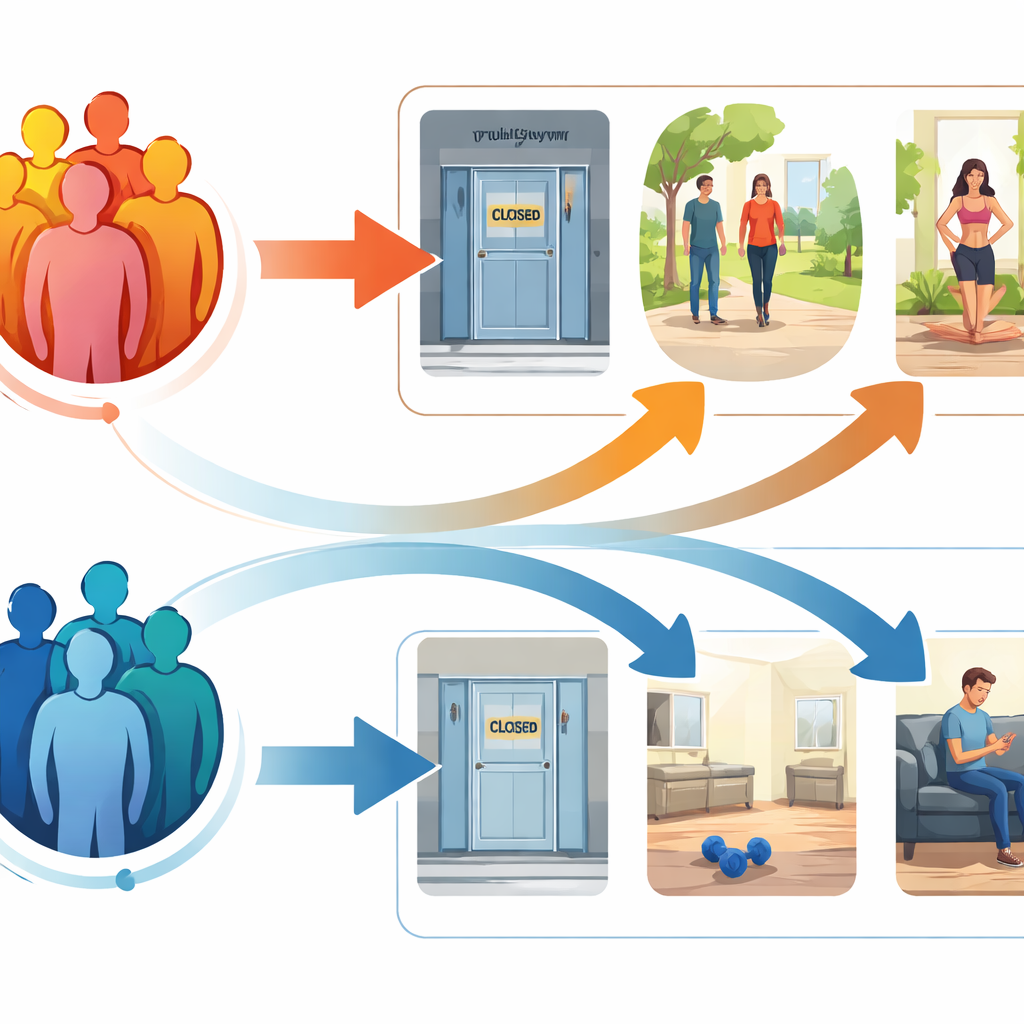
Under normal conditions, people who placed a strong emphasis on caring for others – those high in self-transcendence – were more likely to engage in both structured exercise and light daily activity. They did more workouts and also more gentle movement like walking or gardening. During the restrictions, however, self-transcendence no longer predicted who kept up formal training sessions. Gyms closed, organized sports paused, and routines were disrupted. Yet the same value remained strongly linked to everyday movement: even when sports facilities were less accessible, people who cared deeply about others still tended to keep moving in lighter, more flexible ways, such as walking or staying active around the home.
When safety and tradition dampen workouts
In contrast, people who scored high on conservation – who place a premium on safety, order, and tradition – were consistently less likely to do structured exercise, both before and during the pandemic. This avoidance became stronger when restrictions were in place: for these individuals, a climate of health risk and rule-following seemed to further discourage organized workouts. Their conservation values were only weakly related to light daily activity in ordinary times, but during restrictions even everyday movement showed signs of dropping. Meanwhile, values linked to seeking novelty (openness to change) or status and achievement (self-enhancement) did not show clear, independent ties to how often people moved once factors like age, education, and health were taken into account.
What this means for helping people stay active
Overall, the study suggests that deep-seated priorities help explain why people respond so differently when familiar exercise options vanish. People who care strongly about others seem more likely to find alternative ways to stay gently active, while those who prioritize safety and tradition may retreat even further from structured workouts, especially in uncertain times. For health promoters, this implies that one-size-fits-all campaigns may fall short. Community-oriented activities and messages could resonate better with those driven by helping and connection, while low-risk, home-based routines might be more acceptable to people who value stability. By aligning physical activity programs with people’s underlying motivations, it may be possible to support more lasting movement habits – not only in crises like a pandemic, but whenever life throws routines off course.
Citation: Csurilla, G., Fertő, I., Benedek, Z. et al. Human values and physical activity before and during COVID-19 restrictions in Hungary. Sci Rep 16, 11463 (2026). https://doi.org/10.1038/s41598-026-41883-8
Keywords: physical activity, human values, COVID-19 restrictions, exercise motivation, Hungary