Clear Sky Science · en
Nano-enabled enhancement of salt stress tolerance in barley using chitosan-selenium nanoparticles: physiological and molecular insights
Why salty soils matter for our food
Across the globe, creeping soil salinity is quietly shrinking the land we can farm. When too much salt builds up in fields, crops struggle to take up water, their leaves yellow, and yields fall. Barley, a key cereal for food, feed, and brewing, is more salt-tolerant than many crops, but even it suffers in highly salty soils. This study explores a novel, nano-sized aid: tiny particles made from chitosan (a natural biopolymer) and the essential trace element selenium, sprayed onto barley leaves to help the plants thrive where salt would normally hold them back.
Tiny helpers for stressed plants
The researchers grew two barley varieties, Mv Initium and Tectus, in greenhouse pots and exposed them to three levels of salt in the watering solution: none, moderate, and high. Before the salt was added, the plants were sprayed on their leaves with one of four treatments: plain water, chitosan alone, selenium alone, or a combination in the form of chitosan–selenium nanoparticles. These nanoparticles act as tiny carriers, gradually delivering selenium while being themselves plant-friendly. The team then measured how tall the plants grew, how much biomass they produced, and how green their leaves remained, all standard signs of crop health under stress. 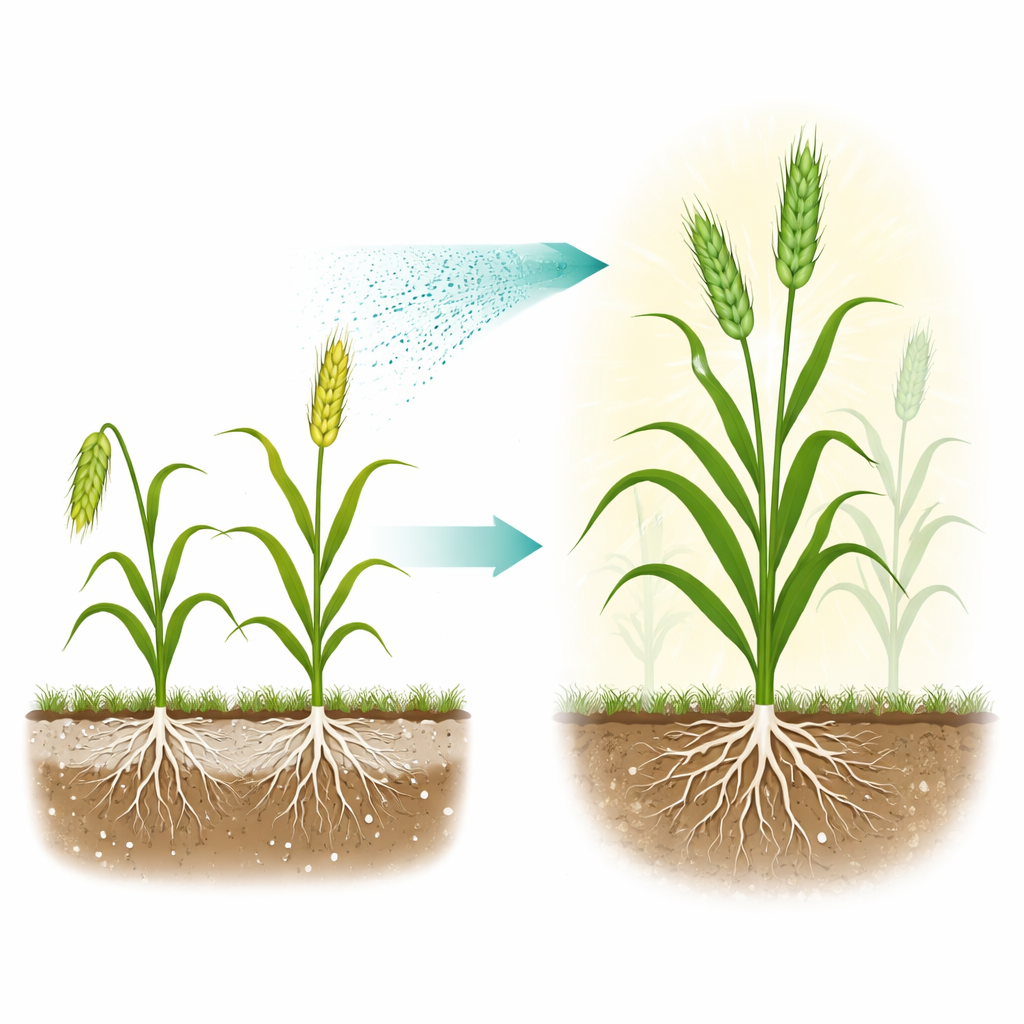
Keeping plants greener and growing
Salt stress predictably stunted barley growth: plants were shorter, lighter, and had less chlorophyll, the green pigment crucial for photosynthesis. But spraying with nanoparticles, especially the chitosan–selenium combination, clearly softened the blow. In both barley varieties and at all salt levels, treated plants generally stayed taller, produced more fresh and dry weight, and retained more chlorophyll and carotenoid pigments than untreated controls. The variety Mv Initium performed better overall than Tectus, suggesting that underlying genetics still matter—but both gained from the nano-treatment. These improvements mean that the leaves could capture light more effectively and keep energy production going even when salt was high.
Inside the plant’s stress shield
To understand how the nanoparticles worked from the inside out, the scientists examined key stress-related molecules. One focus was proline, a small organic compound that plants often accumulate under drought or salinity as a kind of internal “anti-freeze” and stabilizer for proteins and membranes. Under salt stress, proline levels rose in both varieties, but they rose even more when plants were sprayed with chitosan–selenium nanoparticles, especially at the highest salt level. The team also measured two major antioxidant enzymes, ascorbate peroxidase and catalase, which help neutralize harmful reactive oxygen molecules that build up under stress. Salt alone increased these enzyme activities; nano-treated plants showed the largest boosts, indicating a stronger detoxification system. 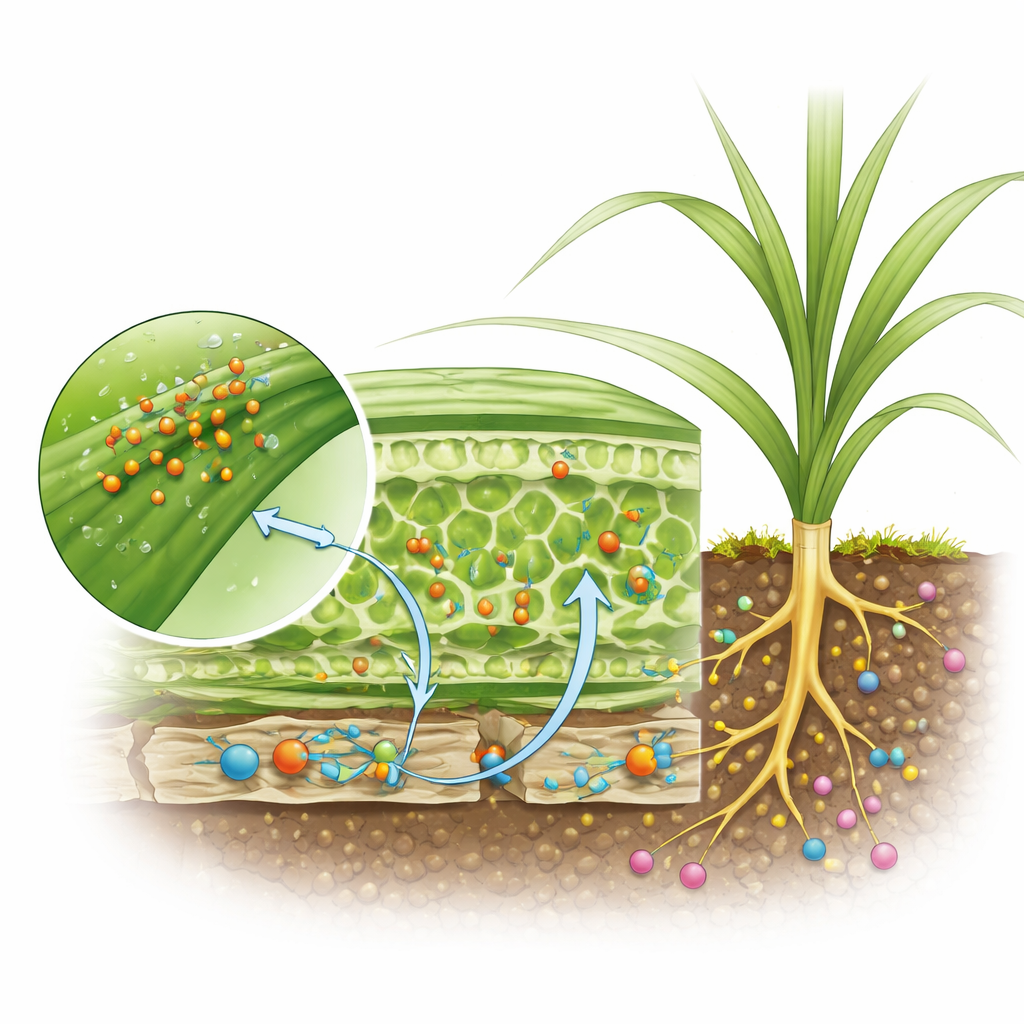
Switching on protective genes
Beyond chemistry, the team looked at which genes were turned up or down under different treatments. They tracked genes that encode antioxidant enzymes as well as genes that help the plant manage ions, such as those that pump sodium into safe compartments or control the balance between sodium and potassium. Salt stress alone already altered the activity of these genes, but spraying with chitosan–selenium nanoparticles pushed many of them to higher expression levels than salt or selenium alone. This was especially clear for genes tied to antioxidant defenses and to keeping sodium out of sensitive parts of the cell. The more salt-tolerant variety, Mv Initium, tended to show stronger or more finely tuned gene responses than the more sensitive Tectus, underscoring that the nano-treatment interacts with each plant’s genetic background.
What this means for future crops
Put simply, the study shows that a foliar spray of chitosan–selenium nanoparticles can help barley plants handle salty conditions by keeping them greener, bigger, and better protected at the molecular level. The nanoparticles appear to act on multiple fronts at once: they support key leaf pigments, encourage the buildup of helpful protective compounds like proline, boost antioxidant enzymes that mop up damaging molecules, and activate genes that keep excess salt away from vulnerable tissues. While more work is needed in field conditions and across different crop types, this nano-enabled strategy points toward a practical, relatively low-dose way to extend barley cultivation onto salt-affected soils and limit yield losses in a world where salinity is on the rise.
Citation: Gholizadeh, F., Tahmasebi, Z. & Janda, T. Nano-enabled enhancement of salt stress tolerance in barley using chitosan-selenium nanoparticles: physiological and molecular insights. Sci Rep 16, 9213 (2026). https://doi.org/10.1038/s41598-026-41850-3
Keywords: barley, salt stress, nanoparticles, selenium, crop tolerance