Clear Sky Science · en
Performance of woven fabrics for absorbent applications
Why smarter cotton fabrics matter
From reusable sanitary pads and baby diapers to sports shirts and medical dressings, many everyday products quietly rely on one key task: soaking up and moving away moisture from our skin. This study explores how to redesign simple cotton cloth so it can pull liquid off the body more efficiently, stay comfortable, and still be strong and durable. By tweaking how cotton threads are arranged and using a fluffier type of yarn, the researchers show that some woven patterns can rival high‑tech materials in how well they deal with sweat and other fluids.
Building a better cotton cloth
The team focused on a familiar material—100% cotton—but changed the way it is put together. Instead of using standard spun yarns in both directions of the weave, they replaced the crosswise yarns with “roving,” a bulkier, more loosely twisted strand. This roving has more open spaces and a larger surface area, which can help it pick up and spread liquid. They produced six fabrics using two common weaves (plain and twill) and three different spacing levels between the roving yarns. Plain weave looks like a simple over‑under grid, while twill creates a diagonal pattern, similar to what you see in denim. All fabrics were then washed and conditioned to imitate real‑life use before testing.
How the fabrics were put to the test
To understand how these fabrics would behave in use, the researchers measured a wide set of properties. These included how easily air passes through, how well the cloth conducts heat, resistance to surface fuzz and wear, bending stiffness, strength and stretch in both directions, and how much the fabric shrinks after washing. They also used sensitive instruments to assess surface roughness and friction, which relate to how soft or scratchy a fabric feels. For moisture behavior, they applied a standard liquid test that drips a salty solution onto the fabric held between sensors. This setup tracks how quickly the top surface wets, how fast and how far liquid spreads on both faces, how effectively it moves from the skin side to the outer side, and rolls all of this into a single score called Overall Moisture Management Capacity. 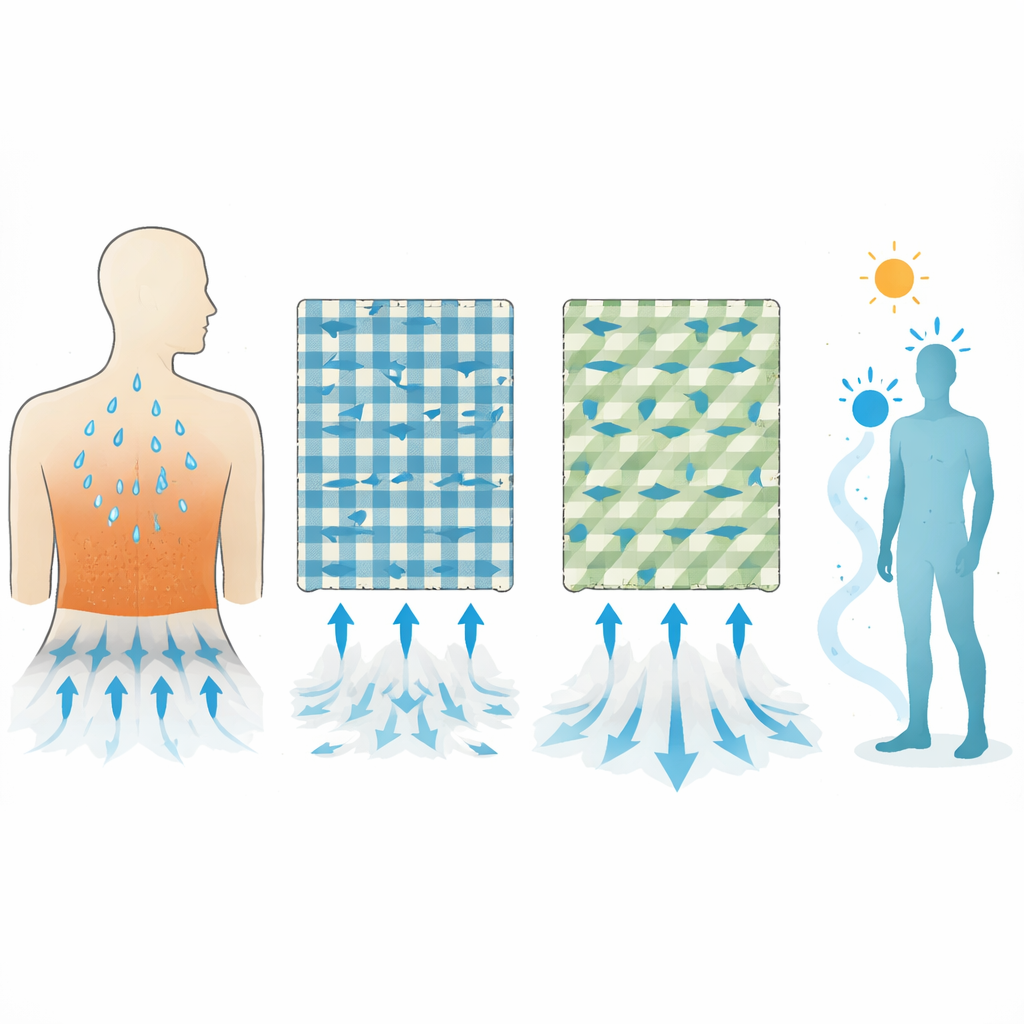
Trade‑offs between strength, comfort, and dryness
The results reveal a classic engineering balancing act. Fabrics with a tight plain weave and higher roving density were generally stronger, more resistant to pilling, and shrank less. Their tightly interlaced threads lock together, boosting durability but also making the cloth denser and rougher. This compact structure reduced air flow, increased heat conduction, and made the fabric less flexible. Most importantly for absorbent uses, plain weaves with roving showed poor one‑way transport of moisture: liquid tended to stay or even build up on the skin‑side surface rather than moving outward. In fact, the one‑way transport index for all plain fabrics was strongly negative, meaning they behaved more like a moisture barrier than a wick.
How twill unlocks moisture movement
In contrast, twill fabrics, with their diagonal floats and fewer interlacing points, created more open channels through the cloth. This structure allowed air to pass more easily and the surface to feel smoother, and—crucially—gave liquid pathways to travel from the inner face to the outer face. The standout sample, a relatively loose twill with only five roving yarns per centimeter, demonstrated an exceptionally high one‑way transport index of about 905% and the highest combined moisture score. Liquid arriving on the skin side was quickly absorbed, pulled through the thickness of the fabric, and spread over the outer surface, where it can evaporate more readily. This performance approaches that of advanced knitted fabrics while keeping the strength advantages of woven cloth. 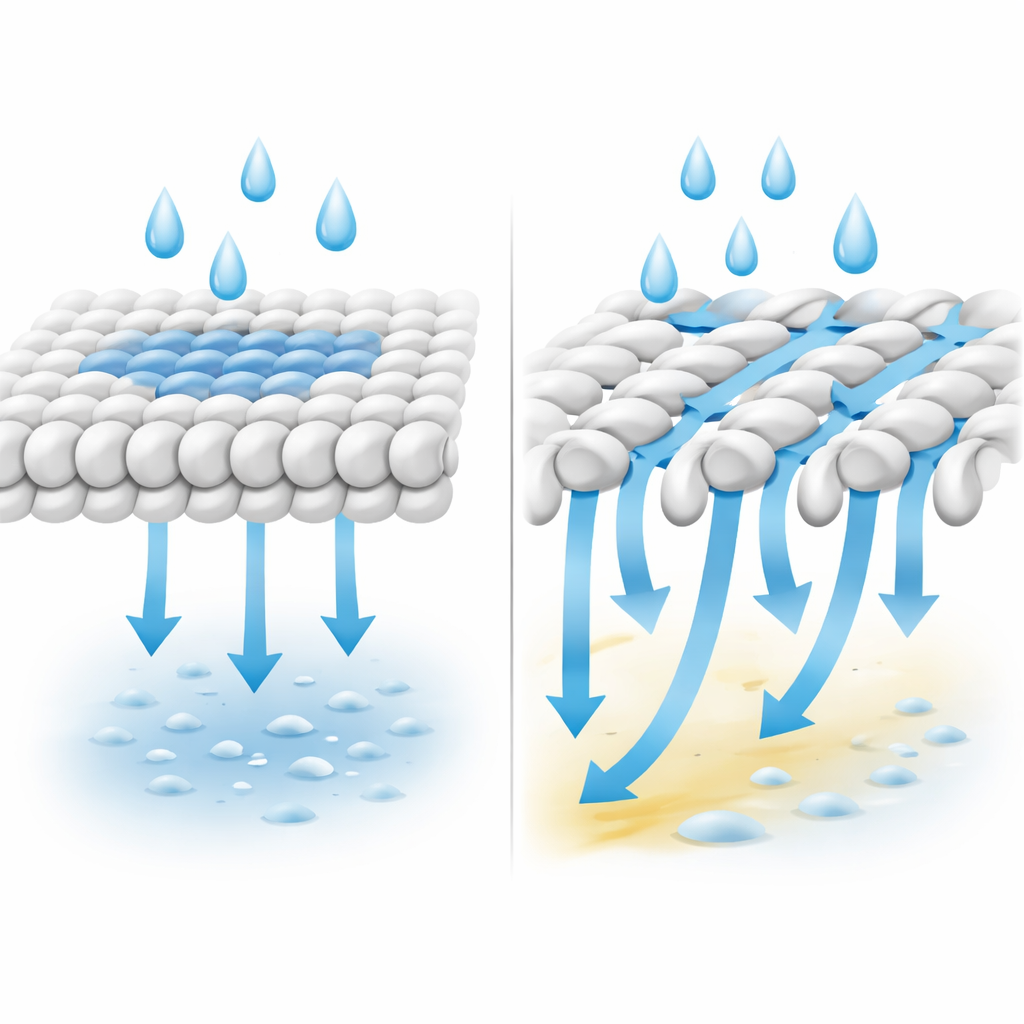
Choosing the right cloth for the right job
For everyday users, the takeaway is that not all cotton fabrics are equal when it comes to staying dry and comfortable. The study shows that using bulky roving yarns in a twill pattern can turn simple cotton into a high‑performing absorbent layer that efficiently pulls moisture away from the skin. However, this design slightly sacrifices some mechanical robustness compared with tighter plain weaves. As a result, very strong plain fabrics may still be best for roles where durability and stability matter most, while twill fabrics—especially those with lower roving density—are better suited as inner layers in sanitary products, sportswear, and medical pads where dryness next to the body is the priority.
Citation: Hashima, W.A., Abd El-Aziz, M.Y., Hakam, M. et al. Performance of woven fabrics for absorbent applications. Sci Rep 16, 9659 (2026). https://doi.org/10.1038/s41598-026-41834-3
Keywords: moisture management, cotton fabrics, twill weave, absorbent textiles, textile engineering