Clear Sky Science · en
Quercetin and nanoquercetin mitigate high fat diet–induced obesity via lipid modulation, genomic DNA integrity restoration, adipokine regulation, and hepato-pancreatic tissue preservation
Why this study matters for everyday health
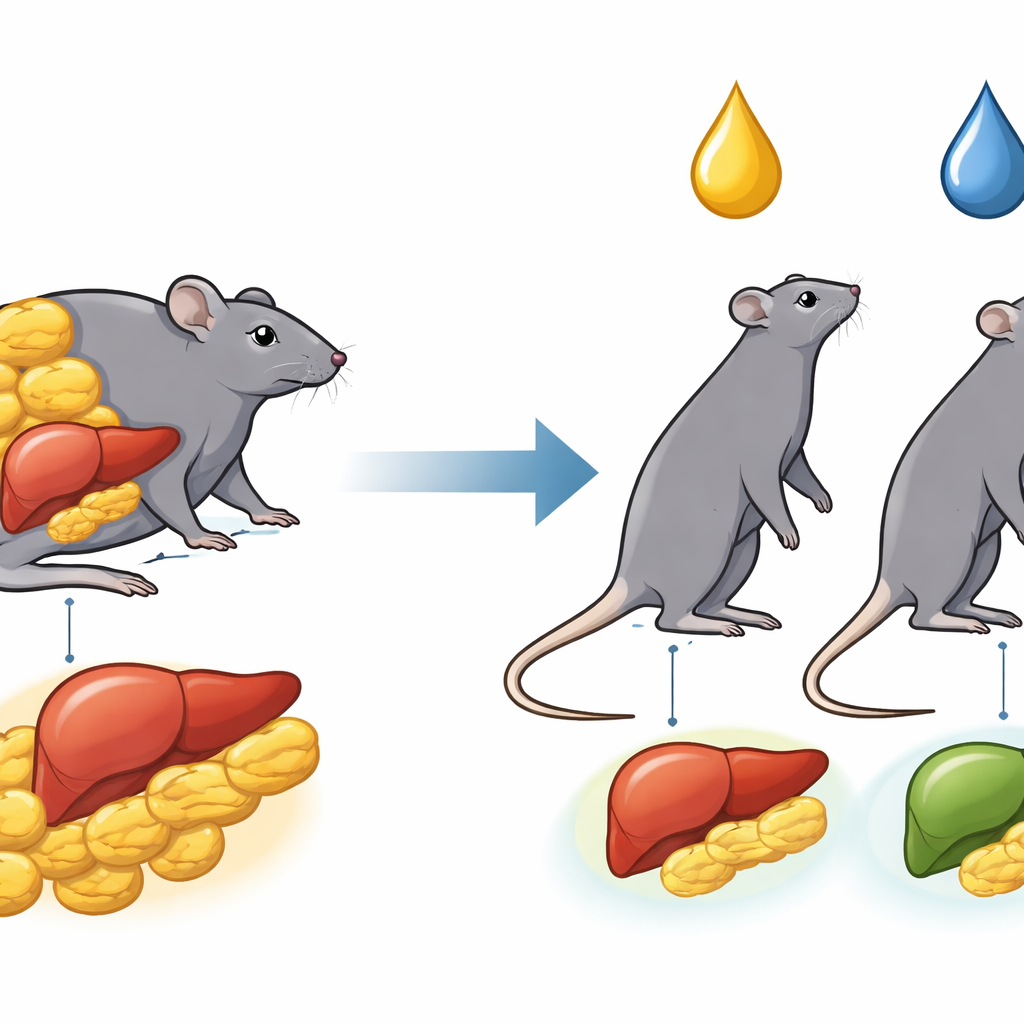
Obesity is often framed as a matter of willpower, but beneath the surface it reshapes organs, blood fats, and even our DNA. This study explores whether quercetin—a plant compound found in apples, onions, and tea—and a nano-sized version of it can protect the body from the damage caused by a high-fat diet. By testing these substances in rats, the researchers ask a question many people care about: can a natural, food-based molecule, delivered more effectively, help prevent or ease obesity-related harm without obvious side effects?
A closer look at a plant helper
Quercetin belongs to a family of colorful plant chemicals that act as natural shields against stress. In people and animals, it has been linked to better control of blood fats, less inflammation, and protection against oxidative damage. The catch is that quercetin does not dissolve well in water and is quickly broken down in the gut and liver, which limits how much reaches key organs. To get around this, scientists have created “nanoquercetin,” where quercetin is packaged into tiny particles that are easier for the body to absorb and distribute. This study set out to compare plain quercetin and nanoquercetin head-to-head in rats made obese by a high-fat diet.
How the experiment was set up
Male rats were fed either a standard diet or a high-fat diet designed to mimic calorie-dense human eating patterns. After four weeks on the fatty diet, the obese animals were split into groups: some continued without treatment, while others received daily doses of quercetin or nanoquercetin for another four weeks. The dose was chosen after safety testing showed that very high amounts of both forms caused no deaths or obvious illness. The researchers then measured body weight, blood fats, blood protein, and markers of DNA damage, and examined the liver and pancreas—the two organs that bear much of the burden in obesity. They also checked the activity of two hormone-like signals, adiponectin and leptin, which help control fat handling and appetite.
What happened to weight, blood fats, and DNA
In healthy rats, quercetin and nanoquercetin did not cause weight loss, which suggests they did not act as harsh diet drugs. Even so, both improved blood fat patterns, lowering total cholesterol, triglycerides, and “bad” LDL while raising “good” HDL, with nanoquercetin generally having the stronger effect. In obese rats, the high-fat diet predictably drove body weight and blood fats up and blood protein down, and it triggered clear signs of DNA damage in liver and pancreatic cells. When these obese rats received quercetin or nanoquercetin, their weight dropped relative to untreated obese animals, their blood fats and protein shifted toward healthier levels, and the DNA damage signals fell back close to normal. Across most of these measures, the nano-sized form came out ahead of the standard one.
Protecting key organs and chemical signals
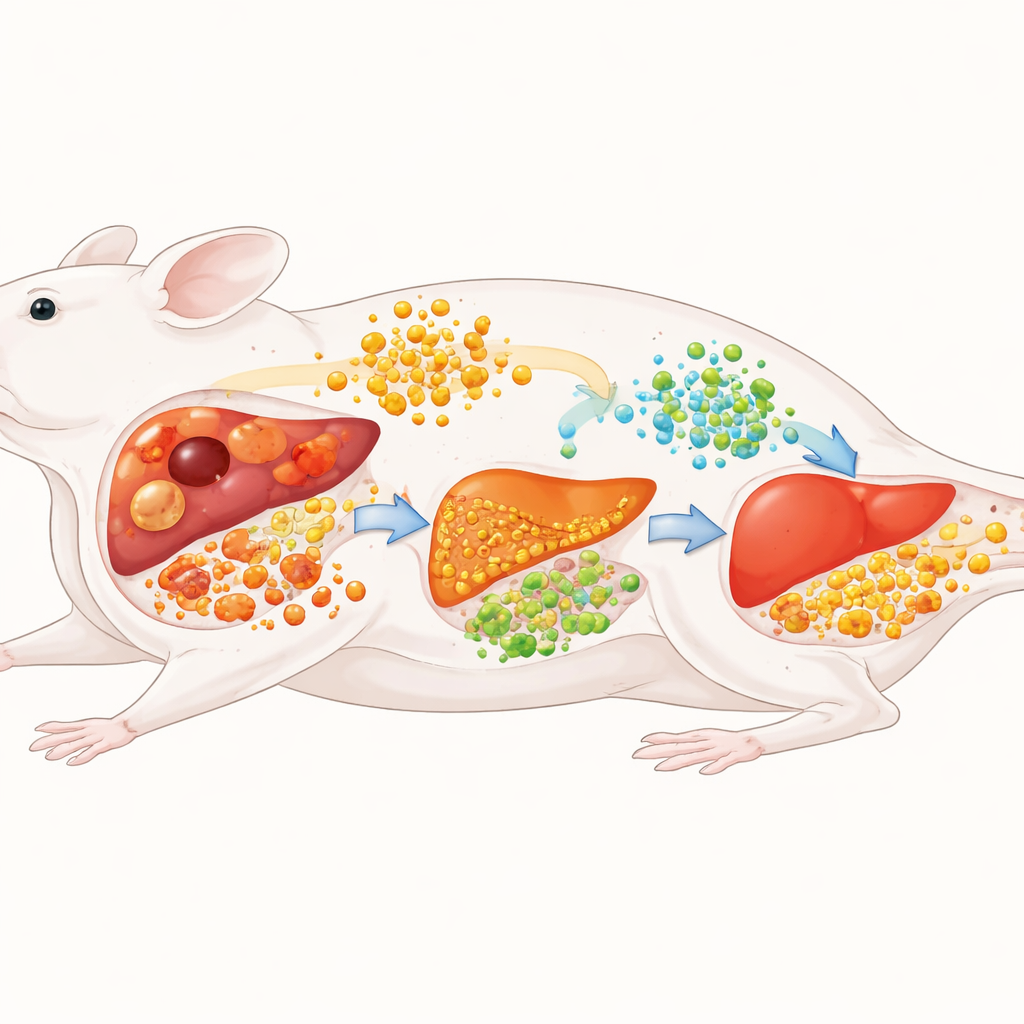
Looking under the microscope, livers from untreated obese rats showed swollen, fat-filled cells typical of early fatty liver disease, and their pancreases displayed damaged digestive tissue and enlarged hormone-producing islets. With quercetin treatment, these injuries eased; with nanoquercetin, liver and pancreatic structure looked much closer to that of lean control rats. At the same time, the chemical messengers that help regulate metabolism shifted in a favorable direction. The high-fat diet had depressed adiponectin and boosted leptin, a combination linked to insulin resistance and chronic inflammation. Both forms of quercetin reversed this pattern, raising adiponectin and lowering leptin in the liver and pancreas, with nanoquercetin again showing the stronger shift.
What this could mean for future therapies
For a layperson, the core message is that a common plant compound, especially when packaged into tiny particles, was able to counter many harmful effects of a high-fat diet in rats: unhealthy blood fats, organ damage, disturbed hormone signals, and even DNA injury. The nanoform did not appear more toxic; instead, it seemed more effective, likely because more of it reached where it was needed. This is not a ready-made obesity cure for humans—people are more complex than lab animals, and only one dose and time frame were tested—but the findings support further work on nanoquercetin as a potentially safer, multi-targeted aid alongside diet and lifestyle changes for managing obesity and its complications.
Citation: Lotify, M.A., Abdelgayed, S.S. & Mohamed, H.R. Quercetin and nanoquercetin mitigate high fat diet–induced obesity via lipid modulation, genomic DNA integrity restoration, adipokine regulation, and hepato-pancreatic tissue preservation. Sci Rep 16, 9660 (2026). https://doi.org/10.1038/s41598-026-41808-5
Keywords: quercetin, nanoquercetin, obesity, high-fat diet, liver and pancreas