Clear Sky Science · en
The relationship between childhood trauma, personality, and subjective well-being in early and late adolescence: a network analysis
Why this matters for teens and parents
Adolescence can be a turbulent time, and many young people carry difficult experiences from childhood into their teen years. This study asks a pressing question: how do early harmful experiences at home shape who teens become and how happy they feel with their lives? By looking at childhood trauma, personality, and self-esteem together in a large group of Chinese adolescents, the researchers show that emotional wounds from early life can quietly reshape personality and, in turn, color teenagers’ day‑to‑day sense of well‑being. Their findings point toward age‑tailored ways to support teens before distress hardens into long‑term problems.
Early hurt and later happiness
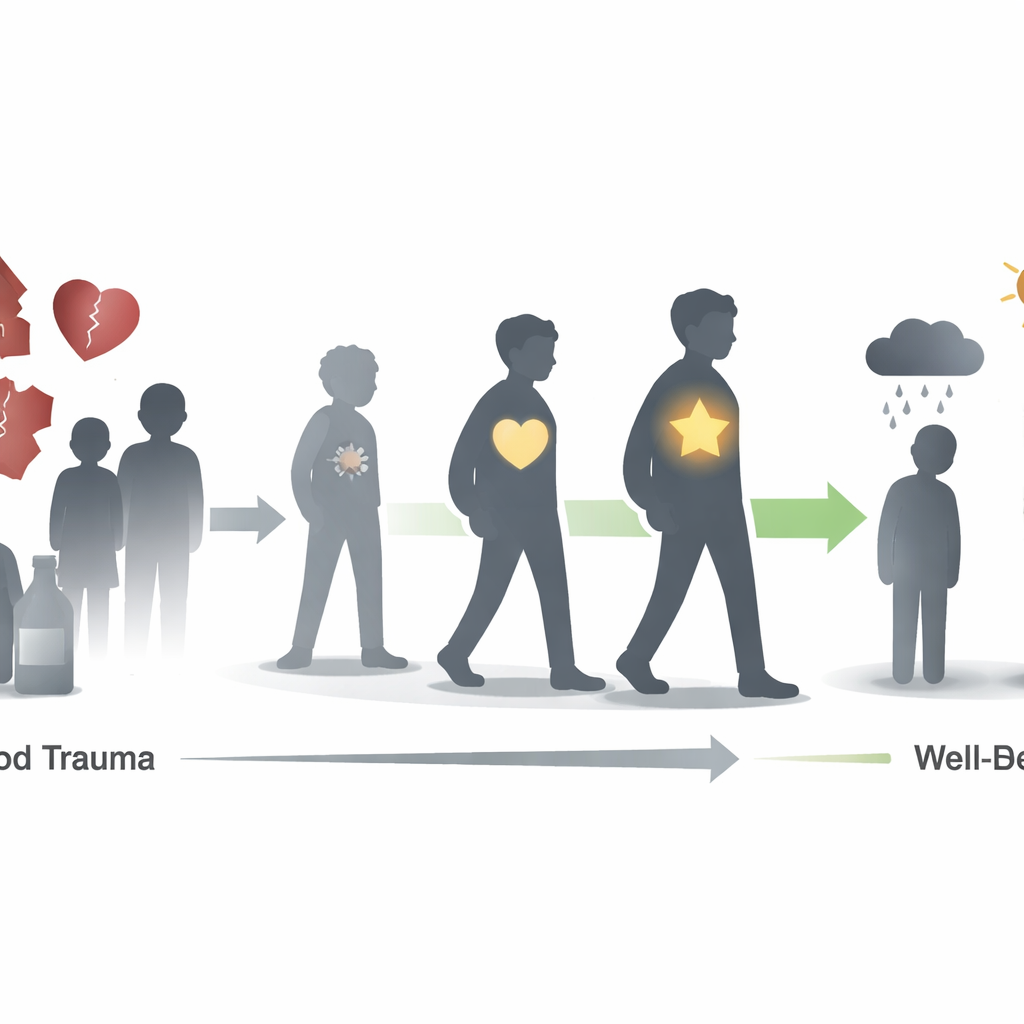
The authors focus on “subjective well‑being,” a broad idea that includes how satisfied people feel with their lives and how often they experience pleasant versus unpleasant emotions. High well‑being in adolescence is not just about feeling good in the moment: it predicts better friendships, stronger family ties, and fewer problems such as depression, anxiety, and substance use well into adulthood. Against this backdrop, childhood trauma—such as emotional and physical abuse, sexual abuse, and emotional or physical neglect—stands out as a powerful risk factor for poorer mental health. Previous work shows that such experiences are linked to lower life satisfaction and more emotional problems, but the pathways connecting early hurt to later happiness have been unclear, especially at different stages of the teen years.
Personality and self‑esteem as inner shields
Guided by a stress process framework, the study treats personality traits and self‑esteem as “personal resources” that can either protect or expose teens to the harmful effects of stress. The researchers draw on the well‑known “Big Five” dimensions—extraversion, agreeableness, conscientiousness, openness to experience, and neuroticism—along with overall self‑esteem. In general, traits like extraversion, agreeableness, and conscientiousness, plus strong self‑esteem, are linked to higher well‑being, while neuroticism—the tendency to experience worry, sadness, and emotional instability—is tied to lower well‑being. The central idea is that childhood trauma may chip away at these positive inner resources and strengthen negative ones, setting the stage for lower happiness in adolescence.
Mapping invisible links as a network
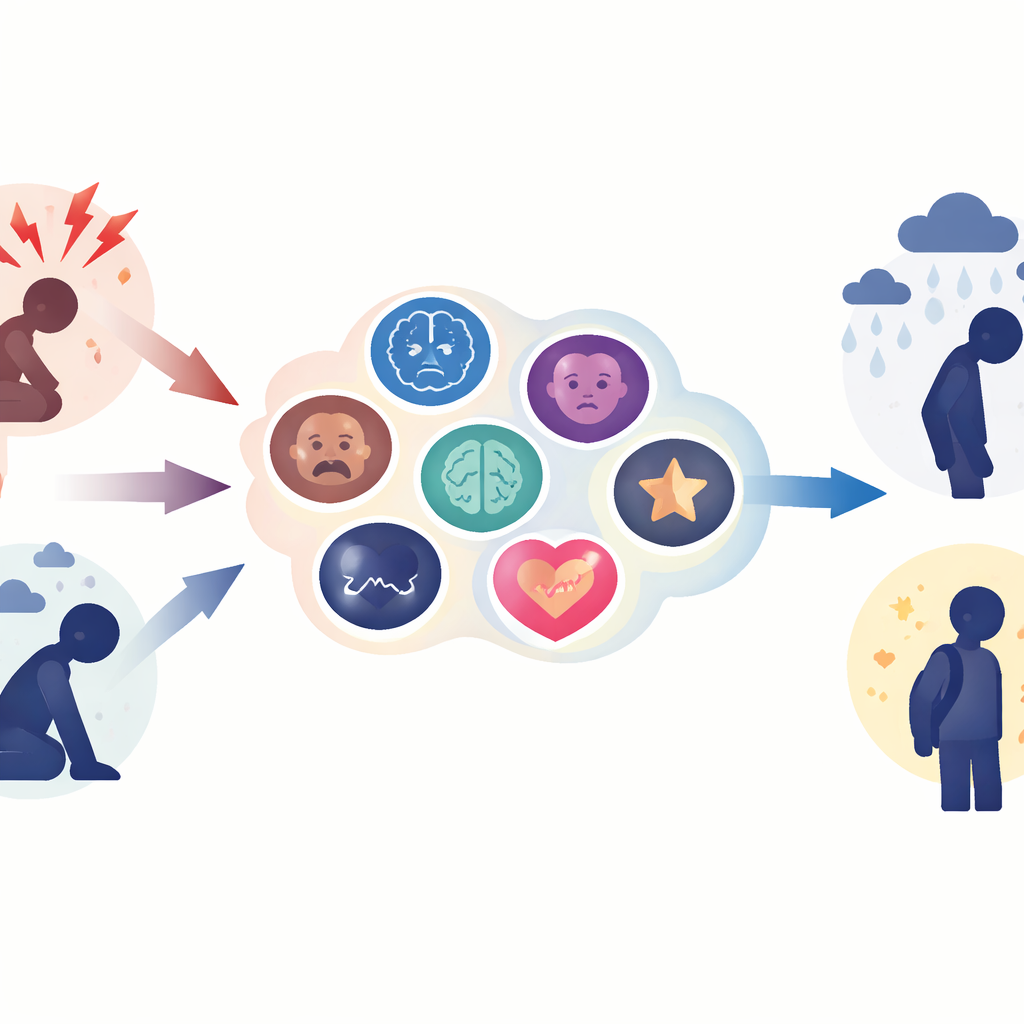
Instead of testing one‑way cause‑and‑effect chains, the team used a “network analysis” approach that treats all the variables as a web of interconnected nodes. They collected data from 2,630 students aged 12 to 18 in two public schools, measuring their history of childhood trauma, personality traits, self‑esteem, and current well‑being. The network showed that neuroticism and self‑esteem sat closest to well‑being, meaning they were most strongly tied to how happy or unhappy teens felt. Emotional abuse and emotional neglect, in particular, were linked to lower levels of helpful traits such as agreeableness, conscientiousness, extraversion, and self‑esteem, while emotional abuse was also tied to higher neuroticism. Once personality and self‑esteem were taken into account, the direct links between most forms of trauma and well‑being weakened or disappeared, suggesting that early experiences affect teens’ happiness mainly by reshaping who they feel they are.
Early teens, older teens, and shifting strengths
The researchers then compared networks for early adolescents (ages 12–15) and late adolescents (16–18). Overall, the web of connections looked similar in both groups, but some strands differed in strength. For younger teens, being outgoing and energetic (extraversion) was especially important for feeling well, perhaps because early adolescence centers on forming new friendships and fitting into peer groups. For older teens, being kind and cooperative (agreeableness) showed a stronger tie to well‑being, reflecting the growing importance of deeper, more stable relationships and social roles. The bond between openness to new experiences and self‑esteem also strengthened in late adolescence, hinting that curiosity and willingness to explore may play a larger role in shaping a positive self‑view as identity solidifies.
What this means for helping teens thrive
In plain terms, the study suggests that childhood emotional abuse and neglect can quietly mold personality in ways that make it harder for teens to feel happy and satisfied with life. Yet it also shows that personality traits and self‑esteem are key “hinge points” where support can make a difference. Strengthening self‑esteem, reducing tendencies toward neuroticism, and fostering traits like extraversion and agreeableness may buffer the impact of early trauma, with different traits mattering more at different ages. Rather than viewing childhood trauma as a life sentence, the findings highlight practical targets for age‑sensitive prevention and counseling efforts designed to help young people rebuild inner resources and improve their overall well‑being.
Citation: Zheng, W., Zhou, L., Lv, X. et al. The relationship between childhood trauma, personality, and subjective well-being in early and late adolescence: a network analysis. Sci Rep 16, 8870 (2026). https://doi.org/10.1038/s41598-026-41659-0
Keywords: adolescent well-being, childhood trauma, personality traits, self-esteem, emotional abuse and neglect