Clear Sky Science · en
Local ice cryotherapy reduced vascular inflammation in large artery from rats with arthritis
Cooling Joints to Protect the Heart
People with rheumatoid arthritis live not only with painful, swollen joints, but also with a hidden threat: a higher risk of heart attacks and strokes. This study asks a surprisingly simple question with big implications—can regularly cooling sore joints with ice do more than ease pain? Using a well-established rat model of arthritis, the researchers tested whether local ice therapy on inflamed paws could also calm inflammation in a major artery, hinting at a low‑tech way to help protect blood vessels in people with arthritis.
Why Arthritis Affects More Than Joints
Rheumatoid arthritis is a long‑lasting disease in which the immune system attacks the joints, leading to swelling, pain and gradual damage to bone and cartilage. But the same chronic inflammation that targets joints also affects blood vessels. The inner lining of arteries becomes irritated, attracts immune cells and produces damaging molecules, setting the stage for early hardening of the arteries. Even when traditional heart risk factors like cholesterol and blood pressure are controlled, people with rheumatoid arthritis still face extra cardiovascular danger, motivating the search for safe, accessible add‑on treatments.
Putting Ice Therapy to the Test
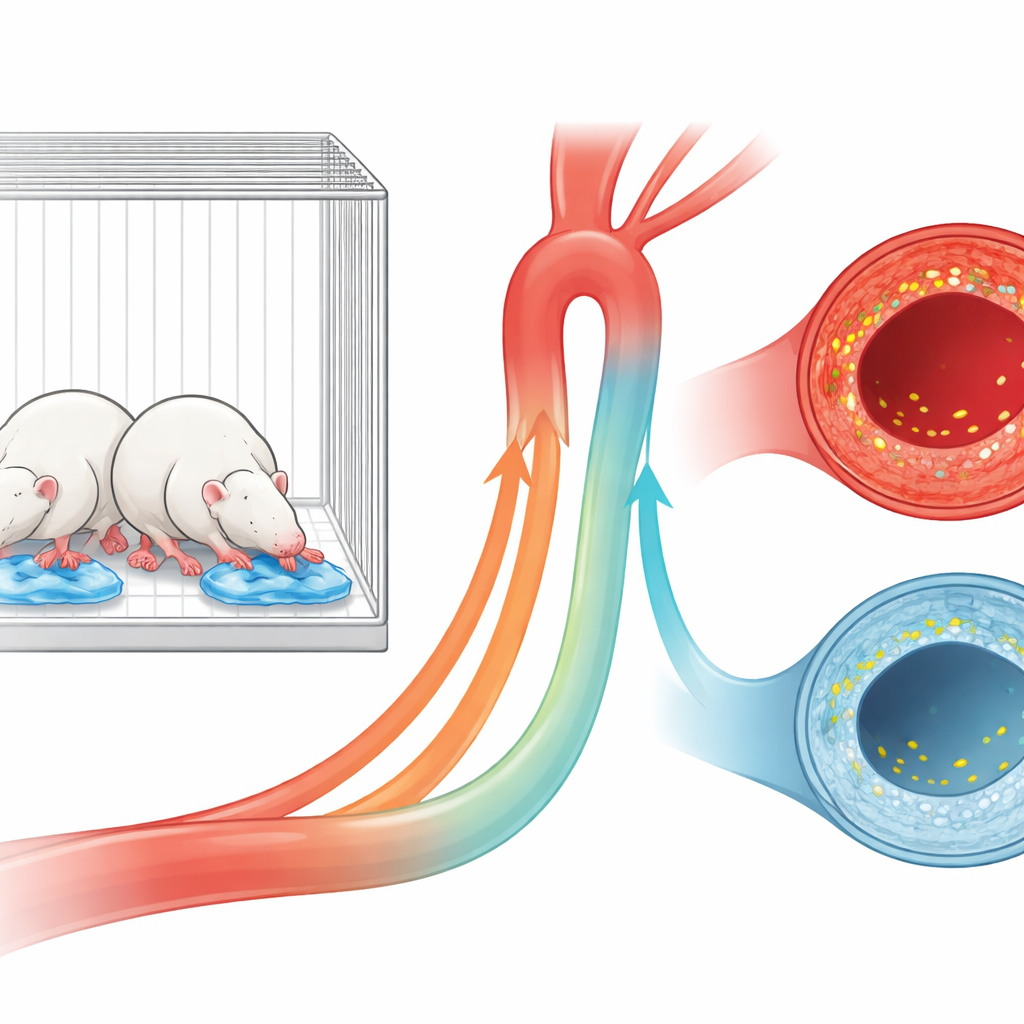
In this experiment, male rats were given adjuvant‑induced arthritis, a standard model that closely mimics severe rheumatoid arthritis. Once joint inflammation had clearly appeared, the team applied local ice therapy twice a day for two weeks. Rats spent 30 minutes in cages lined with frozen ice sticks, which cooled the skin of their inflamed hind paws by about 10 degrees Celsius. The scientists tracked joint swelling and X‑ray signs of damage, collected the main chest artery for molecular and cell analyses, and counted various types of immune cells in both blood and vessel wall. They also measured blood levels of two bone‑related proteins that have been linked to heart disease.
Less Joint Damage and a Calmer Artery
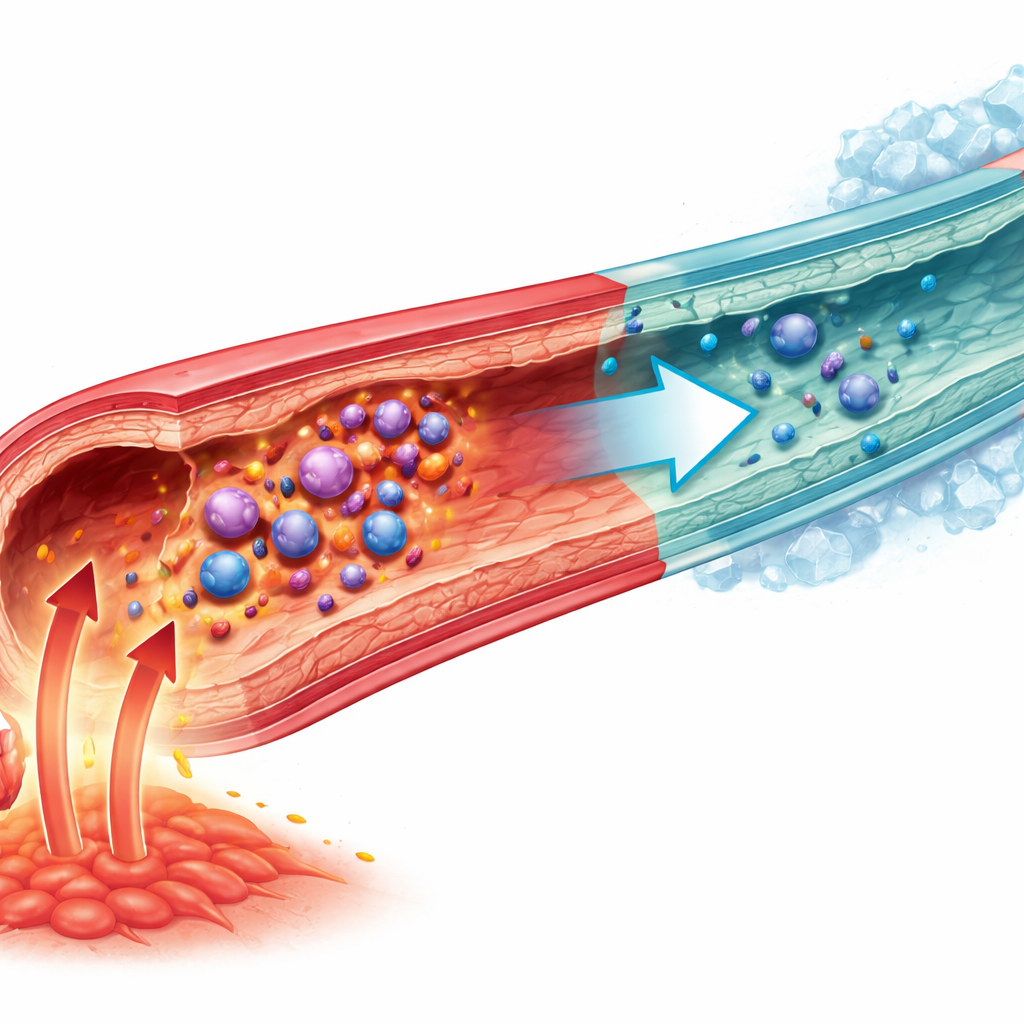
Regular ice treatment clearly helped the diseased joints. Compared with untreated arthritic rats, those receiving ice had about one‑third lower clinical arthritis scores and less joint destruction on X‑rays, especially less osteoporosis and loss of cartilage and bone. Inside the large artery, the benefits extended beyond the joints. Ice therapy reduced the activity of key enzymes and oxidative stress markers associated with an unhealthy vessel lining. At the same time, far fewer immune cells were found within the artery wall, particularly T cells and a subset (often linked to blood vessel injury) that produces the inflammatory signal interleukin‑17. Notably, the number of immune cells in the bloodstream itself did not change, suggesting that ice mainly affected how many cells entered the vessel wall rather than how many were circulating.
What Did Not Change—and Why That Matters
Some expected signals did not move in step with the improvements. Markers of early vessel activation, which typically rise before full‑blown dysfunction, were largely unchanged by ice, and one adhesion molecule even increased slightly—possibly reflecting a shift toward resolving, rather than fueling, inflammation. Likewise, blood levels of the bone‑related proteins osteoprotegerin and sclerostin, proposed as links between bone health and heart disease, stayed the same. These findings point away from a simple whole‑body dampening of the immune system and toward more targeted effects, where cooling the joints alters local and distant inflammatory circuits in subtler ways.
What It Could Mean for People with Arthritis
This research in rats suggests that something as simple as repeated local ice application to sore joints might not only ease symptoms, but also quietly protect large arteries from inflammatory damage. By lowering oxidative stress and limiting the buildup of harmful immune cells in the vessel wall—without broadly suppressing circulating immune cells—ice therapy emerges as a low‑cost, well‑tolerated candidate to complement standard rheumatoid arthritis drugs. More work, especially in female animals and in human studies, is needed to unravel the exact mechanisms and to test whether these vascular benefits translate to fewer heart problems. Still, the study supports the idea that carefully applied cold around inflamed joints could help cool down the heart and blood vessels as well.
Citation: Peyronnel, C., Totoson, P., Tournier, M. et al. Local ice cryotherapy reduced vascular inflammation in large artery from rats with arthritis. Sci Rep 16, 10599 (2026). https://doi.org/10.1038/s41598-026-41594-0
Keywords: rheumatoid arthritis, cryotherapy, vascular inflammation, immune cells, cardiovascular risk