Clear Sky Science · en
Predictive role of vulnerable elderly study-13 screening tools in chemotherapy-related toxicity in elderly patients with lung cancer
Why this matters for older adults with lung cancer
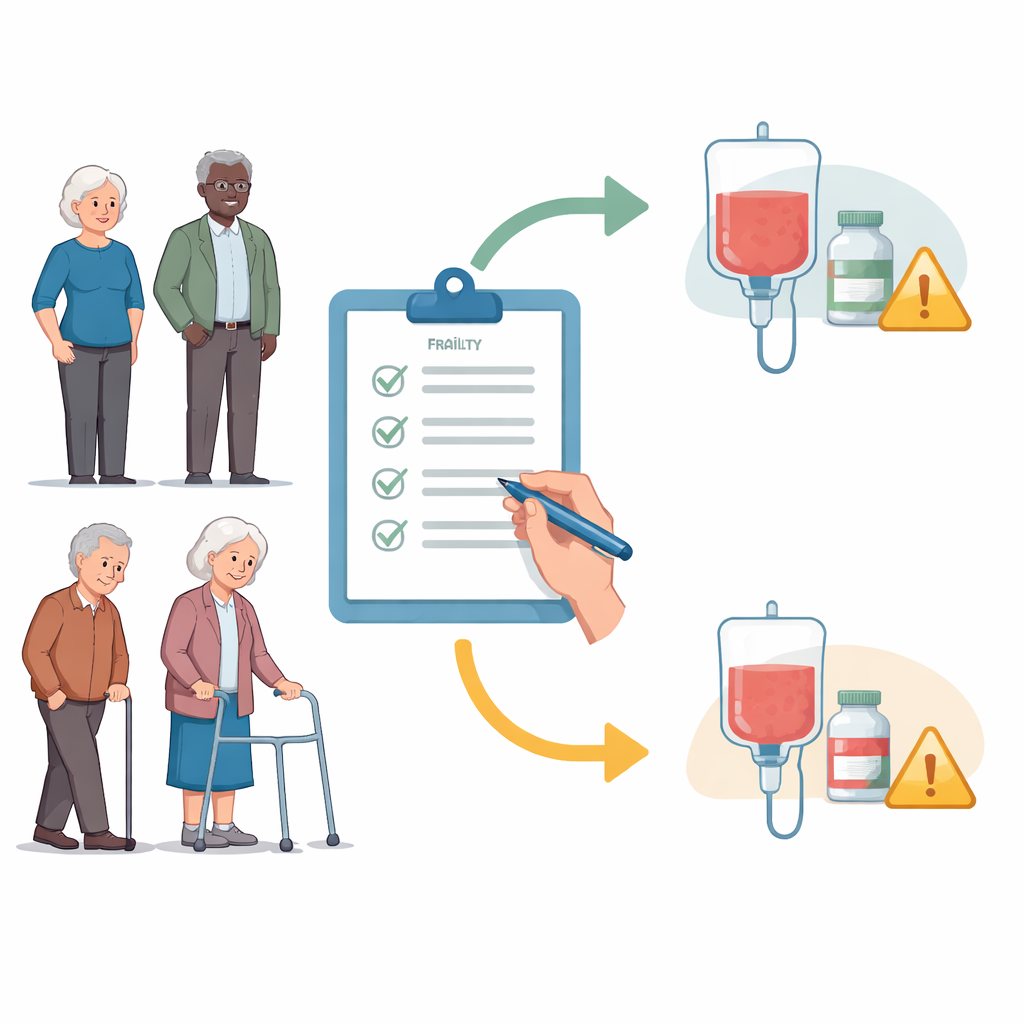
Many people know someone older who has faced lung cancer and the difficult choice of whether to receive chemotherapy. While these drugs can extend life and relieve symptoms, they also carry serious side effects that can be especially dangerous for frail seniors. This study explores whether a short questionnaire, called the Vulnerable Elders Survey-13 (VES-13), can help doctors foresee which older lung cancer patients are most likely to suffer severe side effects—and adjust treatment before problems occur.
A quick checkup on everyday strength
The VES-13 is a brief survey that asks older adults about their age, general health, and how easily they can handle everyday tasks, such as walking, shopping, or doing housework. Instead of relying only on a doctor’s overall impression of “performance status,” this tool focuses on what patients can actually do in daily life. In this study from Türkiye, 131 patients aged 65 to 85 with lung cancer completed the VES-13 before starting chemotherapy. The doctors who chose the treatment did not see the survey scores, so their decisions would not be influenced by the test.
Tracking side effects during treatment
After chemotherapy began, patients were closely followed until 30 days after their planned treatment ended. At each cycle, doctors recorded any treatment-related problems, such as low blood counts, kidney issues, nausea, or severe tiredness. These side effects were graded using a standard international scale, and the most serious ones—those that might lead to hospital stays, stopping treatment, or life-threatening situations—were labeled as high-grade toxicity. Nearly half of the patients (48.1%) experienced at least one severe side effect, often involving the blood, such as low white cells or anemia, or non-blood problems like fatigue.
Frailty scores predict who gets into trouble
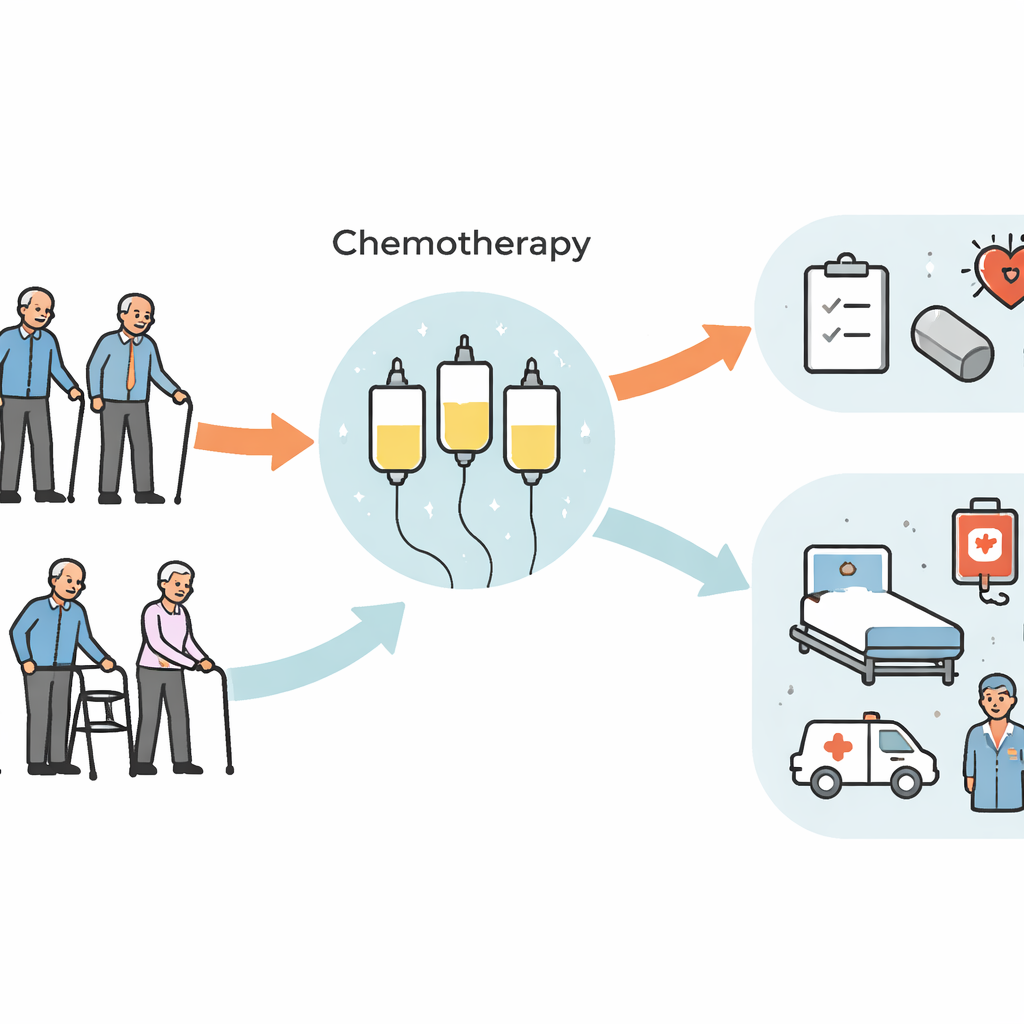
When the researchers compared the VES-13 scores with what actually happened during treatment, a clear pattern emerged. Patients who scored 3 or higher on the survey—indicating they were more vulnerable—were much more likely to have serious side effects. About 71% of these higher-scoring patients developed severe toxicity. Statistical tests showed that a high VES-13 score made severe toxicity roughly eight times more likely, even after accounting for other factors such as other illnesses, type of chemotherapy, and general performance status. The survey also showed good ability to distinguish between patients who would and would not run into major trouble.
Real-world consequences in the clinic
The impact of frailty went beyond just laboratory numbers. Compared with patients with lower VES-13 scores, vulnerable patients were more likely to have their chemotherapy stopped early, interrupted, or started at a reduced dose. They more often needed additional medicines to boost their white blood cells, required blood transfusions, and were admitted to the hospital unexpectedly. In other words, a simple survey completed in just a few minutes predicted not only the risk of side effects but also the need for emergency care and changes in treatment plans in everyday oncology practice.
What this means for patients and families
In plain terms, this study suggests that a short, easy questionnaire can help identify which older adults with lung cancer are at highest risk from chemotherapy before treatment even starts. Knowing this can guide doctors and families toward safer choices, such as gentler drug combinations, lower starting doses, or closer monitoring. While the research was done at a single center and focused on the most severe side effects, it provides strong evidence that systematically measuring frailty can make chemotherapy decisions more informed and personalized for older patients.
Citation: Kara, K., Cavdar, E. Predictive role of vulnerable elderly study-13 screening tools in chemotherapy-related toxicity in elderly patients with lung cancer. Sci Rep 16, 8379 (2026). https://doi.org/10.1038/s41598-026-41578-0
Keywords: lung cancer, elderly patients, chemotherapy toxicity, frailty screening, VES-13