Clear Sky Science · en
Effectiveness of exercise prehabilitation before anterior cruciate ligament reconstruction on functional outcomes – a single-blinded randomized controlled trial
Why preparing before knee surgery matters
For many active people, a torn anterior cruciate ligament (ACL) is a sudden stop sign: sports come to a halt, daily movements hurt, and surgery often looms. This study asks a practical question that matters to every patient and coach: if you use the waiting time before ACL surgery to train in a structured way with professional guidance, do you come out of the operation with a better-working knee than if you just follow written home exercises on your own?
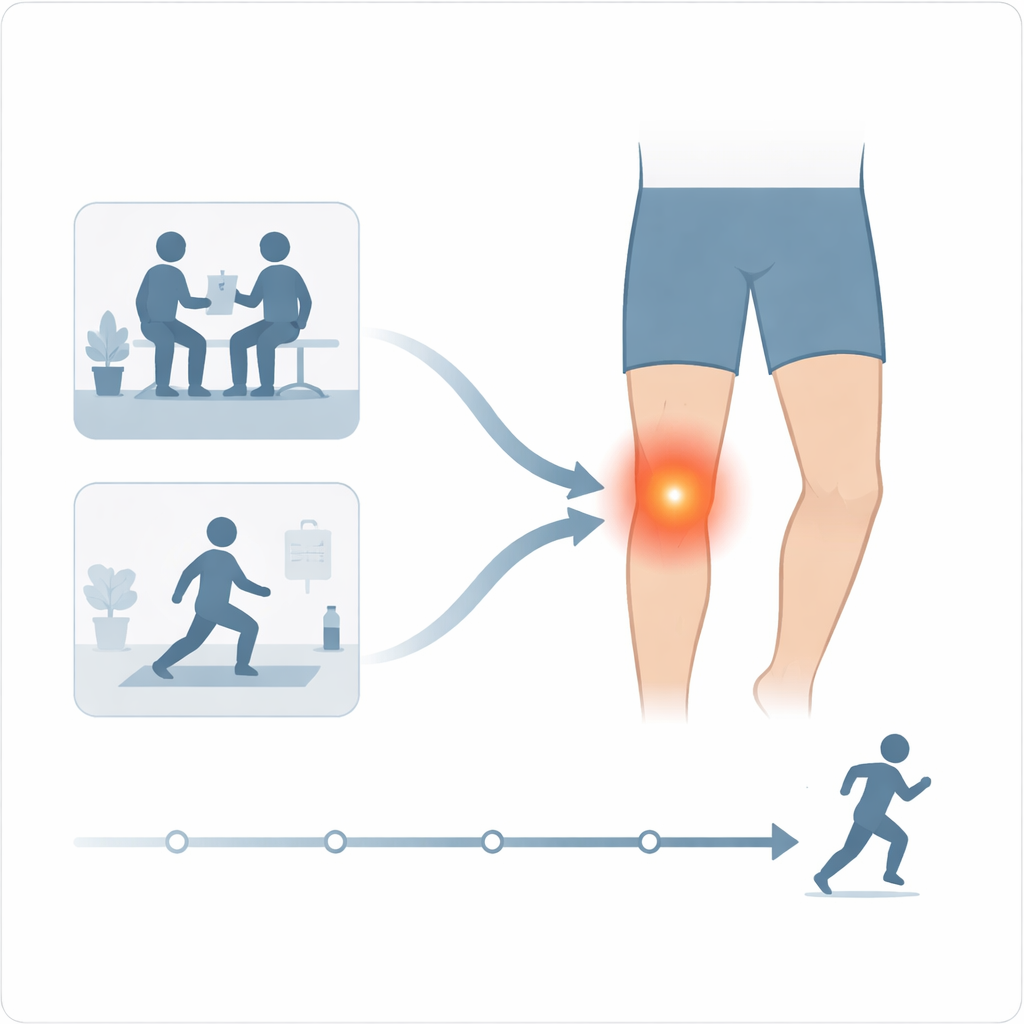
Two different ways to get ready
The researchers followed 114 people aged 16 to 60 who had a complete ACL tear in one knee and were scheduled for reconstruction using their own hamstring or thigh tendon. Everyone would later receive the same post-surgery rehabilitation program. But before surgery, they were randomly assigned to one of two paths. One group trained in a rehabilitation center with a therapist who tailored exercises to each person, adjusted difficulty based on clear criteria like pain and joint motion, and supervised two sessions per week plus a small home program. The other group received a brochure with six standard home exercises—such as squats and single-leg balance—and were told to practice them on their own three times per week.
What the team measured over time
To see how well people were doing, the team repeatedly asked them about their knee in everyday life using a questionnaire called the Knee Injury and Osteoarthritis Outcome Score (KOOS). This captures pain, symptoms, daily activities, sports function, and knee-related quality of life as a single overall score. They also measured how far the knee could bend and straighten, how strong the leg muscles were, how well people could balance and hop, and how mentally ready they felt to return to sport. These checks happened at the first hospital visit, just before surgery, on the day of surgery, and then about one, two, three, and six months after the operation.
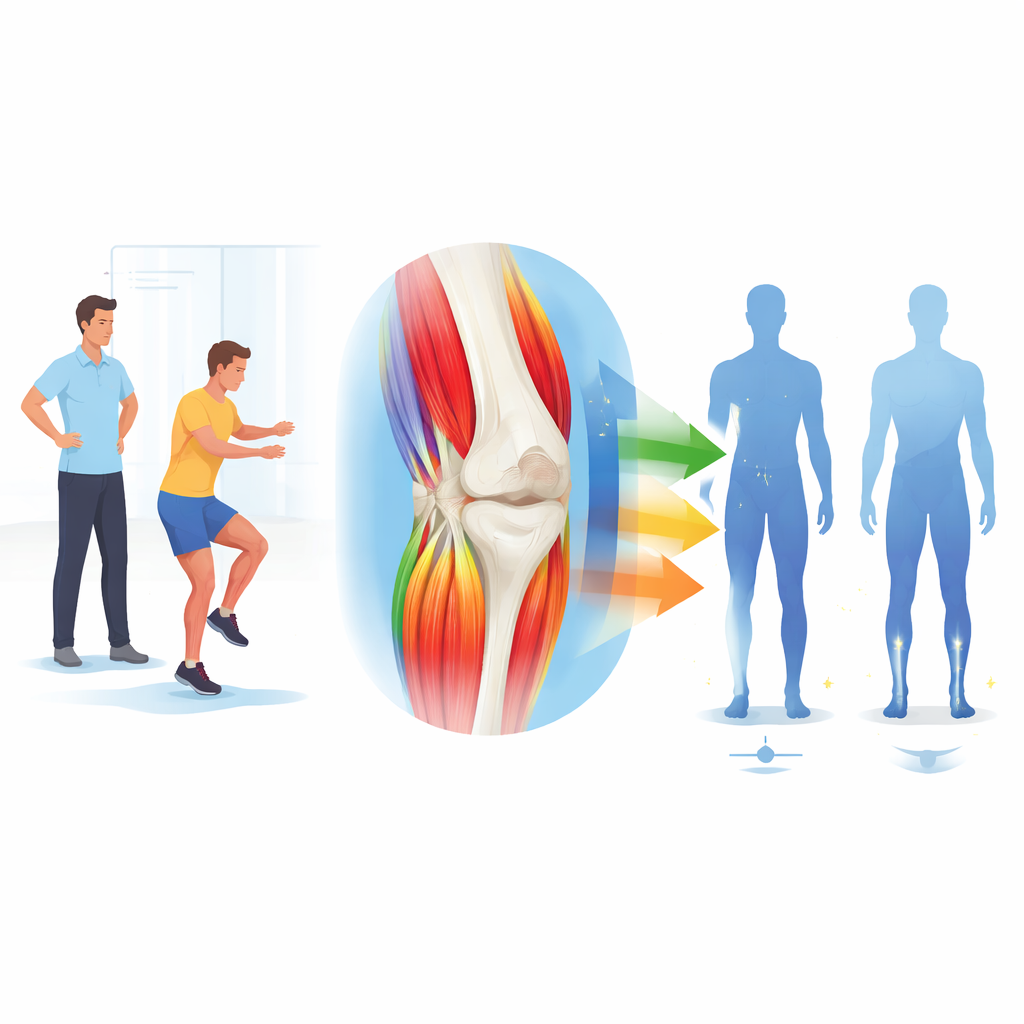
Guided training versus going it alone
Both groups improved in how they felt about their knee before surgery and during the six months after. At the start, the guided-training group actually reported worse knee function than the home-exercise group, leaving more room for improvement. Despite this disadvantage, the guided group showed a stronger gain in their overall KOOS score from the first visit to just before surgery, and they tended to make larger strides during later follow-ups as well. Some specific aspects—such as the ability to be active and overall knee-related quality of life—favored the guided group at certain time points. In contrast, a few strength and balance measures showed small advantages for the home-training group at isolated moments, underlining that the picture is complex.
What may explain the differences
Simply handing people a brochure leaves them to manage motivation, exercise quality, and progression by themselves. In this study, some home-training participants barely trained, while others exercised intensely, leading to very uneven practice. Guided training, by contrast, provided regular contact with a therapist who could correct technique, encourage full knee motion, adjust the workload, and support people emotionally. This closer relationship likely helped participants push safely through discomfort, avoid bad habits, and train more consistently. However, it is hard to separate the benefits of better exercises from the benefits of more time and attention from health professionals, and many participants in both groups dropped out over the long follow-up.
What this means for people with ACL tears
For someone facing ACL reconstruction, this trial suggests that using the waiting period to follow a structured, supervised exercise program may leave the knee feeling somewhat better than relying purely on self-guided home exercises, even though the differences were modest and not always statistically strong. Both approaches were clearly better than doing nothing: everyone who trained, whether with a therapist or at home, gained function over time. The choice between guided sessions and home practice should therefore depend on personal factors such as motivation, access to a rehab center, work and family demands, and preference for hands-on support. The authors argue that pre-surgery training holds real potential, but larger, longer studies are needed to clarify how much guidance, how much exercise, and which mix of physical and psychological support best protects the knee and reduces the risk of re-injury.
Citation: Abel, R., Niederer, D., Glowa, A. et al. Effectiveness of exercise prehabilitation before anterior cruciate ligament reconstruction on functional outcomes – a single-blinded randomized controlled trial. Sci Rep 16, 8962 (2026). https://doi.org/10.1038/s41598-026-41576-2
Keywords: ACL prehabilitation, knee surgery rehab, sports injury recovery, guided physiotherapy, return to sport