Many adults live with attention-deficit/hyperactivity disorder (ADHD), a condition that can make it hard to focus, stay organized, and control impulses. Medications and therapy are the usual tools, but growing evidence suggests that the body’s basic chemistry—including vitamin levels—may also shape how strongly symptoms are felt. This study asked a simple but important question: are common vitamins in the blood linked to how severe ADHD symptoms are in adults?
Looking at Nutrients and Adult Attention
To explore this question, researchers in Türkiye compared 35 adults diagnosed with ADHD to 36 adults without the condition. The two groups were similar in age, sex, education, and work and marital status, so differences in biology would be easier to spot. None of the participants had anemia, serious medical illnesses, obesity, or current psychiatric medications, and anyone using vitamin or iron supplements was left out. On the same day, each person filled out standard questionnaires about their current and childhood ADHD symptoms and gave a fasting blood sample for laboratory analysis.
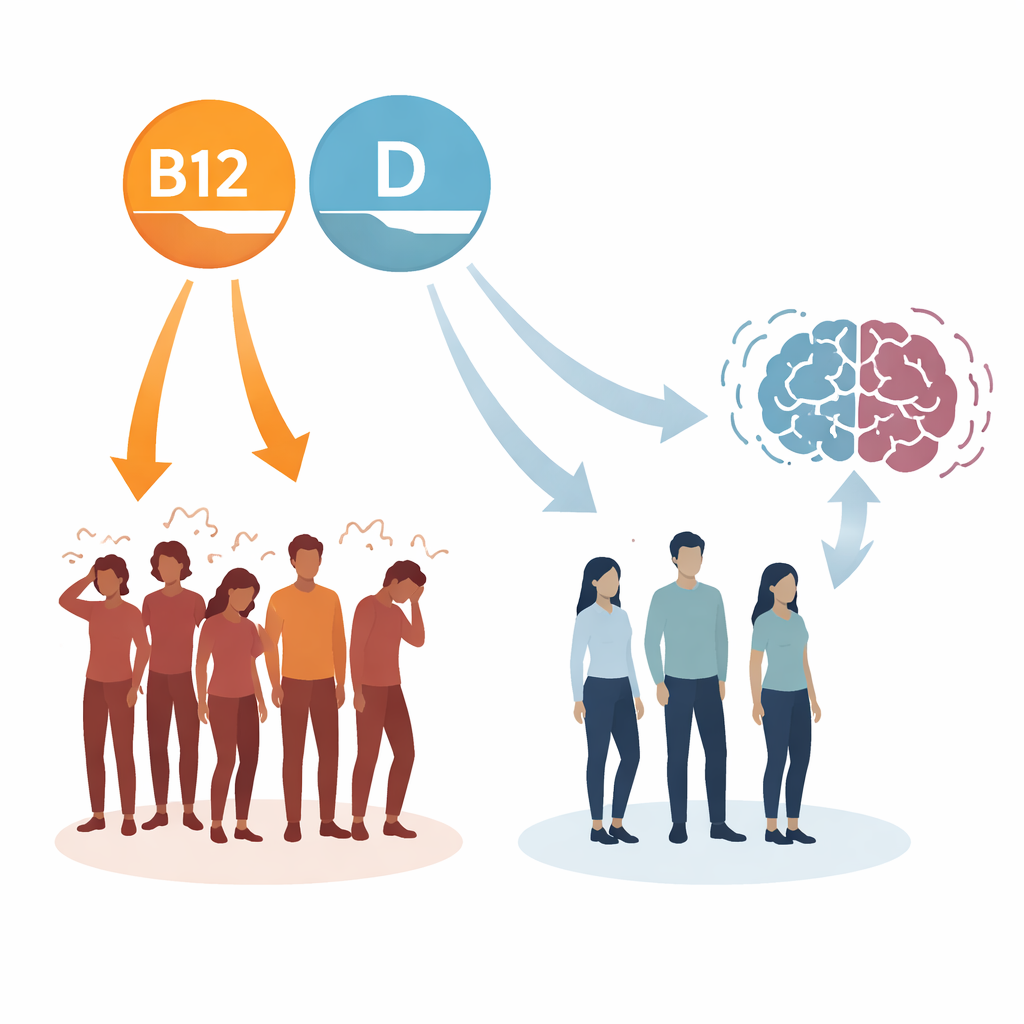
What the Blood Tests Revealed Figure 1.
The team measured four common blood markers: vitamin B12, vitamin D (in the form called 25-hydroxyvitamin D), iron, and ferritin (a protein that reflects iron stores). Adults with ADHD had clearly lower levels of vitamin B12 and vitamin D than those without ADHD. In contrast, the two groups looked nearly identical in their iron and ferritin levels. This suggests that, at least in non-anemic adults, vitamins B12 and D may be more closely tied to ADHD than iron-related measures that have been linked to the condition in children.
Linking Vitamin Levels to Symptom Severity
Beyond simple group differences, the researchers asked whether vitamin levels tracked with how strongly people experienced ADHD symptoms. They found a consistent pattern: lower vitamin B12 and vitamin D levels went hand in hand with more severe problems with attention, hyperactivity, impulsivity, and related emotional and behavioral issues. These links were seen both for current symptoms and for memories of childhood difficulties. In statistical terms, the relationships were moderate to strong and remained even after adjusting for the many different comparisons the team tested. By contrast, iron and ferritin showed no meaningful connection to how intense the symptoms were.
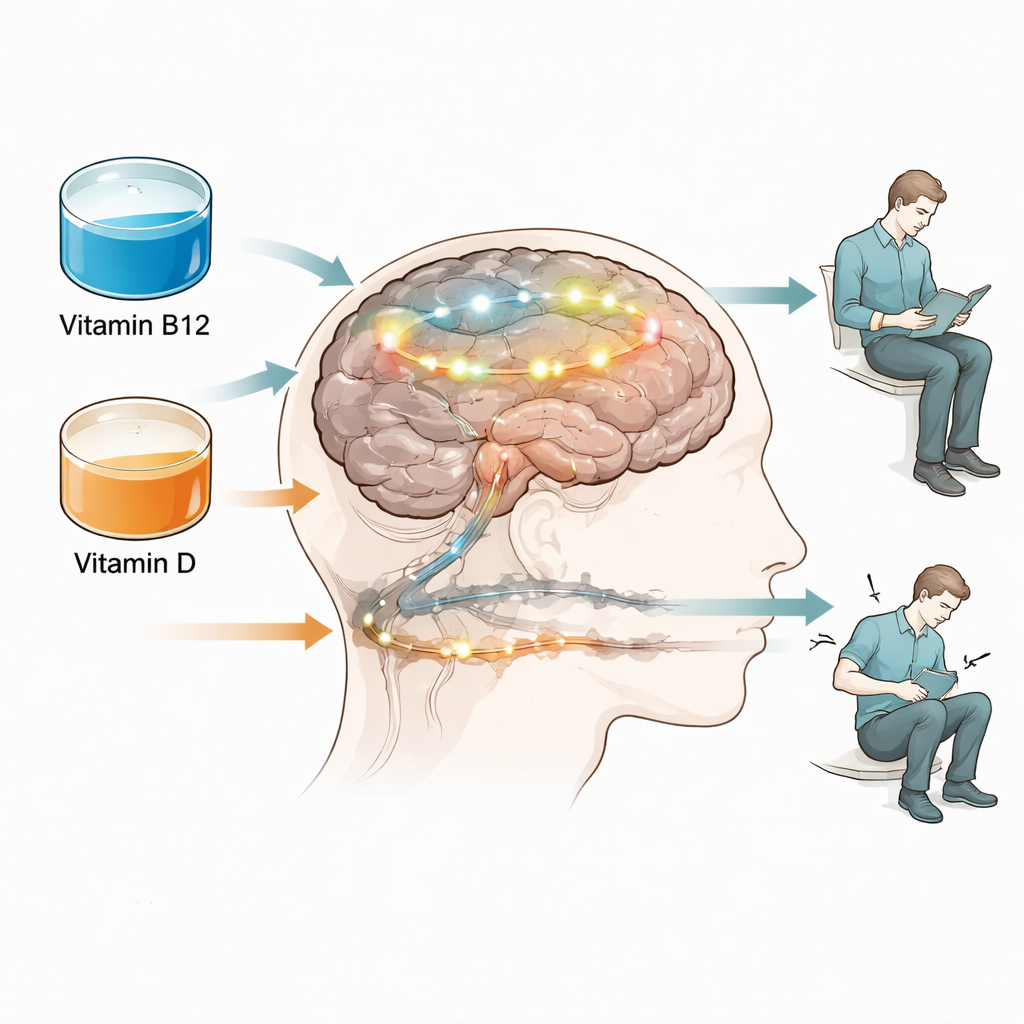
How This Fits with the Bigger Picture Figure 2.
These findings add an important adult perspective to a body of work that has largely focused on children. Earlier studies in young people have tied low vitamin D, low B12, and altered iron status to ADHD, and some have reported small improvements in symptoms with vitamin D supplements. The new study suggests that vitamins B12 and D may continue to matter in adulthood, perhaps by influencing brain chemicals involved in attention and self-control. At the same time, the results did not support a major role for iron stores in adults without anemia, hinting that iron may be more relevant only when there is an obvious deficiency or other medical problems.
What This Means—and What It Does Not
For readers living with ADHD or supporting someone who is, this research offers a hopeful but cautious message. The study suggests that adults with ADHD are more likely to have lower levels of vitamin B12 and vitamin D, and that these lower levels are linked to more severe symptoms. However, the research is cross-sectional—it captures a single moment in time—so it cannot show whether the low vitamins help cause ADHD problems or whether the challenges of ADHD lead to poorer diet, less time outdoors, or other habits that reduce vitamin levels. With a modest sample size and some unmeasured lifestyle factors, the authors emphasize that vitamin testing should be seen as one piece of a broader medical picture, not a replacement for established treatments. Larger, long-term and treatment studies will be needed to learn whether improving vitamin status can meaningfully ease ADHD symptoms in adults.
Citation: Esra, D., Havva, K. Evaluation of the relationship between vitamin levels and symptom severity in adults with attention-deficit/hyperactivity disorder.
Sci Rep16, 9329 (2026). https://doi.org/10.1038/s41598-026-41493-4