Clear Sky Science · en
A demethylation-driven gene signature predicts prognosis and therapeutic vulnerability in hepatocellular carcinoma
Why Liver Cancer Risk Is So Hard to Predict
People diagnosed with liver cancer often face a troubling uncertainty: two patients with tumors of similar size and stage can have very different outcomes, and it is difficult for doctors to know in advance who will benefit from which treatment. This study tackles that problem for hepatocellular carcinoma, the most common form of liver cancer, by searching deep within tumor DNA and gene activity for a small set of molecular clues that can forecast prognosis and reveal which drugs might work best for each patient.
Hidden Marks on DNA and Their Role in Cancer
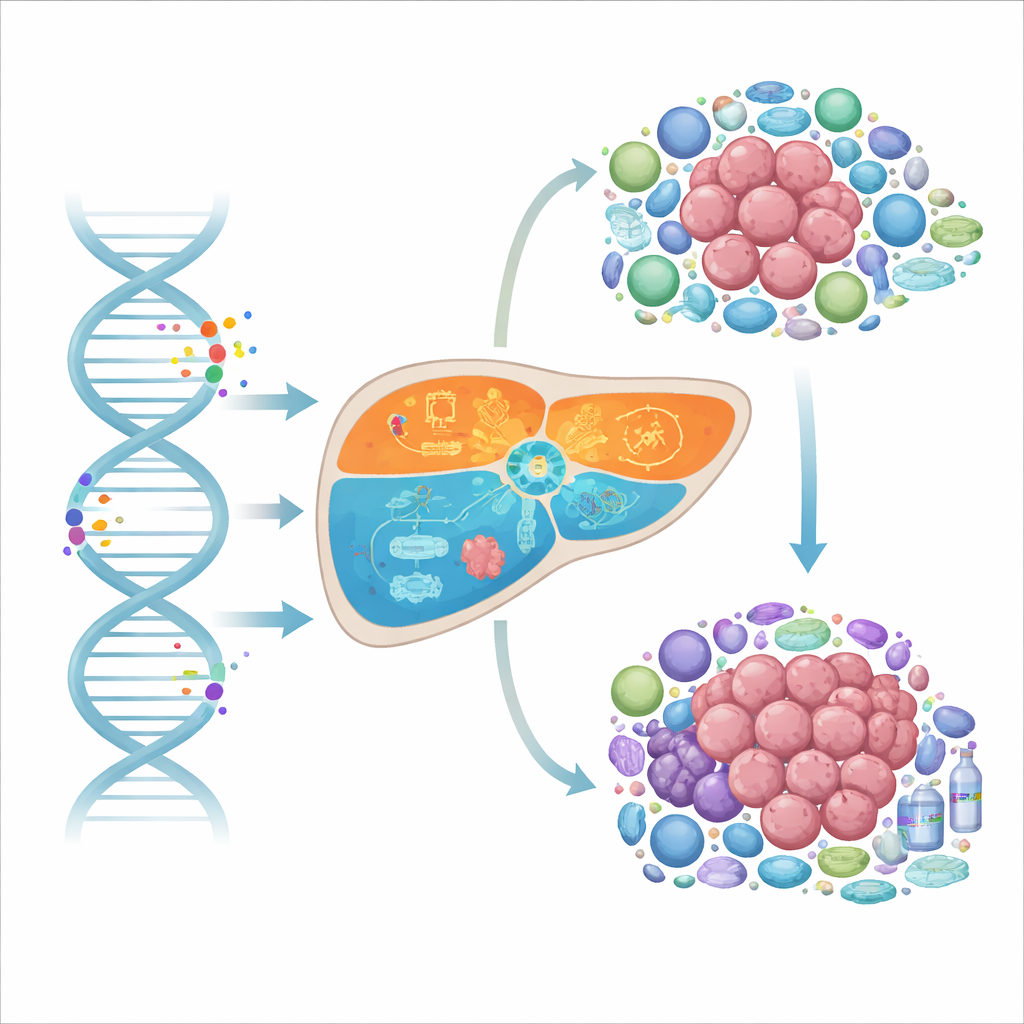
Our genetic code is not just a string of letters; it is also decorated with chemical marks that help turn genes on or off. Adding or removing these marks, a process known broadly as DNA methylation and demethylation, can silence protective genes or activate harmful ones without changing the underlying DNA sequence. In liver cancer, such epigenetic switches have been suspected of helping tumor cells grow, rewire their metabolism, and escape immune attack. Yet, until now, researchers had not systematically examined which demethylation-related genes are altered in liver tumors, how they shape disease behavior, and whether they can help forecast a patient’s future.
Building a Six-Gene Risk Fingerprint
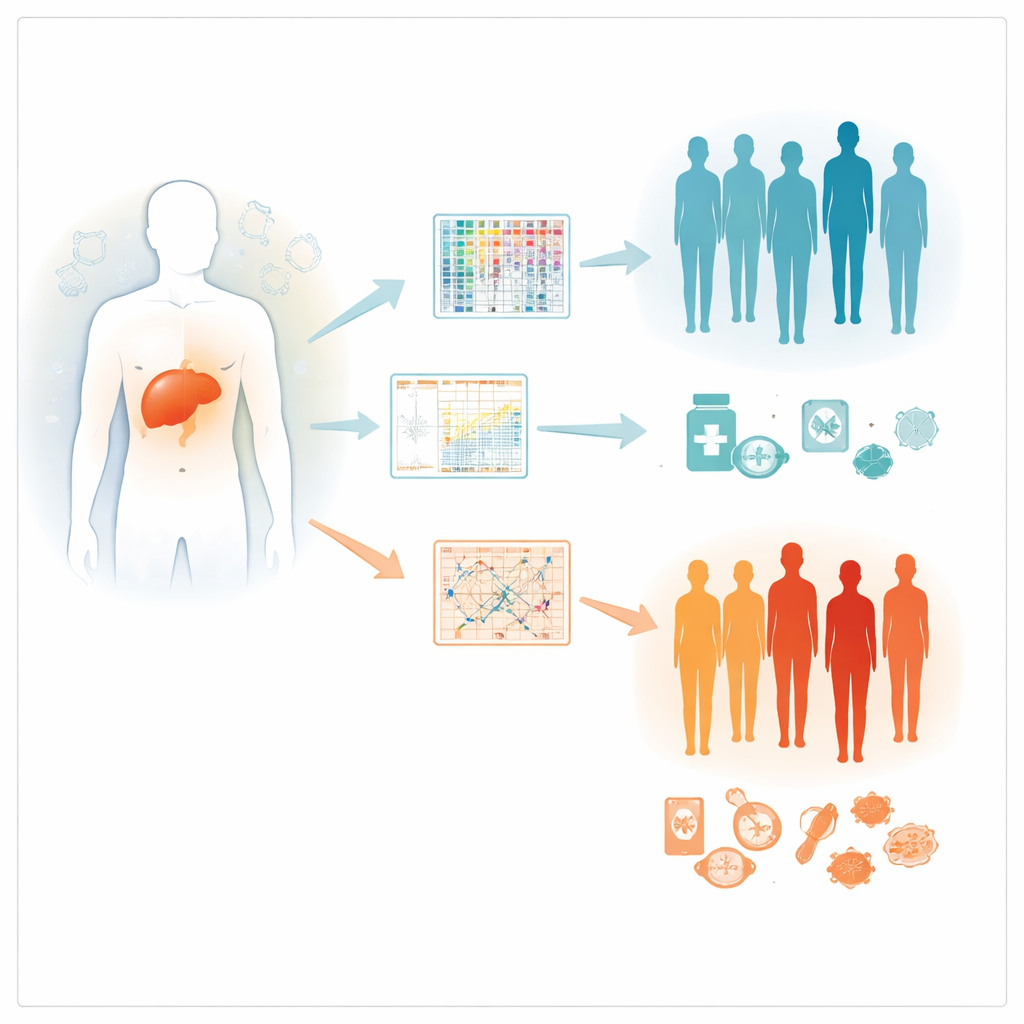
The researchers combined large public datasets containing gene activity profiles from more than 500 liver tumors with a catalog of thousands of genes involved in DNA demethylation. Using statistical and network tools, they filtered down to 232 genes whose activity differed sharply between tumor and healthy liver tissue. They then asked which of these genes best tracked with how long patients survived. Through stepwise modeling, they distilled this large list into a focused signature of just six genes. By mathematically weighting how active each of these genes was in a given tumor, they created a risk score that divides patients into high- and low-risk groups. Across multiple patient cohorts, those in the high-risk group were far more likely to die sooner, and the score predicted one-, three-, and five-year survival with accuracy that matched or exceeded several existing models.
What High-Risk Tumors Are Doing Differently
Looking under the hood of this six-gene fingerprint, the team found that high-risk tumors are not simply growing faster; they are biologically distinct. Gene activity patterns in these cancers pointed to overactive cell division, heightened DNA repair systems, and sweeping changes in how cells process nutrients and energy. One of the key genes, G6PD, which fuels a major metabolic pathway, was found to be strongly increased at both the RNA and protein levels in tumor samples compared with normal liver tissue. At the same time, the immune environment around high-risk tumors appeared skewed toward suppression, with more regulatory T cells and myeloid-derived suppressor cells—cell types known to blunt anti-tumor immune responses. This suggests that the epigenetic changes captured by the signature are tightly linked to how tumors grow and how they interact with the body’s defenses.
Linking Gene Patterns to Mutations and Medicines
The study also explored how this risk score sits within the broader genetic landscape of liver cancer and what it might mean for treatment. Tumors from high- and low-risk patients carried different patterns of DNA mutations, including distinct frequencies of changes in the well-known cancer gene TP53. When the risk score was combined with a measure of overall mutation load, patients with low mutation burden and low risk had the best survival, whereas those with both high mutation burden and high risk fared the worst. Finally, by matching tumor gene activity to a large database of drug responses in cancer cell lines, the researchers predicted that high-risk patients would be more sensitive to several targeted and experimental agents, such as kinase and cell-cycle inhibitors, while low-risk patients might benefit from a different set of compounds. These predictions offer a first roadmap for tailoring therapy based on the six-gene signature.
What This Means for Patients and Doctors
For people facing hepatocellular carcinoma, this work offers more than a new lab test; it proposes a way to connect the molecular wiring of a tumor to both prognosis and treatment choice. A risk score based on just six demethylation-related genes can separate patients into groups with clearly different outlooks, reveal how their tumors reshape metabolism and immune defenses, and point toward drugs that may be especially effective. While the model still needs to be tested prospectively in diverse clinical settings, it highlights how reading the chemical marks and gene activity patterns in cancer cells can bring more precision to liver cancer care and, ultimately, help match the right therapy to the right patient at the right time.
Citation: Wang, Z., Shi, L., Li, Y. et al. A demethylation-driven gene signature predicts prognosis and therapeutic vulnerability in hepatocellular carcinoma. Sci Rep 16, 11170 (2026). https://doi.org/10.1038/s41598-026-41443-0
Keywords: hepatocellular carcinoma, epigenetics, DNA demethylation, prognostic gene signature, tumor immune microenvironment