Clear Sky Science · en
Wear performance of different bulk-fill class II resin composite restorations: 3-year clinical evaluation
Stronger Fillings for Everyday Biting
Anyone with a back-tooth filling has probably wondered how long it will last under years of chewing. This study followed modern “bulk-fill” tooth-colored fillings in real patients for three years, asking a simple question with big everyday consequences: do these faster, easier fillings stand up to wear and tear as well as they promise?
Why Faster Fillings Matter
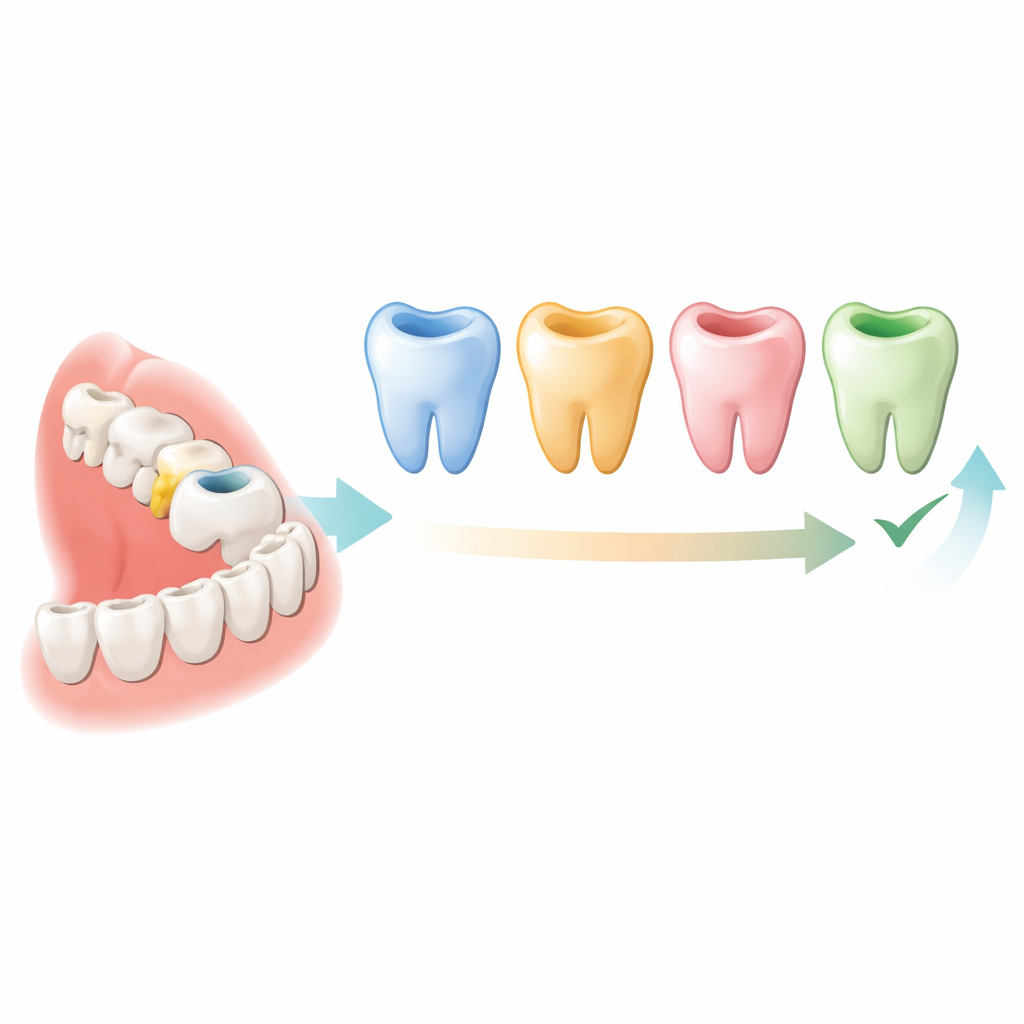
Traditional white fillings in back teeth are placed in thin layers, each one carefully packed and light-cured. Bulk-fill materials were created to simplify this process: dentists can place thicker layers in one step, saving time and reducing the chance of mistakes. Different brands offer thicker, putty-like versions, warmed versions that flow more easily, syringe-delivered runny versions, and a special type activated by sound waves from a handpiece. While all are designed to be strong, there has been concern that speeding up the procedure might come at the cost of durability, especially where chewing forces are highest.
How the Study Was Done
In this randomized clinical trial, 50 adults received 80 fillings in decayed molars that touched neighboring teeth (so‑called Class II cavities). Each cavity was restored with one of four bulk-fill materials: a regular thick paste, the same paste warmed before placement, a more fluid injectable version, or a sound-activated version that becomes runnier during placement and firms up afterward. All were placed by the same dentist under rubber-dam isolation and finished and polished in the same way. Patients returned after one, two, and three years so that the restorations could be checked in the mouth and their wear measured precisely.
Looking at Wear Up Close
To judge performance in a way similar to everyday clinical practice, two independent examiners rated each filling using international criteria that focus on shape, smoothness, and how closely the filling’s wear matches natural enamel. To go beyond this visual check, the researchers also created high-precision stone models from impressions taken shortly after placement and at each yearly visit. These models were scanned in 3D, and specialized software overlaid the scans to calculate how much volume was lost from both the fillings and the surrounding enamel, allowing a direct comparison of material wear with the patient’s own tooth wear.
What Held Up Best Under Chewing
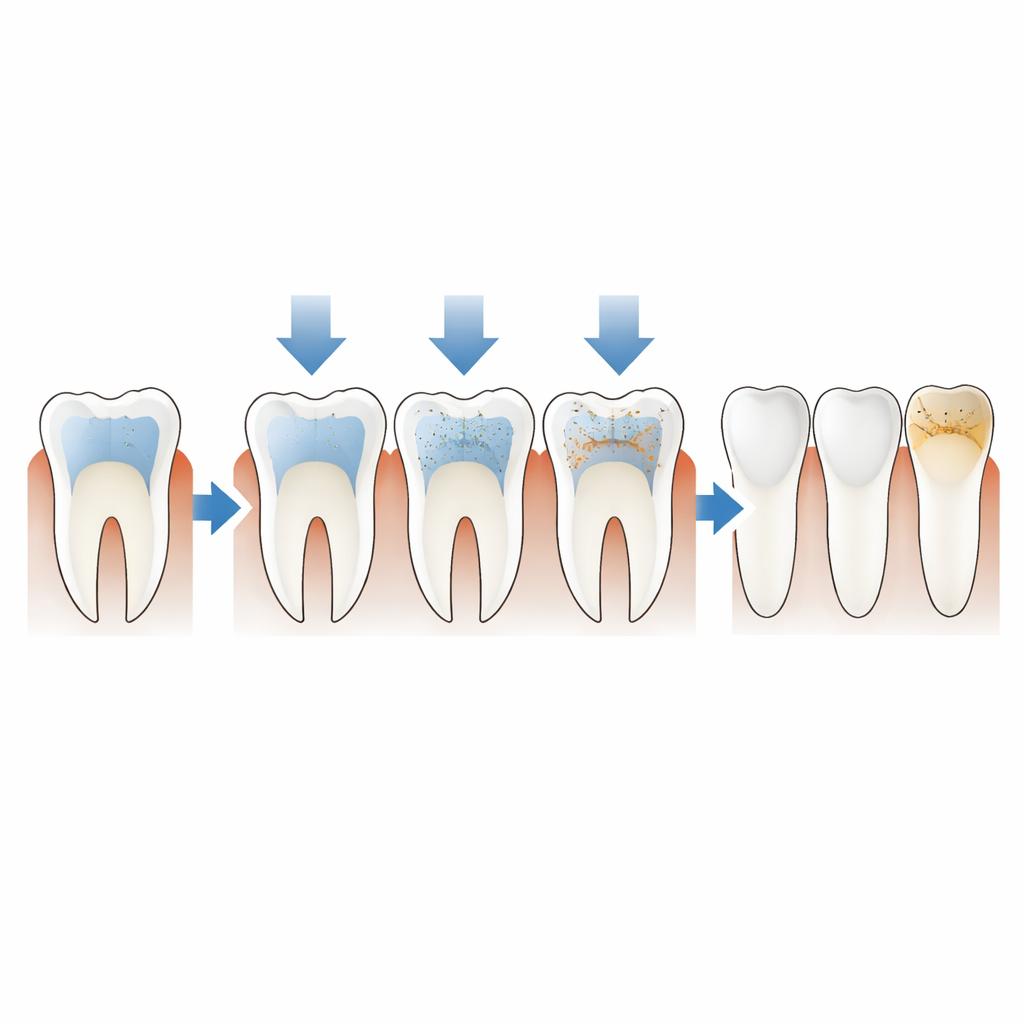
After three years, 78 of the 80 fillings could be re‑examined—a recall rate of nearly 98 percent—and none had failed or needed replacement. Qualitatively, all four materials remained clinically acceptable: their shapes and contact points with opposing teeth were rated as excellent or good, with wear similar to normal tooth surfaces. Quantitative measurements told a more nuanced story. The regular, preheated, and sonic bulk-fill materials all lost very small volumes over time, closely matching enamel wear. By contrast, the injectable material showed noticeably greater volume loss in the first two years and continued to wear more than enamel at three years, even though it still looked satisfactory in the mouth.
What This Means for Patients and Dentists
For people needing back-tooth fillings, this study offers reassuring news. Modern bulk-fill composites—whether used as a thick paste, preheated for better flow, or delivered with sonic activation—provided durable, tooth-colored restorations over three years, with wear behavior very similar to natural enamel. The injectable version was easier to adapt but wore down faster, suggesting it may be less ideal for areas that bear heavy chewing forces. Overall, the findings suggest that when dentists follow good adhesive and placement techniques, bulk-fill materials can safely simplify treatment without shortening the life of most posterior fillings.
Citation: Goda, B., Eltoukhy, R.I., Ali, A.I. et al. Wear performance of different bulk-fill class II resin composite restorations: 3-year clinical evaluation. Sci Rep 16, 10362 (2026). https://doi.org/10.1038/s41598-026-41420-7
Keywords: bulk-fill dental composites, tooth-colored fillings, clinical wear resistance, posterior restorations, resin composite materials