Clear Sky Science · en
Association between modified cardiometabolic index and cardiometabolic multimorbidity in middle-aged and older adults: evidence from two nationwide cohort studies
Why this matters for everyday health
Many people reach midlife only to find that high blood pressure, high blood sugar, and heart problems start arriving together. This clustering of conditions, called cardiometabolic multimorbidity, greatly raises the chances of disability, hospital stays, and early death. The study behind this article asks a practical question: can a single number, calculated from routine blood tests and waist measurements, flag people who are heading toward several of these conditions at once—early enough for doctors and patients to act?
A simple score built from common checkups
The researchers focused on a new score called the Modified Cardiometabolic Index, or MCMI. It combines four familiar pieces of information: triglycerides (a type of blood fat), “good” HDL cholesterol, fasting blood sugar, and waist size adjusted for height. All of these can be measured during a standard clinic visit. MCMI builds on an earlier score, the Cardiometabolic Index (CMI), by adding fasting blood sugar and a mathematical adjustment meant to better capture the body’s underlying resistance to insulin—a root problem that links obesity, diabetes, and heart disease.
Tracking health over time in China and England
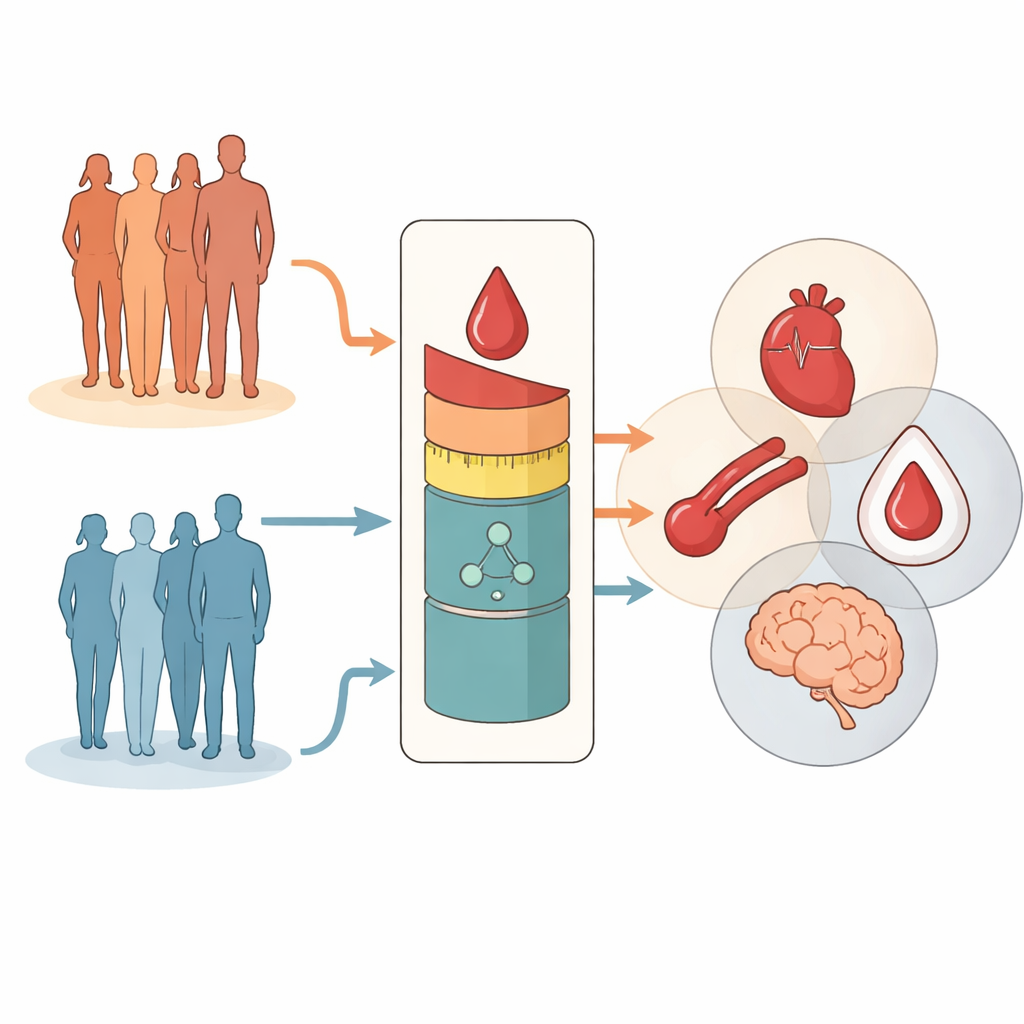
To test how well MCMI signals future trouble, the team did not rely on a single group in one country. Instead, they drew on two long-running national studies that regularly survey and examine older adults: more than 7,200 participants from the China Health and Retirement Longitudinal Study and over 2,200 from the English Longitudinal Study of Ageing. All volunteers were free of multiple major cardiometabolic diseases at the start. Researchers then followed them for about seven years, recording new doctor-diagnosed cases of high blood pressure, diabetes, heart disease, and stroke. When a person developed at least two of these conditions, they were counted as having cardiometabolic multimorbidity.
Higher index, higher chance of multiple diseases
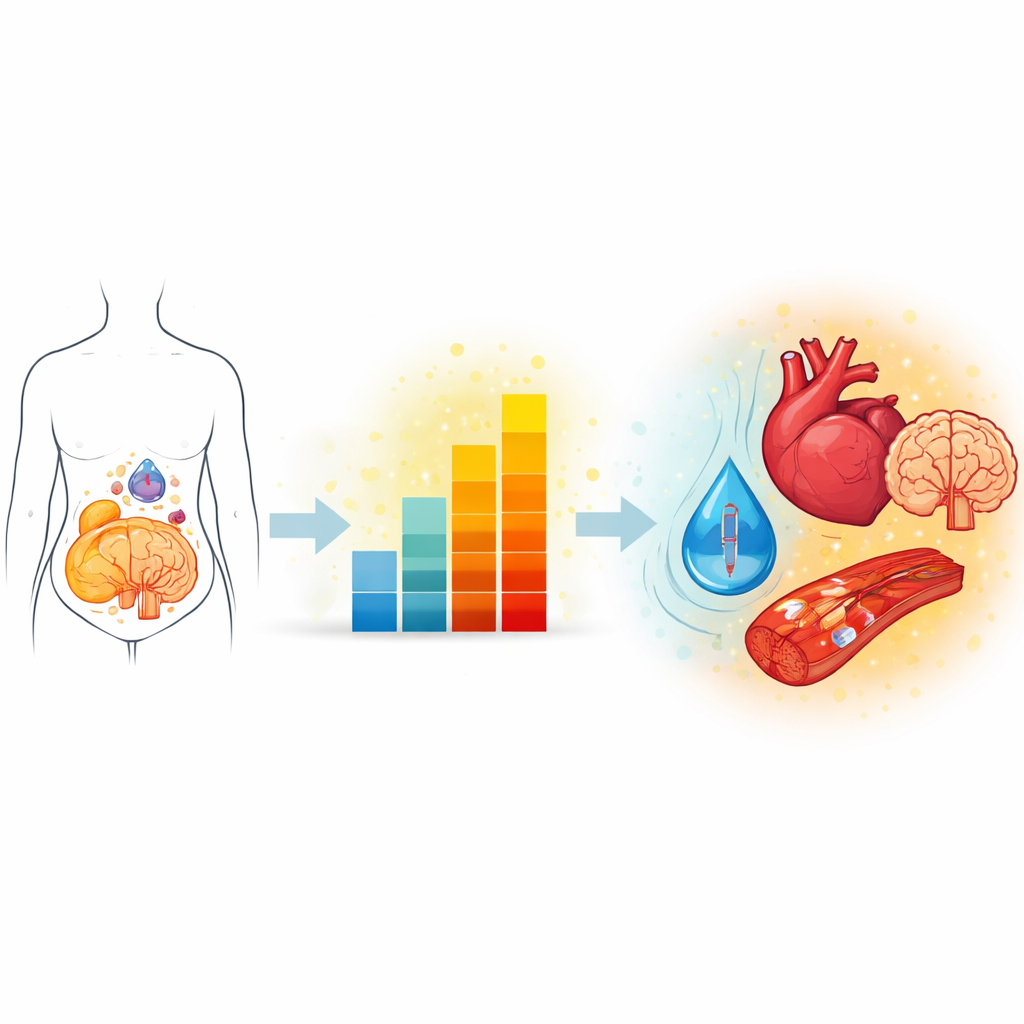
The results were clear: people with higher MCMI scores at baseline were more likely to go on to develop clusters of heart and metabolic problems. This pattern appeared in both China and England. When the scientists divided participants into four groups from lowest to highest MCMI, risk rose steadily from one group to the next. Those in the top quarter of scores had roughly three to four times the risk of multimorbidity in China and about three times the risk in England, compared with those in the lowest quarter, even after accounting for age, sex, income, mood symptoms, and other health factors. In the Chinese group, the relationship between MCMI and risk curved upward sharply beyond a certain level, while in the English group it increased more smoothly and steadily.
Who seemed most vulnerable
When the researchers looked more closely at different segments of the population, the link between a high MCMI and future multimorbidity held up in almost every subgroup. In China, it was especially strong among older adults, men, people with more years of schooling, and those who smoked or drank alcohol—groups that may face particular lifestyle and environmental pressures. In England, the association was broadly similar across most subgroups, though the signal was clearest among people with at least a high school education, likely because larger numbers in this category made the estimates more precise.
How well the new score performs
The study also compared how well MCMI and the earlier CMI could tell apart people who would later develop multimorbidity from those who would not. Using statistical tools that track prediction accuracy over time, MCMI consistently edged out CMI in the Chinese cohort, suggesting that adding fasting blood sugar and the updated formula offers a real, if modest, improvement. In the English cohort, MCMI and CMI performed similarly, so the advantage of the new index there was less certain. Still, in both countries, higher MCMI clearly marked higher risk.
What this means for patients and doctors
For non-specialists, the take-home message is that a single, easy-to-calculate index based on everyday tests can help flag people at risk of developing several serious cardiometabolic conditions at once. MCMI is not a diagnosis and cannot replace medical judgment, but it captures the combined impact of abdominal fat, blood fats, and blood sugar in a way that appears useful for predicting future health problems, especially in Chinese middle-aged and older adults. If further studies in diverse populations confirm these findings, MCMI could become a practical tool to identify high-risk individuals early, prompting tailored advice on weight management, diet, physical activity, and other lifestyle changes before multiple diseases take hold.
Citation: Chen, S., Lv, T. & Zhou, J. Association between modified cardiometabolic index and cardiometabolic multimorbidity in middle-aged and older adults: evidence from two nationwide cohort studies. Sci Rep 16, 10274 (2026). https://doi.org/10.1038/s41598-026-41398-2
Keywords: cardiometabolic multimorbidity, insulin resistance, risk prediction, waist and blood tests, older adult health