Clear Sky Science · en
Serum programmed death ligand 2 is elevated in cats with mammary carcinoma
Why cat breast cancer matters to us
Cats share our homes, our habits, and, surprisingly, many of our diseases. One of the closest feline counterparts to human breast cancer is mammary carcinoma in female cats. This study explores a blood-borne molecule called PD-L2 that helps tumors hide from the immune system. By asking whether PD-L2 is unusually high in cats with mammary cancer, the researchers hope to create a simple blood test that could flag aggressive tumors early and guide future immune-based treatments in both veterinary and human medicine.
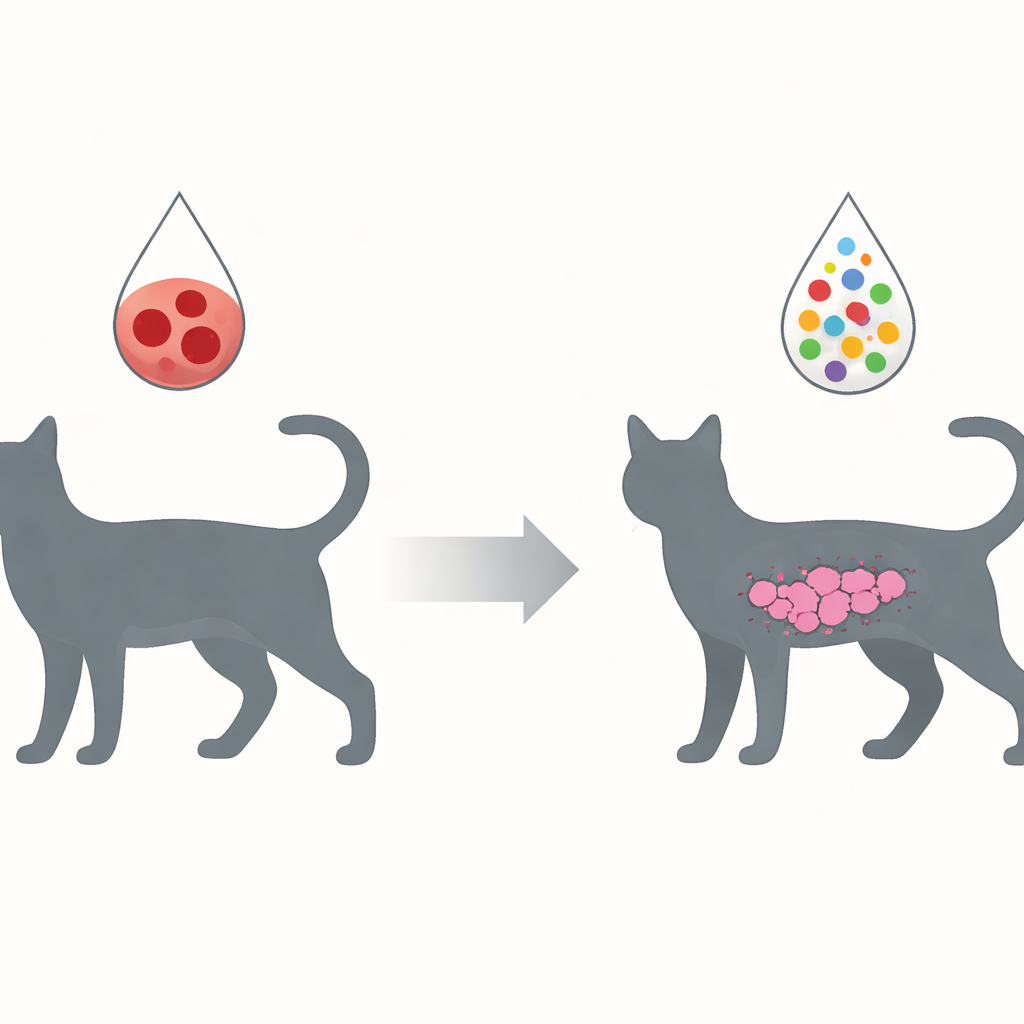
A blood signal of hidden tumors
The team focused on a family of immune “brakes” that normally prevent the body from attacking its own tissues. Tumors can hijack these brakes to switch off cancer-fighting cells. PD-L2 is one of the key switches in this system and exists not only on cell surfaces but also in a soluble form that circulates in the bloodstream. The researchers collected blood from 52 female cats with mammary carcinoma and 28 healthy cats. Using a laboratory assay that can detect tiny amounts of protein, they measured how much soluble PD-L2 was present in each sample and compared the two groups.
Clear differences between healthy and sick cats
The contrast was striking. Cats with mammary carcinoma had much higher levels of PD-L2 in their blood than healthy cats. When the team plotted how well PD-L2 values separated the two groups, they found an excellent performance: a single cut-off value correctly identified most diseased cats while rarely mislabeling healthy ones. This means that, with further validation, a simple blood draw could potentially help veterinarians decide whether a cat is likely to harbor mammary cancer, adding a minimally invasive tool alongside physical exams and imaging.
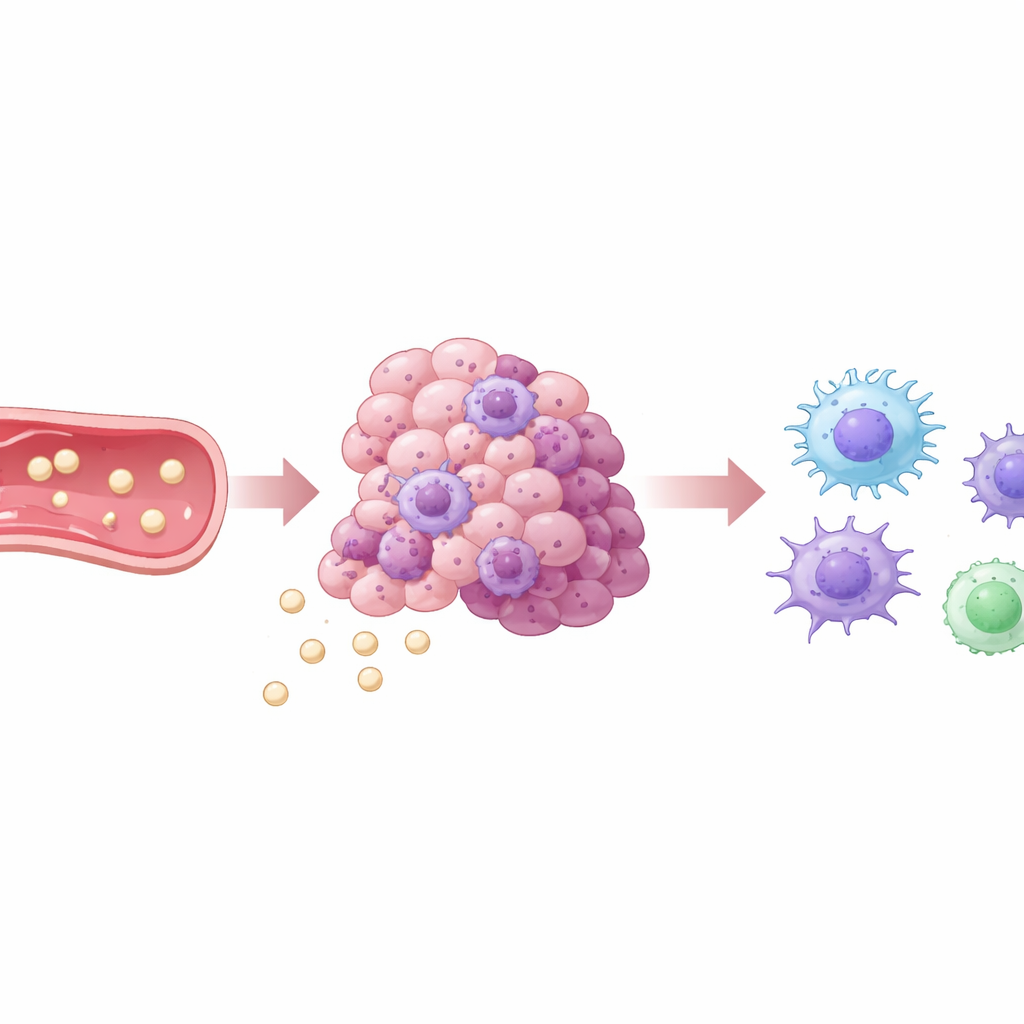
Spotting the most dangerous tumor types
Not all mammary tumors behave the same. As in women, cats develop molecular subtypes known as Luminal A, Luminal B, HER2-positive and Triple-Negative. The latter two are typically faster-growing and harder to treat. When the researchers grouped cats by subtype, HER2-positive and Triple-Negative tumors showed the highest PD-L2 levels. A higher cut-off value for PD-L2 could distinguish these aggressive cancers from the more favorable Luminal types with impressive accuracy. In other words, the same blood marker that flags disease may also hint at how threatening that disease is.
Clues about growth and immune escape
The study went further by comparing PD-L2 levels with other biological features. Cats whose tumors lacked progesterone receptors or overproduced the HER2 protein—both warning signs—tended to have more PD-L2 in their blood. Tumors with a high Ki-67 index, a marker of rapid cell division, also showed elevated PD-L2, and a specific threshold could separate fast-growing from slower-growing tumors. PD-L2 levels rose in step with several other immune and blood vessel–related molecules, suggesting a coordinated environment in which the tumor grows vigorously while the immune system is held in check. Cats with above-median PD-L2 had shorter periods without disease recurrence, hinting that this marker may forecast earlier return of cancer even if overall lifespan is affected by many other factors.
What this means for cats and people
To a lay reader, the main message is that a single molecule drifting in a cat’s bloodstream may encapsulate several pieces of bad news at once: the presence of mammary cancer, its aggressiveness, its speed of growth and its ability to dodge immune attack. While the test used here still needs formal validation for feline samples and larger, more balanced studies, the pattern is consistent with observations in women with breast cancer. That makes feline mammary carcinoma a powerful comparative model and positions PD-L2 as both a promising blood biomarker and a potential future target for immune therapies designed to take the brakes off the body’s own defenses.
Citation: João, V.S., Pereira, G., Vicente, G. et al. Serum programmed death ligand 2 is elevated in cats with mammary carcinoma. Sci Rep 16, 8863 (2026). https://doi.org/10.1038/s41598-026-41375-9
Keywords: feline mammary carcinoma, breast cancer, PD-L2, immune checkpoint, veterinary oncology