Clear Sky Science · en
Therapeutic Potential of GYY4137 in Reducing Oxidative Stress and Mortality in Experimental Decompression Sickness
Why Divers and Doctors Care About This Study
When scuba divers surface too quickly, tiny gas bubbles can form in their blood and tissues, causing decompression sickness—often called “the bends.” This dangerous condition can lead to pain, paralysis, or even death, and current treatments are limited. The study summarized here explores whether a laboratory compound that slowly releases hydrogen sulfide, a gas our bodies naturally produce in small amounts, can protect against the damage caused by rapid decompression in an animal model. Understanding this could one day help make diving, submarine escape, and certain medical procedures safer.
The Problem with Sudden Pressure Changes
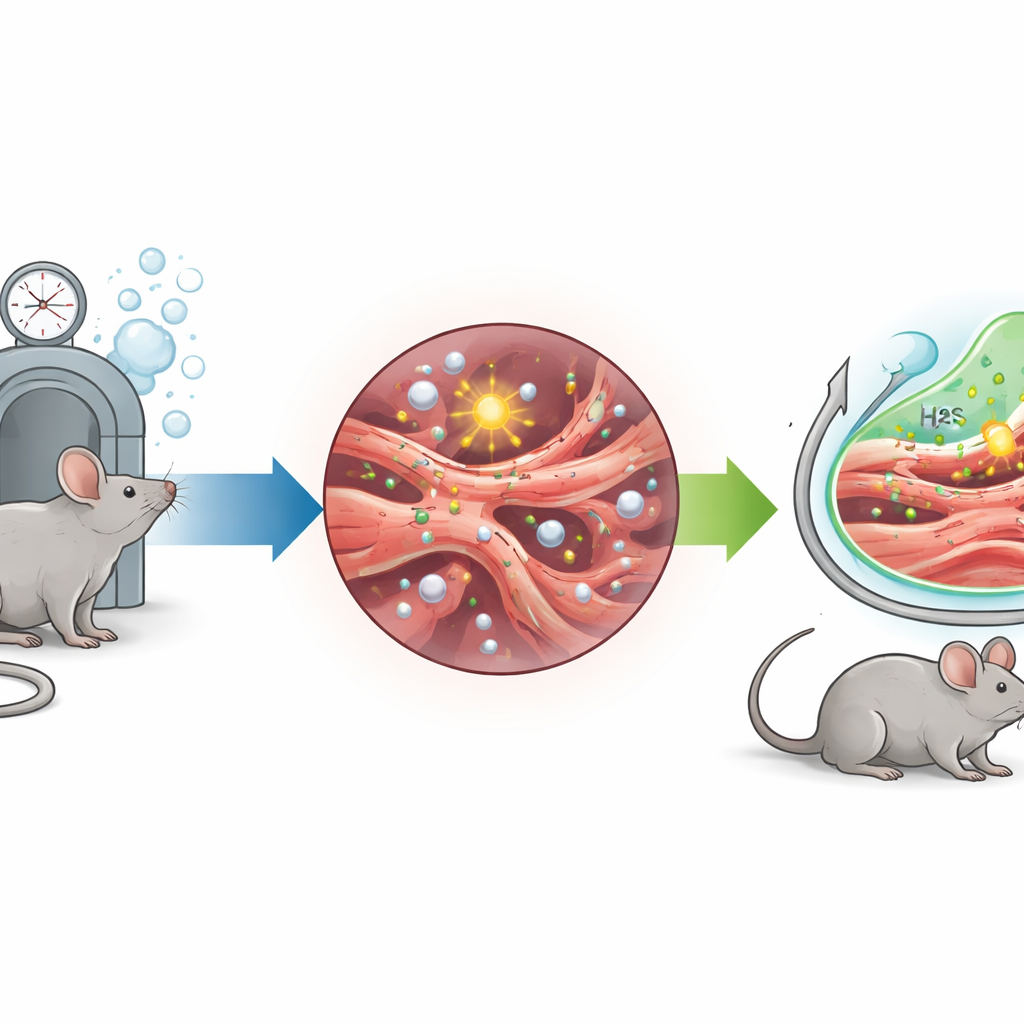
Decompression sickness happens when someone moves too fast from high pressure to normal pressure, such as a diver rising quickly from deep water. Under high pressure, extra gas—mostly nitrogen—dissolves in the body. If the pressure drops too quickly, this gas can come out of solution as bubbles, which may block blood vessels and injure delicate tissues, especially in the nervous system. Beyond the bubbles themselves, the body mounts an inflammatory response and produces harmful reactive oxygen species, unstable molecules that damage cells. This wave of oxidative stress is believed to play a key role in how serious decompression sickness becomes.
A Gas with a Protective Side
Hydrogen sulfide is best known for its rotten-egg smell, but inside the body it acts as a signaling molecule that can relax blood vessels, reduce inflammation, and protect cells from oxygen-related damage. The researchers tested a compound called GYY4137, which steadily releases hydrogen sulfide in the body and has already shown protective effects in heart and lung injury models. They asked three main questions in mice exposed to experimental decompression: how decompression affects measures of oxidative balance; whether GYY4137 changes these measures; and, most importantly, whether the compound improves survival after a severe decompression challenge.
What the Experiments in Mice Revealed
Sixty male mice were injected either with GYY4137 or with a simple salt solution, then placed in a hyperbaric chamber that mimicked very deep dives. After an hour at high pressure, the chamber was decompressed rapidly to trigger decompression sickness. The researchers measured how many mice survived at different simulated depths and also analyzed blood samples for enzyme activities linked to cell breakdown and for overall redox potential, a global indicator of oxidative stress. Mice treated with GYY4137 survived deeper “dives” than untreated mice: the depth at which half of the animals died (the LD50) shifted from under 100 meters to about 120 meters in the treated group, indicating a meaningful but not absolute protective effect.
How the Compound Affects Cellular Balance
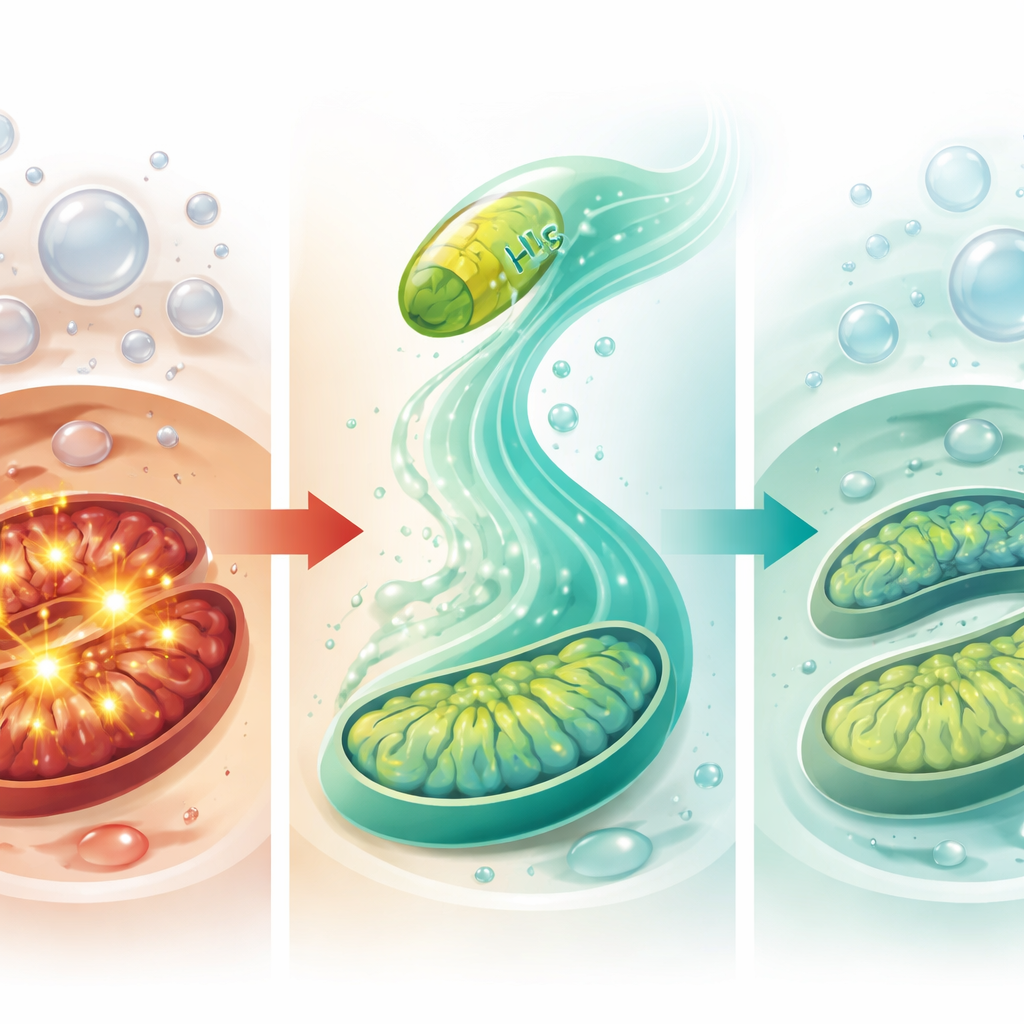
To understand how GYY4137 might be working, the team examined two enzymes involved in breaking down energy-rich molecules during cell death, processes that can generate reactive oxygen species. They found only modest changes in these enzymes after treatment, suggesting that this pathway is not the main target. In contrast, the redox potential—a measure that rises when oxidative stress increases—was clearly lower in GYY4137-treated mice after decompression compared with untreated animals. Experimental decompression itself pushed redox potential higher than in control mice that never experienced pressure changes, confirming that the model triggers oxidative stress. The fact that GYY4137 blunted this rise supports the idea that it dampens the burst of damaging oxygen-based molecules.
What This Could Mean for Future Care
Overall, the study shows that giving mice a hydrogen sulfide–releasing compound before a severe decompression event reduces both oxidative stress and the risk of death, even though the effect is moderate and the exact mechanisms remain to be fully mapped. The work suggests that, alongside oxygen therapy and recompression, carefully chosen hydrogen sulfide donors might one day serve as add-on treatments to limit tissue damage in decompression sickness. Before that can happen, however, scientists will need to test these compounds in more realistic dive profiles, explore different doses and timing, and confirm safety in larger animals and, eventually, humans.
Citation: Daubresse, L., Marlinge, M., Lavner, H. et al. Therapeutic Potential of GYY4137 in Reducing Oxidative Stress and Mortality in Experimental Decompression Sickness. Sci Rep 16, 8874 (2026). https://doi.org/10.1038/s41598-026-41352-2
Keywords: decompression sickness, hydrogen sulfide donor, oxidative stress, hyperbaric diving, experimental mouse model