Clear Sky Science · en
Quantum-augmented graph differential geometry enhances accuracy in protein-protein interaction prediction
Why tiny molecular meetings matter
Inside every cell, life depends on countless microscopic "handshakes" between proteins. These protein-protein interactions help control everything from how we turn food into energy to how cancer develops. But finding which proteins actually meet—and which pairings are most important—is like mapping the social network of a crowded city in the dark. This study presents a new way to switch on the lights by blending ideas from quantum physics and advanced network mathematics to predict these molecular relationships far more accurately than before.
A new map for protein relationships
The authors introduce a framework called the Quantum-based Graph Differential Model (QGDM). In simple terms, they treat all the proteins in a cell as points in a network and each possible interaction as a link between them. Traditional computer models look at this network in a mostly static, either-or way: proteins either interact or they do not. QGDM instead treats interactions as probabilities that can change over time. To do this, it borrows tools from graph theory—mathematics for analyzing networks—and extends them so they can handle richer, more dynamic behavior.
Bringing quantum behavior into biology
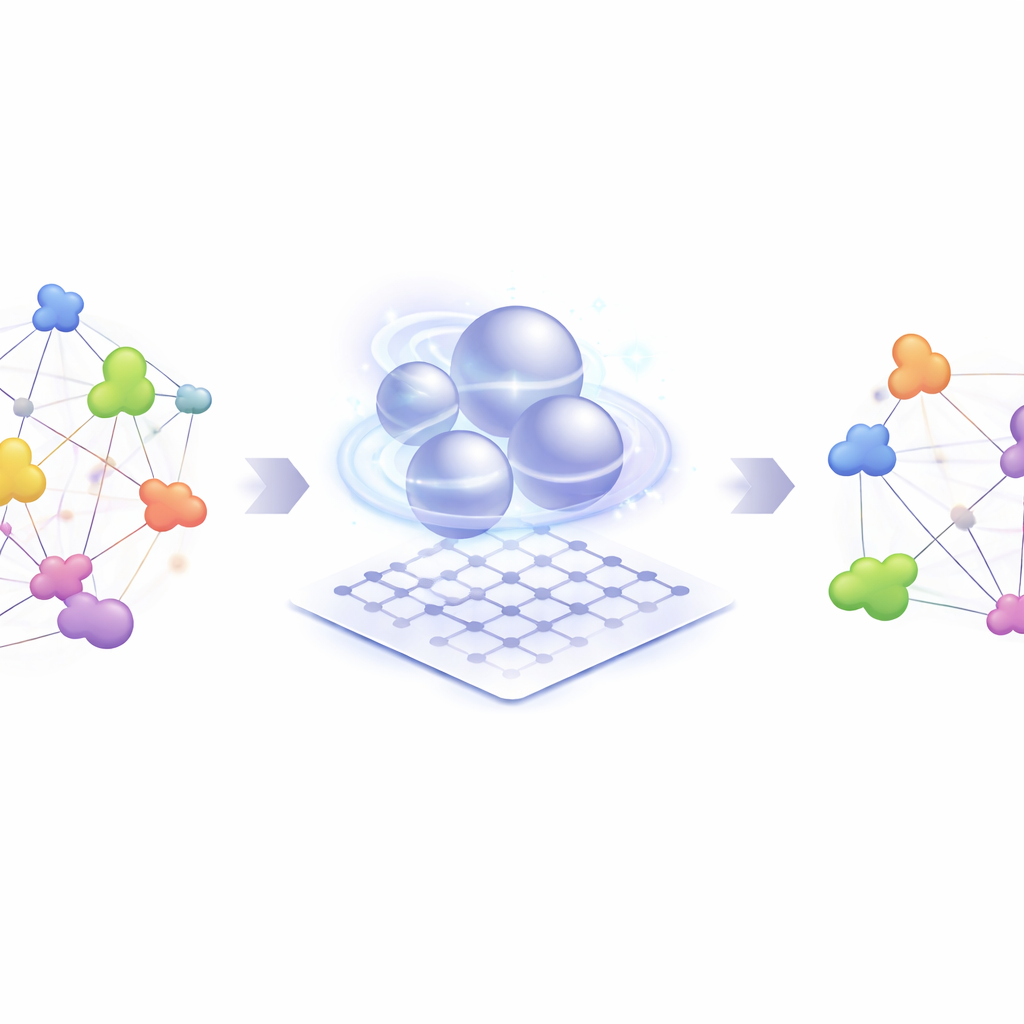
What makes QGDM unusual is that it takes inspiration from quantum mechanics, the theory that governs atoms and subatomic particles. Proteins are not rigid blocks; they constantly wiggle, twist, and shift shape. The model represents each protein as a cloud of possible shapes rather than a single fixed structure, similar to how quantum physics allows particles to be in a blend of states at once. It also uses quantum-style correlations to capture the way changes in one part of a protein network can ripple through distant regions—important for subtle effects such as allostery, where binding at one site influences another far away. By building these features into the network equations, QGDM can better capture how real biological systems behave.
From theory to working algorithm
To turn these ideas into practice, the researchers designed a hybrid system that combines quantum-inspired calculations with standard machine learning. First, they gather information about proteins at many levels: atomic-level forces, the makeup and structure of amino acids, overall protein shape, and how proteins fit into larger cellular networks. These features feed into a model that uses specialized operators—mathematical rules adapted from both quantum physics and differential geometry—to simulate how likely two proteins are to interact over time. A quantum-style optimization step searches through many possible settings of the model, while a classical computer guides the search and evaluates performance. This design aims to capture quantum advantages while staying compatible with today’s hardware.
Outperforming existing tools and finding new biology
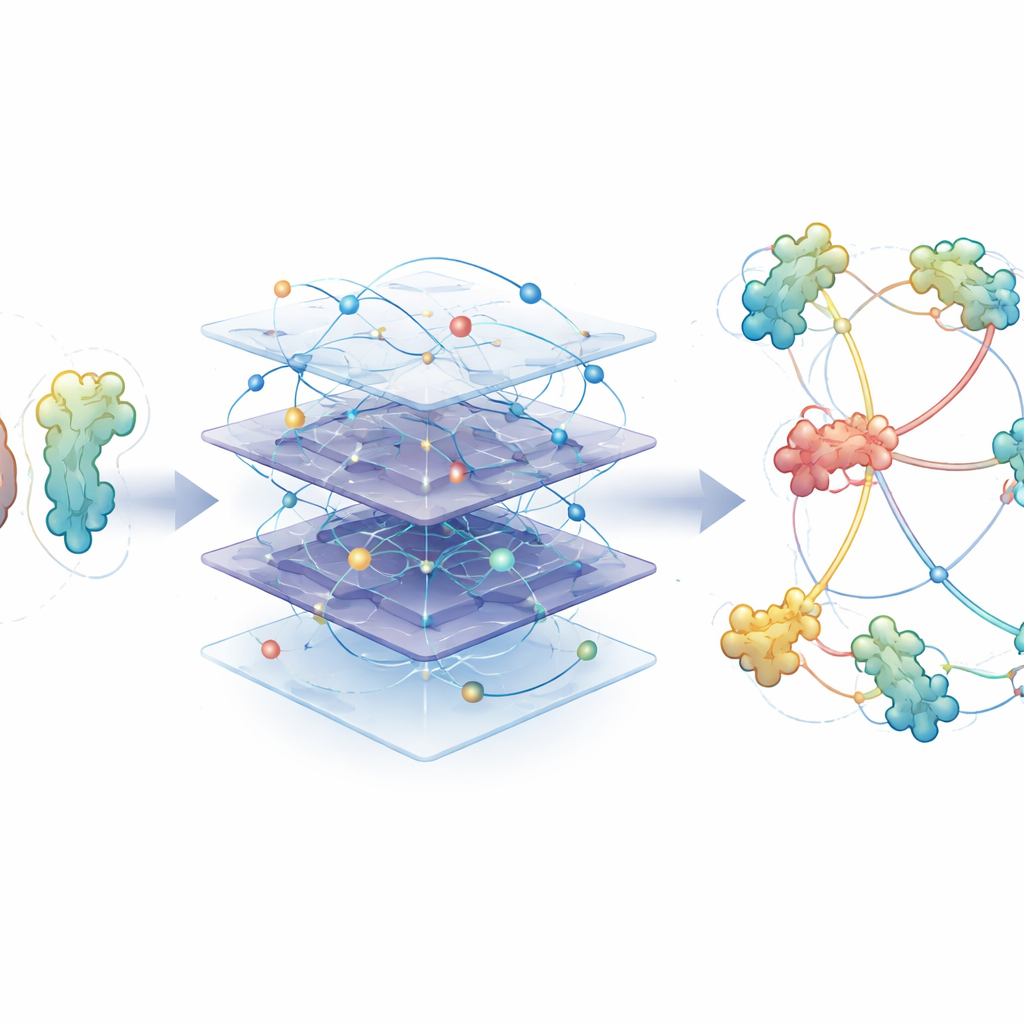
The team tested QGDM on six major protein-interaction databases, including STRING, BioGRID, IntAct, HIPPIE, DIP, and MINT, which together cover millions of known or suspected interactions. Across all of them, the new model beat fifteen leading methods—ranging from classic techniques like support vector machines to modern graph neural networks—in accuracy, precision, and recall. In one key measure, accuracy, QGDM reached about 96–97%, a jump of roughly 9–15 percentage points over the best existing systems. Crucially, it did not just perform well on paper: it predicted 1,247 previously unknown human protein interactions, and follow-up laboratory experiments confirmed more than 90% of them. Many of these new links touch pathways involved in cancer, brain disorders, metabolism, and immune responses, and the model highlighted dozens of promising new drug target sites.
What this means for medicine and the future
For non-specialists, the main message is that this work shows how ideas from quantum physics can help us better understand and control biology. By treating proteins as flexible, probabilistic actors in a complex network, the QGDM approach reveals interactions that earlier tools missed and provides a clearer picture of how signals and malfunctions spread through the cell. In the near term, this can speed up the search for new drugs and combination therapies by pointing researchers toward the most promising protein partnerships to test. Looking ahead, as quantum computing hardware improves, models like this could underpin highly personalized medicine, where a patient’s unique network of protein interactions guides tailored treatment. In short, the study argues that the future of decoding life’s molecular conversations may be decisively quantum.
Citation: Karthick, V., Alshammari, F.S., Jayasimman, I.P. et al. Quantum-augmented graph differential geometry enhances accuracy in protein-protein interaction prediction. Sci Rep 16, 8650 (2026). https://doi.org/10.1038/s41598-026-41325-5
Keywords: protein-protein interactions, quantum biology, network modeling, drug discovery, machine learning