Clear Sky Science · en
Evaluating long-read metagenomics for bloodstream infection diagnostics: a pilot study from a Thai Tertiary Hospital
Why faster blood infection tests matter
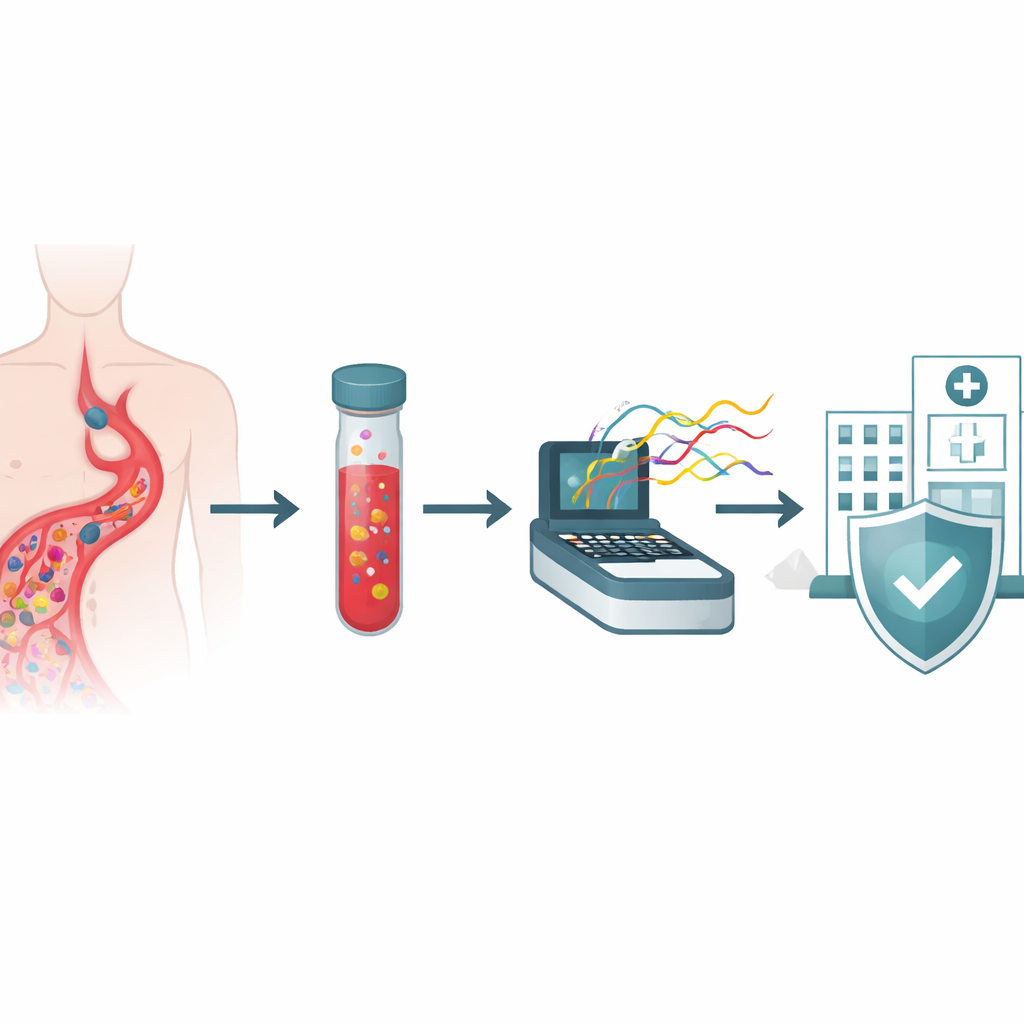
When bacteria invade the bloodstream, every hour counts. Doctors must quickly choose the right antibiotic, but today’s lab tests can take several days to identify the culprit and work out which drugs are likely to fail. This study from a large Thai hospital explores a new way to speed things up by reading the genetic material of all microbes in a blood sample at once, using a handheld DNA sequencer. The goal is to move from waiting days for answers to having a detailed picture of the infection within a single working shift.
A new way to read germs in the blood
The researchers focused on patients who already had signs of bacterial growth in standard blood culture bottles, which are routinely used in hospitals worldwide. Instead of growing each bacterium on separate plates and running a series of chemical tests, they took fluid directly from 40 positive culture bottles and extracted all the microbial DNA. This DNA was then run on an Oxford Nanopore sequencer, a device that pulls long strands of genetic material through tiny pores and reads their sequence in real time. Because the method does not depend on growing each organism separately, it can, in principle, detect many species, their drug-resistance traits, and their disease-causing tools in a single streamlined workflow.
What was found in Thai bloodstream infections
Conventional testing of the same 40 samples produced 45 bacterial isolates, reflecting that a few patients were infected with more than one species. The usual hospital workhorse system, VITEK, showed that two familiar gut bacteria, Escherichia coli and Klebsiella pneumoniae, caused nearly 40% of these infections, and that many of these strains were resistant to multiple drugs. The nanopore approach largely agreed with this picture, identifying 43 distinct bacterial genomes and confirming that members of the Enterobacterales group dominated. It also spotted a few uncommon or misclassified species, such as an environmental bacterium called Ralstonia mannitolilytica and the stomach bug Campylobacter jejuni, which routine methods had missed or only identified in broad terms. In some mixed infections, however, the sequencing struggled to fully separate closely related microbes when one was present at much lower levels than the other.
Peering into resistance and stealth tactics
Because the new method reads long stretches of DNA, it can do more than just name the bacteria: it can reveal the genetic machinery that helps them resist antibiotics and cause disease. The team scanned the genomes for known resistance genes and for "virulence" genes that help germs stick to tissues, form protective biofilms, steal iron, or produce toxins. E. coli and K. pneumoniae carried many such genes, including those that disable key antibiotic families like beta-lactams and aminoglycosides. The sequencing also highlighted powerful resistance packages in hospital-hardened species such as Acinetobacter baumannii and Pseudomonas aeruginosa, whose genomes were rich in drug-pumping systems and other defenses. At the same time, some rarer bloodstream bacteria had relatively modest arsenals, suggesting a lower but still significant threat. 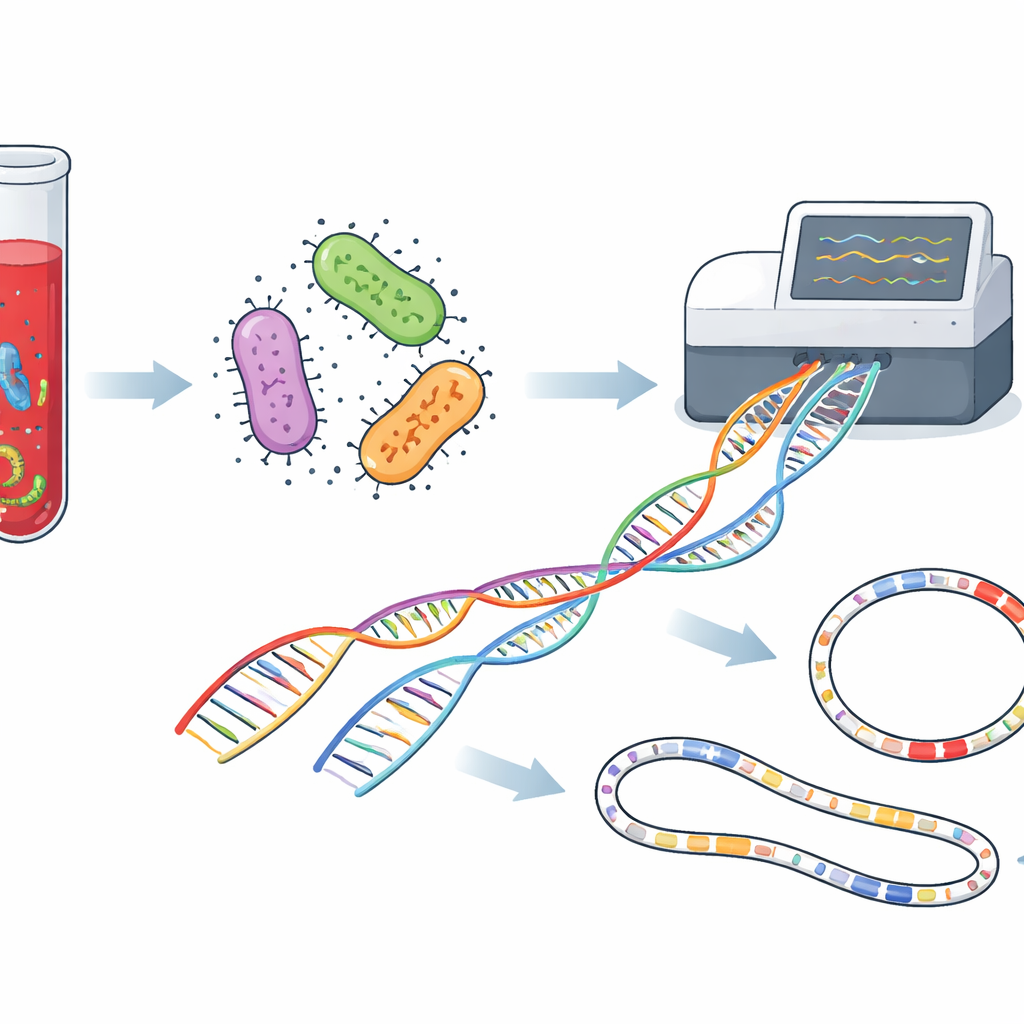
Following resistance on mobile DNA
Another strength of long-read sequencing is its ability to piece together entire bacterial chromosomes along with circular DNA molecules called plasmids, which can hop between bacteria and spread resistance genes. In this study, the researchers catalogued dozens of plasmid types. Some were strongly tied to particular species, while others were shared across several kinds of bacteria, hinting at ongoing gene exchange in the hospital environment. Many carried well-known drivers of treatment failure, such as extended-spectrum beta-lactamases and carbapenemases—enzymes that blunt some of the most important antibiotics. Mapping these mobile elements helps infection-control teams understand how dangerous traits move through a hospital over time.
Speeding up answers for doctors and hospitals
Timing is where the new approach shows the clearest advantage. Standard workflows often take five to seven days from the moment a blood culture turns positive to the point where full identification and drug-sensitivity results are ready. In contrast, the nanopore setup in this pilot study delivered early species identifications within two to four hours of starting the run and flagged key resistance genes within six to eight hours. While longer sequencing runs improved the completeness of the genomes, they did not change the main clinical conclusions. Although this was a small, early-stage study that did not yet link results to patient outcomes or measure costs, it suggests that integrating long-read metagenomic sequencing into hospital labs could provide faster, richer information to guide treatment, support antibiotic stewardship, and strengthen regional tracking of drug-resistant infections.
What this means for patient care
For a layperson, the takeaway is that doctors may soon have a genetic "snapshot" of a bloodstream infection in the same day that a culture turns positive, rather than waiting nearly a week. This snapshot not only names the germ but also highlights many of its weak spots and its potential to spread resistance to others. While more work is needed with larger patient groups, tighter contamination controls, and cost analyses, this Thai pilot study shows that pocket-sized DNA sequencers can move us closer to rapid, genome-informed care for life-threatening blood infections.
Citation: Yaikhan, T., Wongsurawat, T., Jenjaroenpan, P. et al. Evaluating long-read metagenomics for bloodstream infection diagnostics: a pilot study from a Thai Tertiary Hospital. Sci Rep 16, 9330 (2026). https://doi.org/10.1038/s41598-026-41247-2
Keywords: bloodstream infection, antimicrobial resistance, metagenomic sequencing, nanopore technology, clinical microbiology