Clear Sky Science · en
Unpacking the influence of ICT on respiratory diseases in Sub-Saharan Africa
Why Phones and the Internet Matter for Breathing
Across Sub-Saharan Africa, more people than ever are going online, using mobile phones, and relying on digital services. At the same time, doctors are seeing large numbers of chronic respiratory diseases such as asthma and chronic bronchitis, often made worse by pollution and climate change. This study asks a simple but important question: as the digital revolution spreads, is it helping people breathe easier, or quietly making air quality and lung health worse? 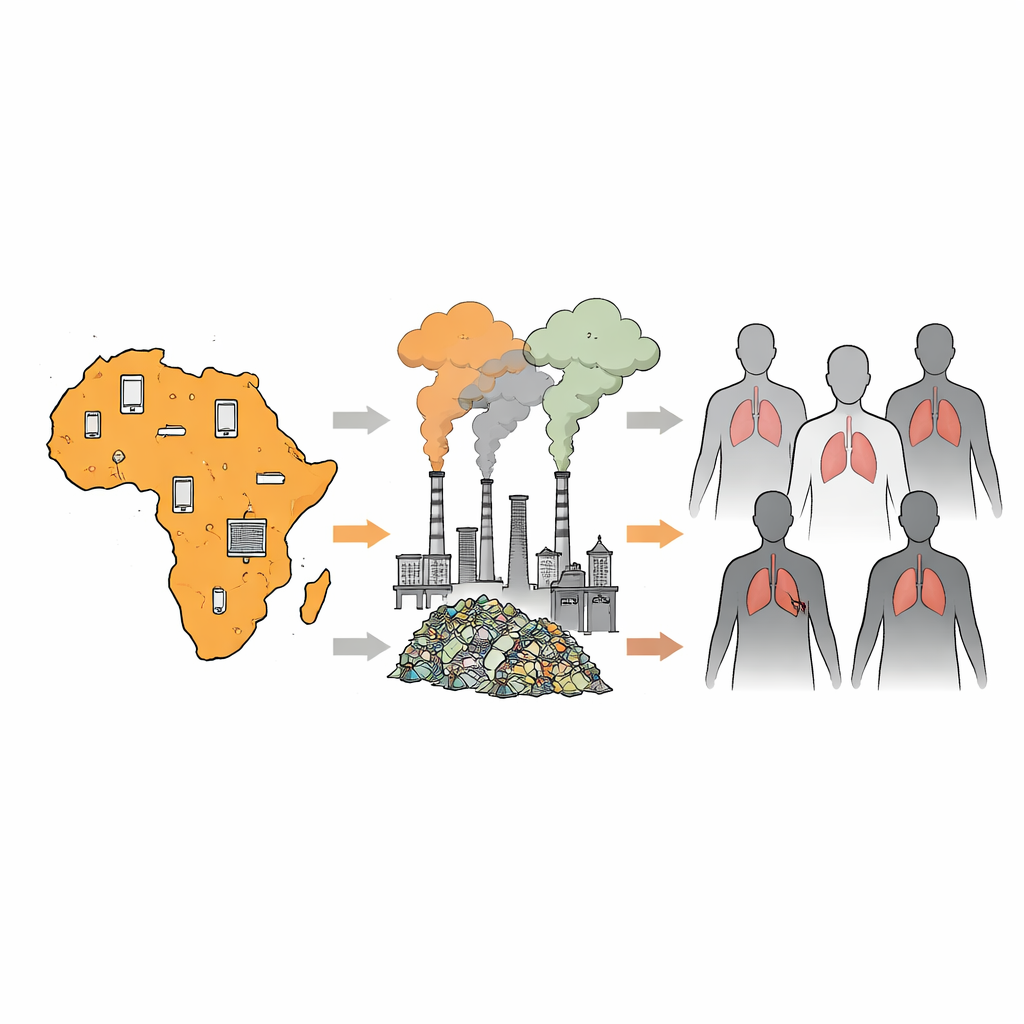
Rising Screens in a Region Struggling to Breathe
Sub-Saharan Africa already faces a heavy burden of respiratory illness driven by dirty fuels, traffic fumes, and rapid urban growth. Many countries depend on mining and other resource-heavy industries that release smoke and fine particles into the air. At the same time, international goals such as the United Nations’ Sustainable Development Goal 3 call for better health and longer lives. Digital tools, from telemedicine to electronic records, are often advertised as part of the solution. Yet the devices, data centers, and power grids that make these tools possible can themselves demand large amounts of electricity and generate electronic waste, raising concerns that technology might both help and harm.
What the Researchers Measured
The authors examined data from 29 Sub-Saharan African countries between 2000 and 2019. They measured respiratory disease by tracking the probability of dying from chronic lung conditions, using figures from the World Health Organization. As a stand‑in for digital development, they used the share of people using the Internet. They also accounted for economic growth, trade, manufacturing activity, and income from natural resources, and they added an index of how well each country is governed. This allowed them to ask three linked questions: how Internet use relates to respiratory deaths, whether the familiar pattern of “pollution first, cleaner later” appears as economies grow, and whether good governance can soften any harm from digital expansion.
More Internet Use, More Lung Trouble
After running a series of statistical tests and robustness checks, the study finds that higher Internet use is associated with worse respiratory outcomes in the region. In other words, as digital access expands, deaths from chronic respiratory diseases tend to rise rather than fall. The authors trace this pattern to several channels: data centers and power systems that still rely heavily on fossil fuels, rapid growth in device production and disposal, and informal e‑waste recycling that releases toxic metals into the air. Greater time spent indoors and sedentary, screen‑based lifestyles may also increase exposure to indoor air pollutants in poorly ventilated homes. These patterns remain even when the authors substitute other digital indicators and adjust for financial crises and human capital. 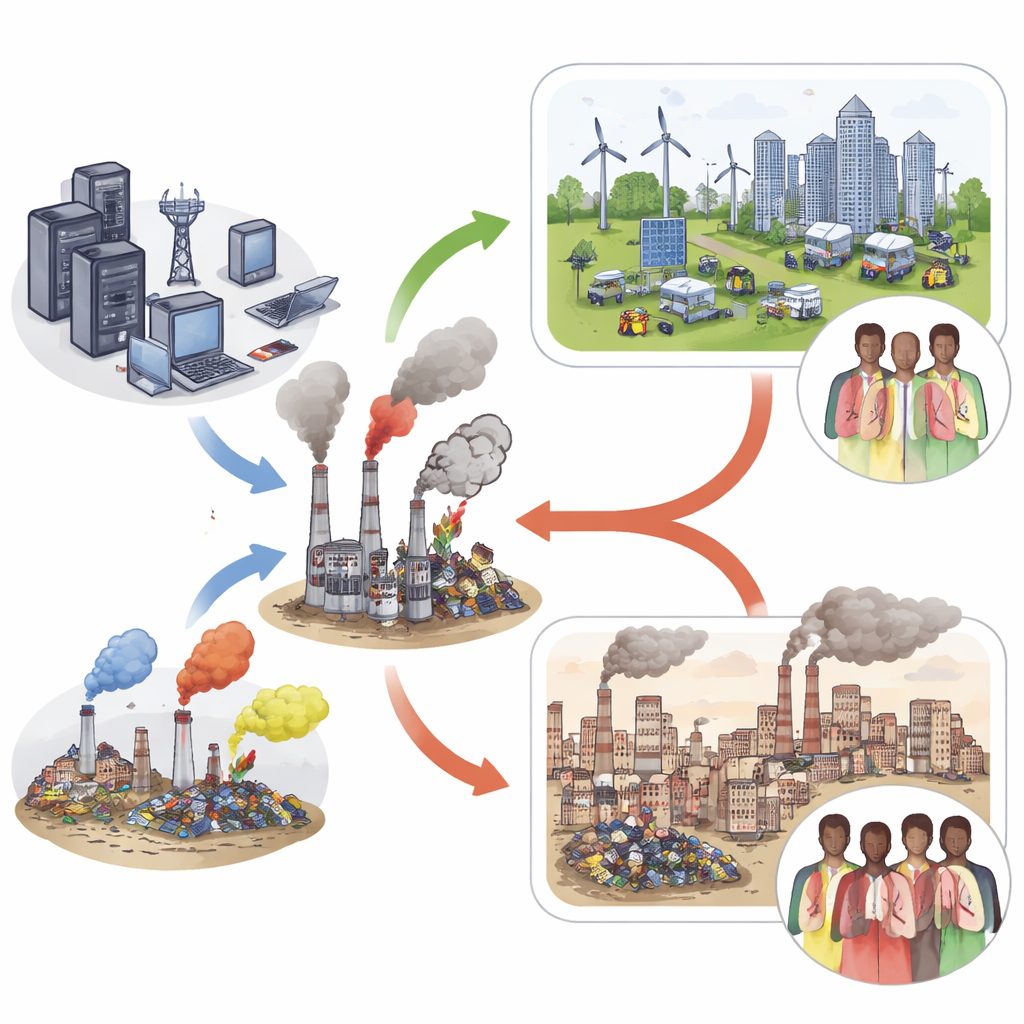
Growth, Global Links, and the Power of Good Rules
The study also confirms a classic “inverted U” relationship between income and respiratory disease: as countries grow richer, lung problems at first worsen, but beyond a certain income level, better health systems and cleaner technologies begin to improve outcomes. However, this turning point is not automatic. In countries with high levels of foreign investment or strong ties to the global economy, digital growth seems to do more damage to lung health, likely because such places attract pollution‑heavy industries and consume more energy and electronics. By contrast, where governance is stronger—where rules on pollution, e‑waste, and corruption are better enforced—the damaging link between Internet use and respiratory disease becomes weaker, suggesting that institutions can channel technology onto a healthier path.
What This Means for People on the Ground
For ordinary citizens, the message is not that the Internet is “bad,” but that without careful oversight, the digital boom can silently worsen the air they breathe. The study’s conclusion is that information and communication technology, as it is currently deployed in much of Sub-Saharan Africa, tends to increase respiratory disease risk. Yet it also shows that this outcome is not inevitable: economic growth can eventually support cleaner environments, and strong governance can curb the harms from energy‑hungry servers and unsafe e‑waste. In practical terms, steering digital expansion toward renewable power, safe recycling, and strict pollution controls could allow people to enjoy the benefits of connectivity without paying for it with their lungs.
Citation: Luo, H., Zhang, L., Sun, Y. et al. Unpacking the influence of ICT on respiratory diseases in Sub-Saharan Africa. Sci Rep 16, 8383 (2026). https://doi.org/10.1038/s41598-026-41234-7
Keywords: Sub-Saharan Africa, respiratory diseases, digital technology, air pollution, governance