Clear Sky Science · en
Optimizing renewable energy investments using artificial intelligence-based multi-facet fuzzy decision models
Smarter Choices for Clean Energy
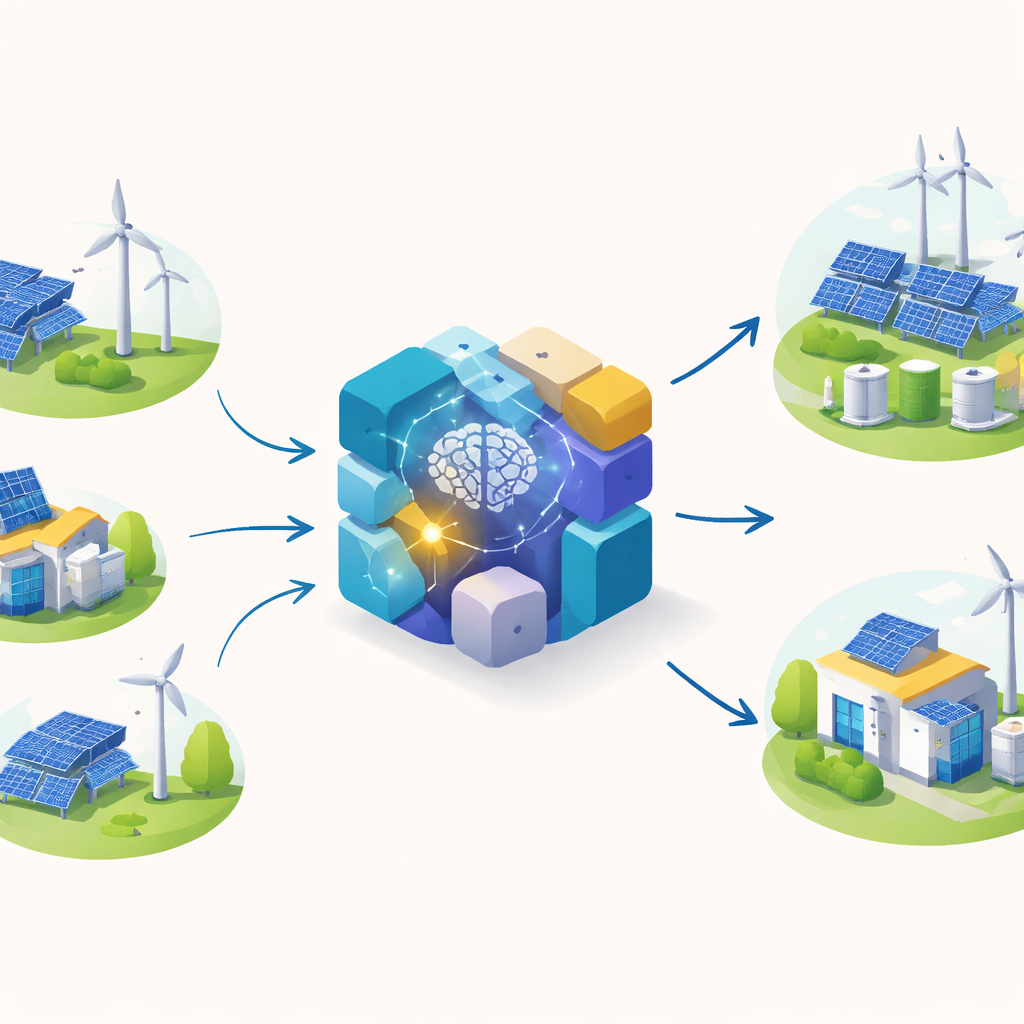
As countries race to replace fossil fuels with clean power, deciding where to put billions of dollars in solar farms, wind parks, and local microgrids has become a high-stakes puzzle. This paper explores how artificial intelligence can help investors and policy makers sort through that complexity to choose renewable energy projects that deliver the most reliable, scalable, and long-lasting benefits for both the economy and the environment.
Why Technical Details Matter
Behind every wind turbine or solar array lies a web of technical choices that quietly decide whether a project will thrive or struggle. The authors focus on five such ingredients: how efficiently a system converts sunlight or wind into power; how easily it can grow as demand rises (scalability); how often it fails (reliability); how simple and fast it is to repair (maintainability); and how safely it operates. Because money, land, and skilled labor are limited, investors must know which of these factors to prioritize. Yet earlier studies usually examined them in isolation, or only for a single technology such as solar or wind, leaving decision makers without a clear, general roadmap.
Blending Human Judgment with Smart Algorithms
The study introduces a decision framework that weaves together expert opinion and AI-style computation. Instead of treating expert views as fixed and flawless, the model first evaluates the experts themselves, giving more weight to those with stronger knowledge and experience. It then represents their assessments using a flexible form of "fuzzy" logic, which is designed to handle shades of gray rather than strict yes-or-no answers. Crucially, the model does this under four contrasting conditions—negative, positive, unstable, and ordinary—so that it can reflect how real-world uncertainty, market swings, or policy shifts might alter the way people judge technical risks and benefits.
Mapping Cause and Effect Inside Energy Systems
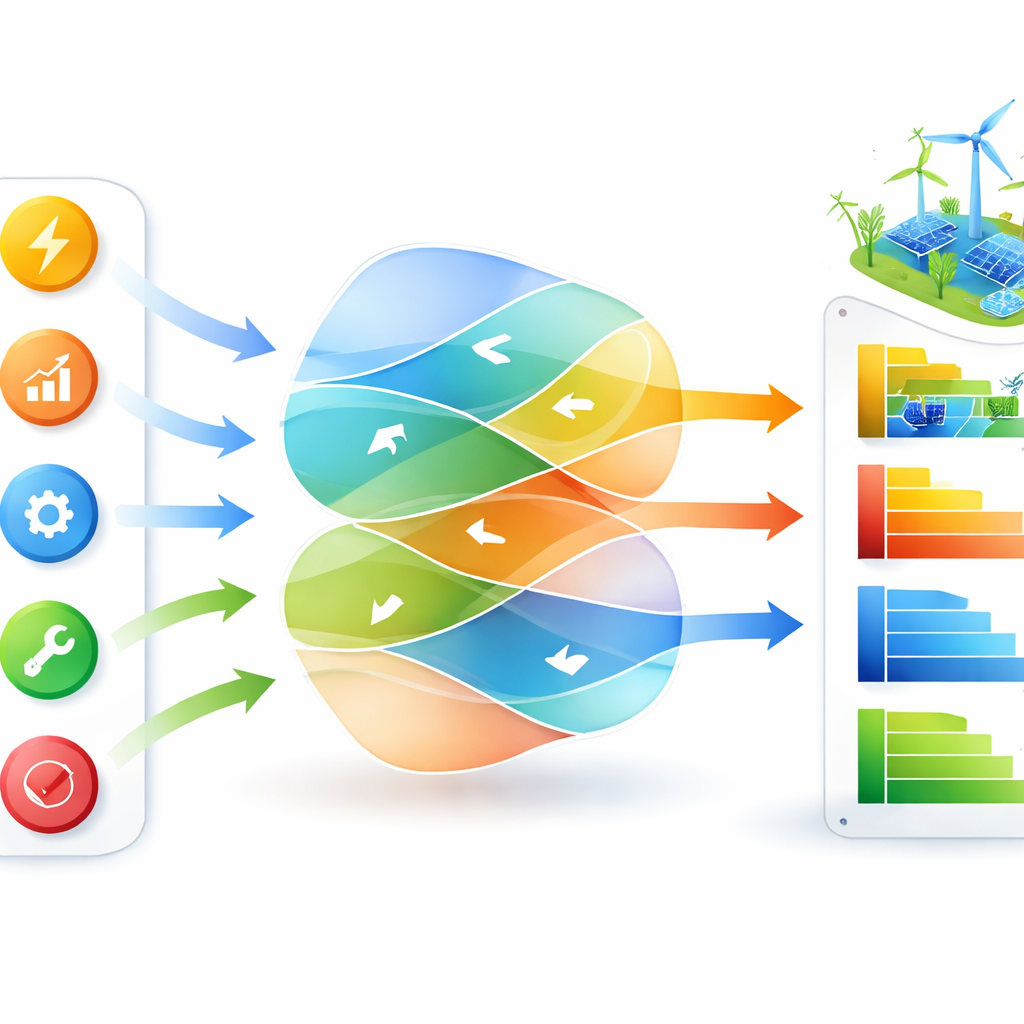
To move beyond simple checklists, the framework also maps how the five technical factors influence one another. For example, a system that is easier to maintain can become more reliable and thus safer over time. The researchers use a network-like representation of these cause-and-effect links, then repeatedly update it until the strengths of the connections settle into a stable pattern. This produces a set of weights that express how strongly each factor shapes overall project performance once these feedback loops are taken into account. Rather than assuming each criterion stands alone, the model explicitly captures their interdependence.
Finding the Best Investment Paths
Armed with these weights, the authors compare five broad investment strategies: backing technologies with very high energy conversion, favoring stable and predictable systems, focusing on easily serviced microgrids, combining multiple renewable sources, and maximizing performance over the entire life of a project. A specialized ranking step then looks for the pattern that best separates strong options from weak ones while preserving as much information as possible. Across many different uncertainty settings and sensitivity checks, two strategies consistently rise to the top: investing in microgrids that are easy to service, and designing projects to perform well across their whole life cycle, from installation to retirement.
What This Means for the Clean Energy Transition
For non-specialists, the key message is straightforward: the renewables that serve us best over decades are not just the ones that squeeze out the most power today, but those that can grow with demand and be repaired quickly when something breaks. This AI-supported approach suggests that scaling up modular, easily maintained microgrids and focusing on long-term performance can make renewable investments more resilient, less risky, and ultimately more cost-effective. By translating complex math into practical rankings, the framework offers investors and policy makers a clearer way to steer the clean energy transition toward projects that are both robust and future-ready.
Citation: Dinçer, H., Yüksel, S., Aksoy, T. et al. Optimizing renewable energy investments using artificial intelligence-based multi-facet fuzzy decision models. Sci Rep 16, 8708 (2026). https://doi.org/10.1038/s41598-026-41164-4
Keywords: renewable energy investment, microgrids, decision-support models, fuzzy logic, energy project scalability