Clear Sky Science · en
Low fungal knowledge and limited identification skills: study reveals a species literacy gap among laypeople from Germany
Why Mushrooms Matter More Than We Think
Most of us notice a bright red toadstool or a supermarket mushroom, but rarely think about the hidden kingdom beneath our feet. Yet fungi quietly recycle dead matter, feed forests, and supply us with medicines. This study asked a simple question with big implications: how well do ordinary people in Germany actually know their local mushrooms, and what does that mean for nature and for safety in the woods?
A Hidden Corner of Biodiversity
Biodiversity loss is accelerating worldwide, threatening the stability of ecosystems and the services they provide, from clean water to food. Scientists know that public support is crucial for conservation, and that people are more likely to protect what they can name and recognize. Much research has explored how well we know animals and plants, but fungi have largely slipped through the cracks. This neglect has even earned a name: Fungal Awareness Disparity Syndrome, the tendency to overlook fungi or think of them only as mold, food, or disease. Because fungi make up an enormous share of living diversity and are key recyclers in almost every land ecosystem, not knowing them means not fully understanding nature.
Putting Mushroom Knowledge to the Test
To measure fungal “species literacy,” the researchers surveyed 747 adults across Germany using an online questionnaire designed to reflect the country’s population in age, education, gender, and where people live. Participants first answered questions about their connection to nature, time spent outdoors, and whether they eat or collect mushrooms. They then listed up to five mushroom species they knew, responded to simple statements about how fungi live and what they are, and tried to identify 12 common native mushrooms from clear color photographs. For each pictured species, they also had to decide if it was edible, inedible, or poisonous.
Gaps, Guesswork, and Dangerous Confusions
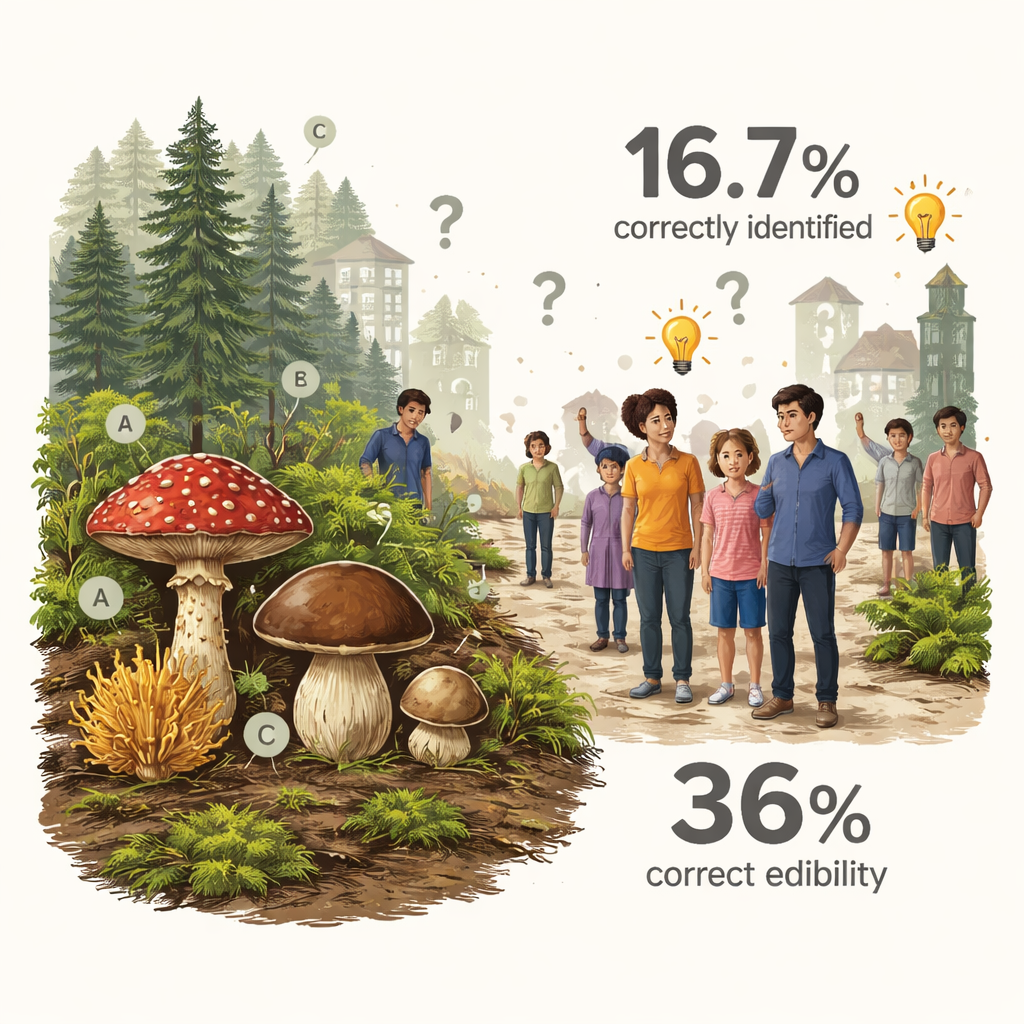
The results revealed a striking knowledge gap. On average, people could correctly identify only about 17% of the pictured species, and more than a quarter failed to name even one. Many believed that fungi are plants, and only a minority recognized them as a separate major group of life. While participants did slightly better at judging edibility, they were still correct only about a third of the time. Worryingly, some of the most dangerous mushrooms were often mistaken for safe ones. The deadly death cap was frequently judged edible or confused with familiar field mushrooms, and a bitter but inedible bolete was widely assumed to be fine to eat, especially because it looks dull and harmless. At the same time, brightly colored but edible fungi were often rejected as poisonous, suggesting that people relied on instinctive color cues instead of solid knowledge.
Who Knows More About Mushrooms, and Why?
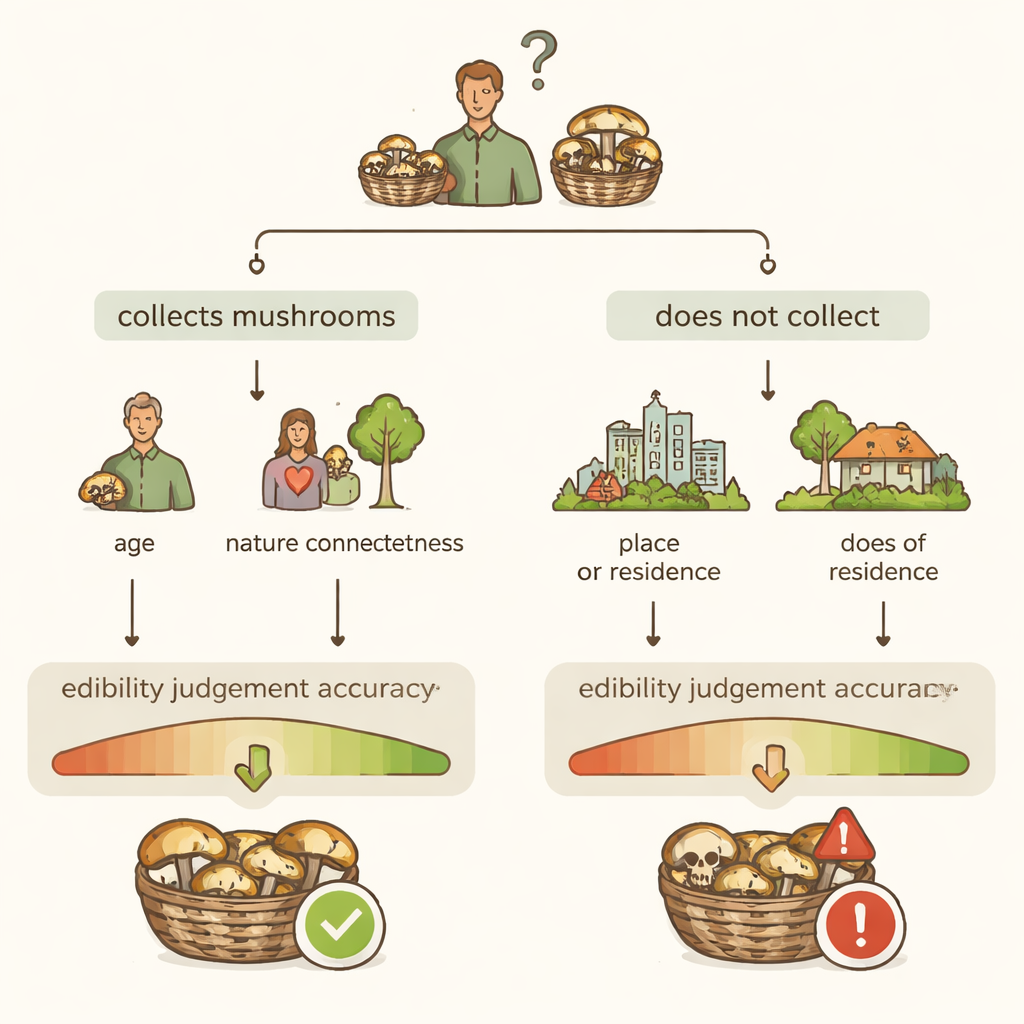
By analyzing patterns in the data, the authors found that real-world experience made a clear difference. People who had collected mushrooms before, who felt more emotionally connected to nature, who lived in rural areas, and who were older tended to identify more species correctly. However, simply spending many hours outdoors was not enough on its own; what mattered was focused, hands-on engagement, like actually picking and learning mushrooms. Family and friends were the most common sources of fungal knowledge, while only a minority remembered learning about fungi at school. This suggests that formal education is missing a major opportunity to build basic understanding of an entire kingdom of life.
From Forest Floor to Classroom and Policy
The study concludes that low fungal literacy is not just a curiosity; it has both safety and environmental consequences. When many people cannot distinguish a deadly mushroom from a harmless look‑alike, foraging can become life‑threatening. More broadly, if fungi remain invisible in textbooks, monitoring programs, and conservation lists, their decline will go unnoticed, undermining efforts to protect biodiversity. The authors argue that fungi should feature much more prominently in school curricula, teacher training, outdoor education, and national conservation plans. Helping people recognize and appreciate mushrooms—beyond what ends up on their plates—could foster safer foraging, deeper interest in the natural world, and stronger support for protecting the living networks that keep ecosystems, and ultimately humans, alive.
Citation: Schanz, I., Remmele, M. Low fungal knowledge and limited identification skills: study reveals a species literacy gap among laypeople from Germany. Sci Rep 16, 7737 (2026). https://doi.org/10.1038/s41598-026-41150-w
Keywords: fungal literacy, biodiversity, mushroom identification, nature education, conservation