Clear Sky Science · en
Cannabidiolic acid as a modulator of lipid metabolism in the liver of rats with metabolic-associated steatotic liver disease
Why this matters for everyday health
Fatty liver disease used to be mostly a concern for people who drank heavily. Today, it increasingly affects people who simply eat energy-dense food, move too little, and live with chronic stress. This study explores whether a natural compound from the hemp plant, called cannabidiolic acid (CBDA), can help a fat-overloaded liver handle fats more safely. Using rats on a junk‑food‑like diet, the researchers asked if CBDA could reduce fat buildup in the liver and shift the balance toward healthier types of fat.
The problem of a liver overloaded with fat
Modern diets rich in fat and sugar can cause metabolic‑associated steatotic liver disease (MASLD), in which the liver becomes packed with fat droplets. Over time, this fatty overload can trigger inflammation, scarring, and even liver cancer. A key driver is how the liver manages incoming fats: more fat is transported in from the blood, more is made from scratch inside the liver, and less is burned off. The result is an excess of fat molecules, including some particularly harmful species that interfere with insulin and damage cells. Finding ways to nudge these pathways back into balance is a major goal of current research.
A closer look at a hemp‑derived molecule
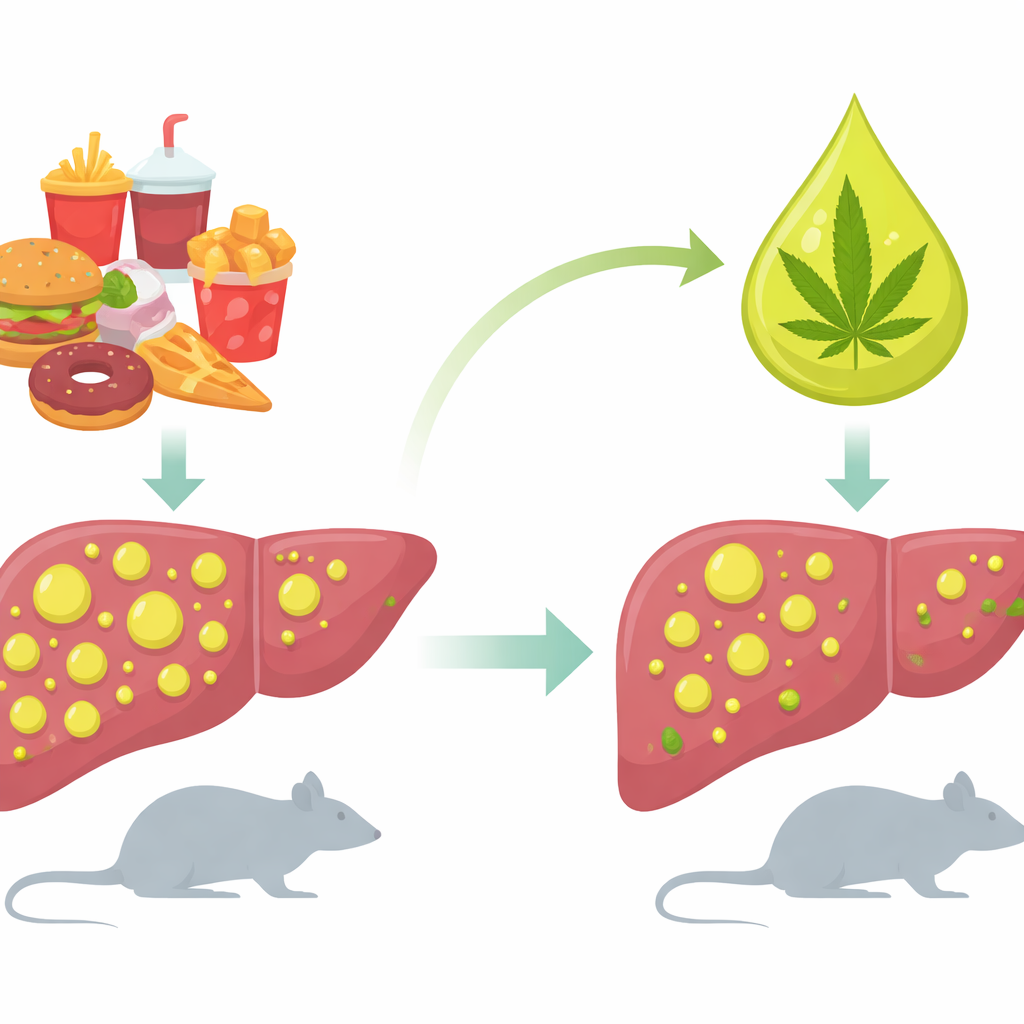
CBDA is a natural component of hemp and certain cannabis oils. Unlike its better‑known relative cannabidiol (CBD), CBDA is the original acidic form found in the plant and is absorbed especially well when taken by mouth. It is not intoxicating and has already shown anti‑inflammatory and other protective effects in animal studies. However, almost nothing was known about its influence on fat handling in the liver. To test this, male rats were fed either a normal chow or a high‑fat diet that induces fatty liver. During the final two weeks, some animals in each diet group received a low daily dose of CBDA by mouth, while others received only the oil it was dissolved in. The researchers then measured different fat fractions and their detailed fatty acid makeup in the liver and blood, and examined the levels of proteins that control fat uptake, burning, and processing.
How CBDA reshaped fat traffic in the liver
As expected, the high‑fat diet alone caused the liver to take up more fat from the blood, driven by higher levels of several "gateway" proteins on liver cells that pull fatty acids inside. The livers of these rats accumulated more of every major fat fraction, including free fatty acids, triacylglycerols (the main storage form), diacylglycerols, and phospholipids, and showed clear fatty change under the microscope. When CBDA was added on top of the high‑fat diet, the picture changed: two of the main fat‑import proteins (CD36 and FABPpm) fell, and some of the most problematic fat pools, particularly diacylglycerols and certain phospholipids, decreased in the liver. At the same time, CBDA boosted proteins involved in breaking down stored fat and channeling it toward the cell’s power stations, suggesting that more fat was being burned rather than simply stored in large droplets. Blood tests also hinted at less liver injury, with lower levels of a common liver damage marker compared with rats on the high‑fat diet alone.
Turning down harmful fats and boosting friendlier ones
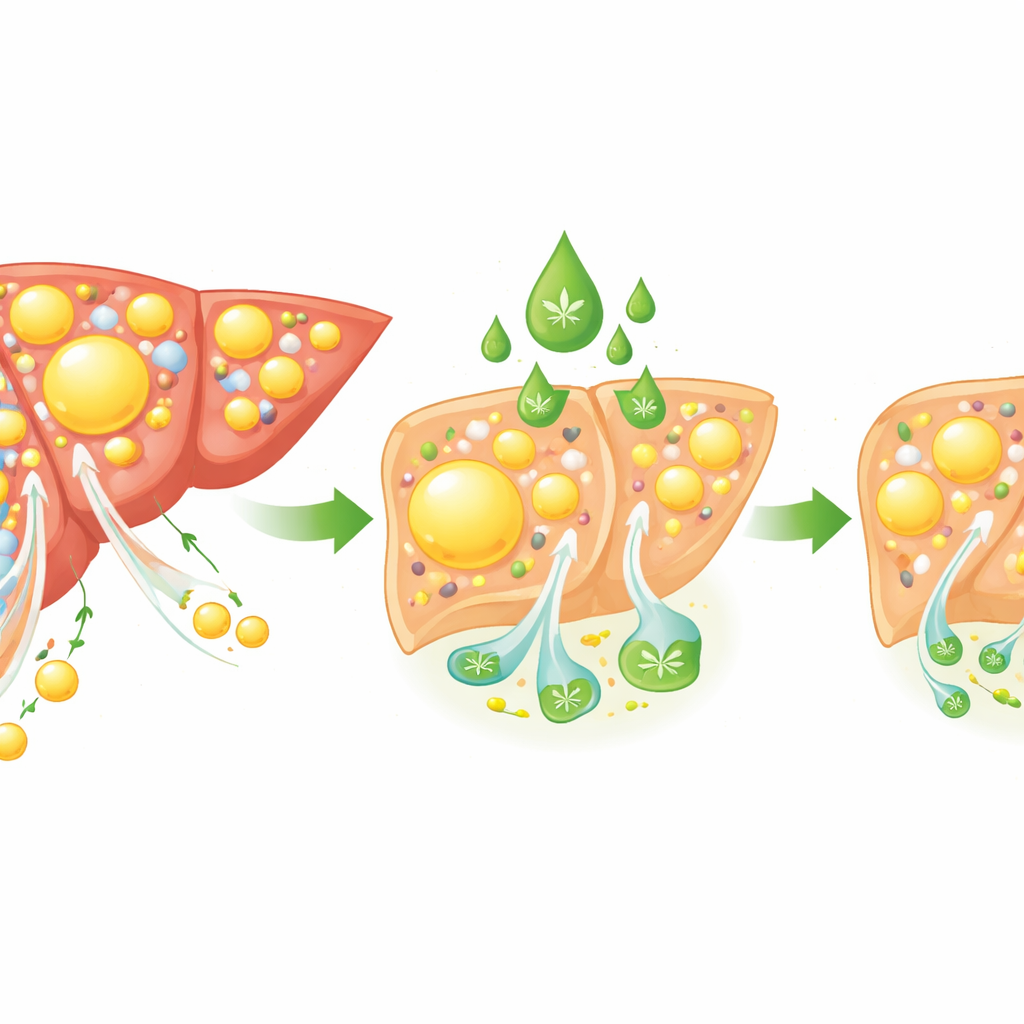
Beyond how much fat was present, the researchers examined what kinds of fatty acids dominated. High‑fat feeding pushed the liver toward a profile rich in saturated fats, which are more likely to injure cells, and altered the balance of monounsaturated and polyunsaturated fats. CBDA partly reversed these trends. In high‑fat‑fed rats, it lowered the share of saturated fats in key fractions and shifted monounsaturated fats away from reactive intermediate molecules toward safer storage and structural roles. Importantly, CBDA increased beneficial omega‑3 polyunsaturated fats in several liver fat pools while reducing some omega‑6 fats that are more prone to fueling inflammation. It also altered the activity of enzymes that lengthen and desaturate fatty acids, in ways that favor the production of longer, more protective polyunsaturated fats. Together, these changes suggest that CBDA does not just reduce fat accumulation but improves the "quality" of liver fat in a direction thought to be less toxic.
What this could mean for future therapies
From a lay perspective, this work suggests that CBDA helps a stressed liver cope better with a flood of dietary fat. In rats with diet‑induced fatty liver, CBDA reduced the influx of fat into liver cells, encouraged more fat to be broken down, and remodeled the remaining fat toward forms that are less damaging and more anti‑inflammatory. The study does not yet prove that CBDA can treat human fatty liver disease, and the experiments were short‑term and done in animals. Still, by showing that a plant‑derived, non‑intoxicating compound can beneficially influence several fat‑handling pathways at once, the research opens the door to developing CBDA‑based or CBDA‑inspired therapies to slow or prevent the progression of fatty liver disease.
Citation: Kurzyna, P.F., Chabowski, P., Zwierz, M. et al. Cannabidiolic acid as a modulator of lipid metabolism in the liver of rats with metabolic-associated steatotic liver disease. Sci Rep 16, 8670 (2026). https://doi.org/10.1038/s41598-026-41130-0
Keywords: fatty liver disease, cannabidiolic acid, hepatic lipid metabolism, high-fat diet, phytocannabinoids