Clear Sky Science · en
The cytotoxic effects of glycyrrhizic acid-modified chitosan/selenium nanocomposite on osteosarcoma cancer cell line
New hope for bone cancer treatment
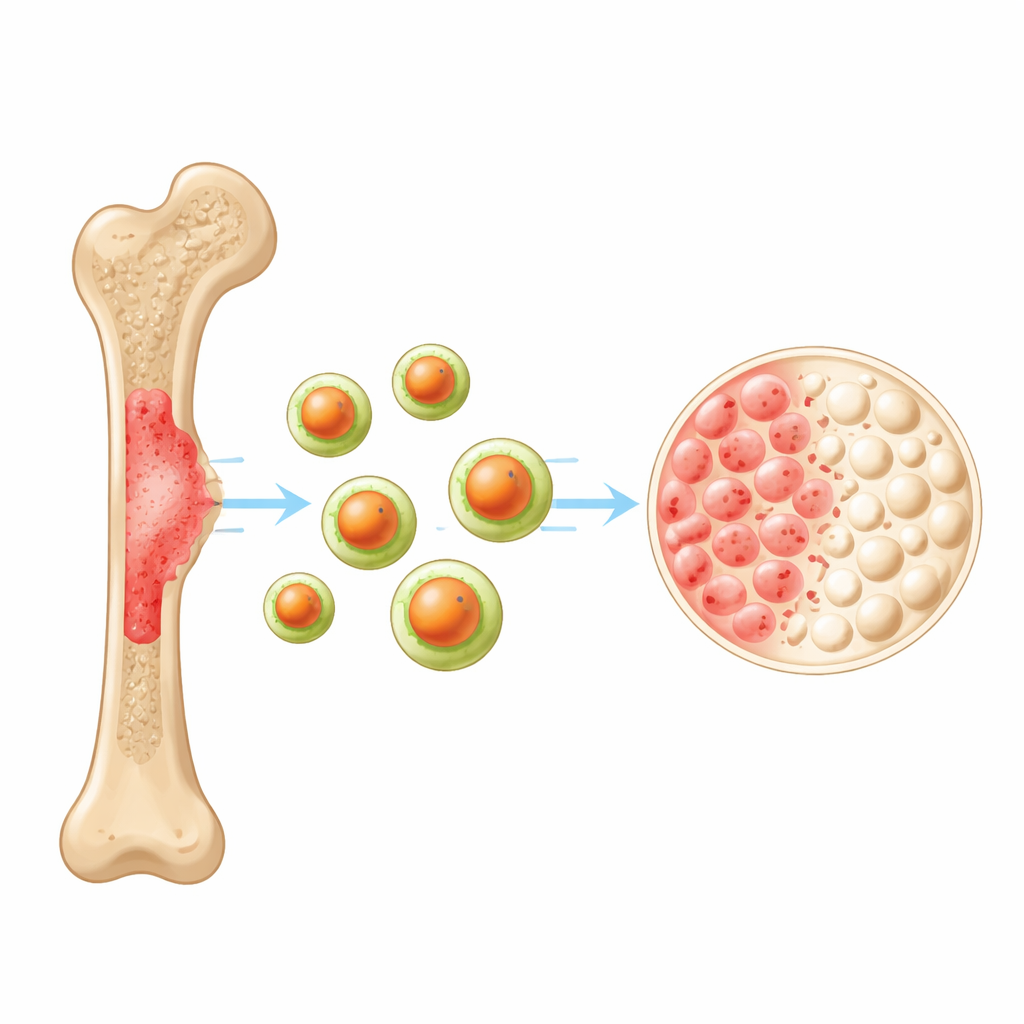
Osteosarcoma, the most common bone cancer in teenagers and young adults, is notoriously hard to treat without harming healthy tissue. This study explores a new kind of tiny, tailor‑made particle that aims to attack tumor cells more precisely while sparing normal bone cells. By combining a mineral our bodies need, a natural sugar‑based polymer, and a compound from licorice, the researchers built a smart “nano‑package” designed to push cancer cells into a clean self‑destruct mode rather than causing messy cell death and inflammation.
Building a tiny three‑layered fighter
The team created nanoparticles with three main components. At the core is selenium, a trace element known to damage cancer cells by raising harmful oxygen‑based molecules inside them. This core is wrapped in chitosan, a biopolymer derived from natural sources such as shellfish, which helps keep the particles stable in water and improves their ability to enter cells. Finally, the surface is modified with glycyrrhizic acid, a molecule from licorice root that has anti‑cancer and anti‑inflammatory properties. Using electron microscopy and other structural tests, the researchers confirmed that the particles are nearly spherical, about 100–200 nanometers across, and uniformly coated, a size range considered ideal for traveling through the body and slipping into tumor tissues.
Stable design with good “behavior” in the body
Measurements of surface charge showed that both the basic chitosan–selenium particles and the licorice‑modified version carry a moderately positive charge, enough to repel each other and stay evenly dispersed instead of clumping. Infrared and X‑ray analyses revealed that glycyrrhizic acid is firmly bound into the chitosan shell without disrupting the crystalline nature of the selenium core. This combination suggests a robust structure that can circulate, interact with cell surfaces, and gradually release its active components. The chitosan coating also improves compatibility with living tissue and supports controlled release of selenium, potentially reducing side effects compared to free drugs or unstable particles.
Hitting cancer cells harder than healthy cells
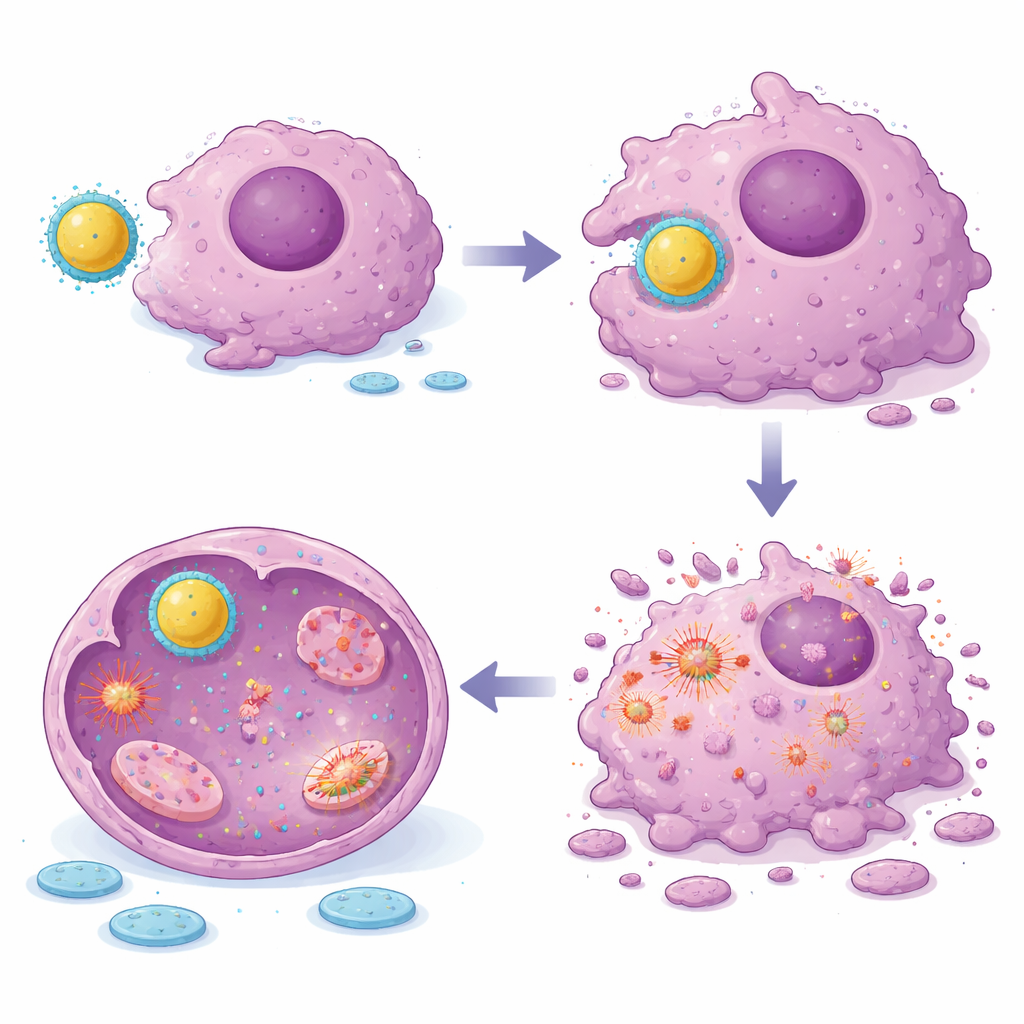
The particles were tested on human osteosarcoma cells and on normal bone marrow stromal cells grown in the lab. All three tested formulations—glycyrrhizic acid alone, chitosan–selenium particles, and the full three‑component nanocomposite—reduced the survival of cancer cells as the dose increased. The plain chitosan–selenium particles were the most aggressive, the licorice‑modified nanocomposite somewhat less so, and glycyrrhizic acid alone the mildest. Remarkably, none of the formulations reached a damaging dose for the normal bone marrow cells within the same concentration range, suggesting promising selectivity toward tumor cells. Staining experiments that distinguish orderly cell suicide (apoptosis) from chaotic rupture (necrosis) showed that the nanocomposite shifted cancer cells toward apoptosis and away from necrosis, unlike the unmodified selenium particles, which caused more destructive necrotic death.
Triggering clean self‑destruct signals inside tumor cells
To understand how these particles kill cancer cells, the researchers measured key internal signals that control life and death decisions in cells. The licorice‑modified nanocomposite strongly boosted genes and proteins that promote apoptosis, such as Bax and the tumor‑suppressor p53, while reducing levels of Bcl‑2, a molecule that normally protects cells from dying. This pattern is characteristic of a well‑regulated, mitochondria‑driven suicide program rather than accidental damage. Microscopy of fluorescently labeled proteins confirmed higher Bax and p53 and lower Bcl‑2 in treated osteosarcoma cells, especially with the nanocomposite. These changes fit with the idea that selenium in the core generates oxidative stress, while glycyrrhizic acid fine‑tunes inflammatory and survival pathways, giving a coordinated push toward programmed death of cancer cells.
What this could mean for future bone cancer care
For a layperson, the key message is that the researchers have built a tiny, three‑layered particle that can tell bone cancer cells to die in a controlled way while leaving nearby normal cells largely unharmed—at least in lab dishes. By combining the cancer‑stressing action of selenium, the gentle delivery properties of chitosan, and the anti‑cancer, calming influence of a licorice compound, this design aims to maximize tumor killing and minimize harmful inflammation or collateral damage. While these findings are still early and limited to cell cultures, they point toward a future nanomedicine approach in which smart particles could complement or refine existing osteosarcoma treatments, making therapy more targeted, effective, and potentially less toxic.
Citation: El-ghannam, G., Elfeky, S.A., Abo-Elfadl, M.T. et al. The cytotoxic effects of glycyrrhizic acid-modified chitosan/selenium nanocomposite on osteosarcoma cancer cell line. Sci Rep 16, 9677 (2026). https://doi.org/10.1038/s41598-026-41099-w
Keywords: osteosarcoma, nanoparticles, selenium, chitosan, glycyrrhizic acid