Clear Sky Science · en
The impact of different exercise modes on prostate cancer: a Bayesian network meta-analysis
Why Moving Matters After Prostate Cancer
For many men, surviving prostate cancer is only half the story. Standard treatments such as surgery, hormone therapy, and radiation can leave lasting side effects: weaker muscles, more body fat, deep tiredness, and a drop in day‑to‑day enjoyment of life. This study asks a practical question that matters to patients, families, and clinicians alike: if exercise can help, which kinds of exercise do the most good for men living with or after prostate cancer?
What the Researchers Set Out to Learn
The authors pulled together results from 54 randomized trials involving 3,522 men with prostate cancer at various stages and treatment points. Instead of comparing just one exercise routine against usual care, they used a "network" approach that allows many exercise styles to be compared with one another at once. They looked at five outcomes that men feel in their everyday lives: muscle strength, body fat, tiredness, walking capacity (measured by a six‑minute walk), and overall cancer‑related quality of life. Exercise programs were treated as complete "modes" that combine type, intensity, and schedule—much like a real‑world exercise prescription—rather than just labels like aerobic or resistance.
Different Workouts, Different Payoffs
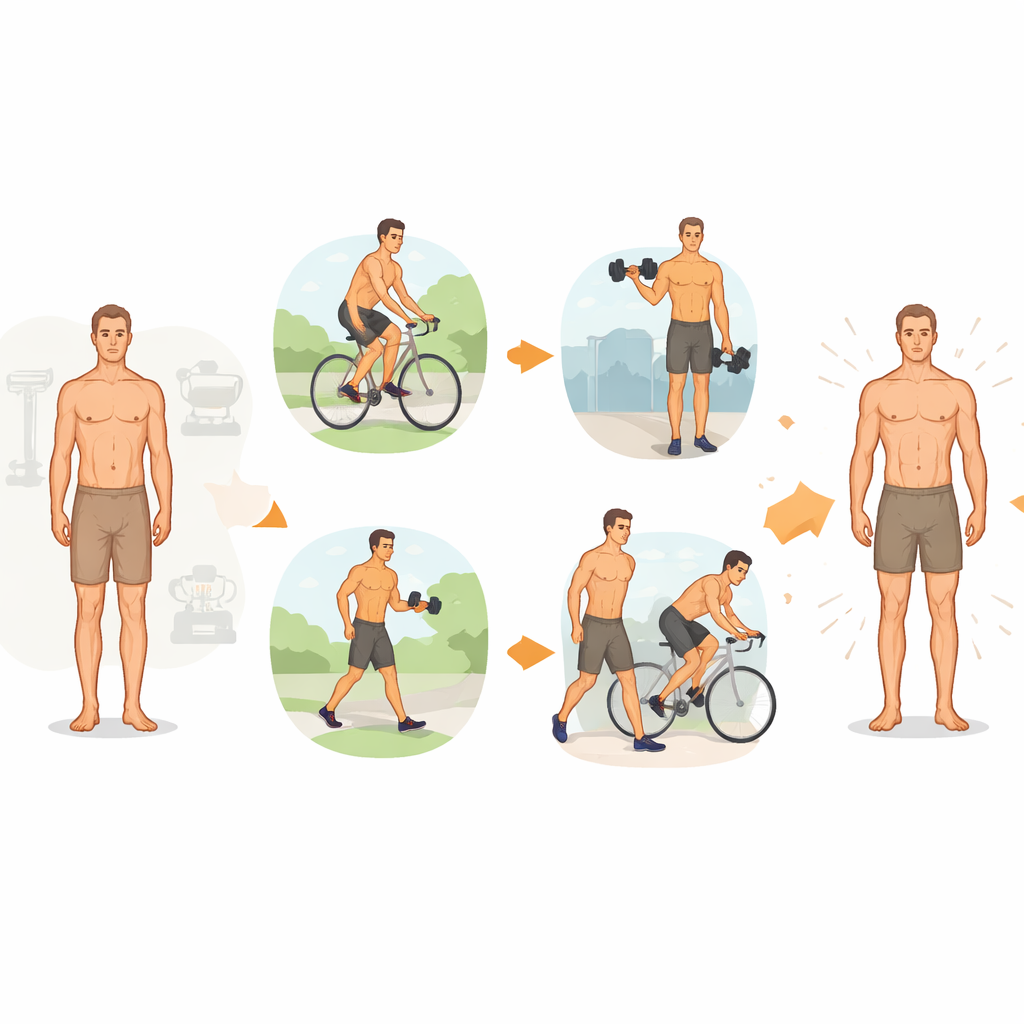
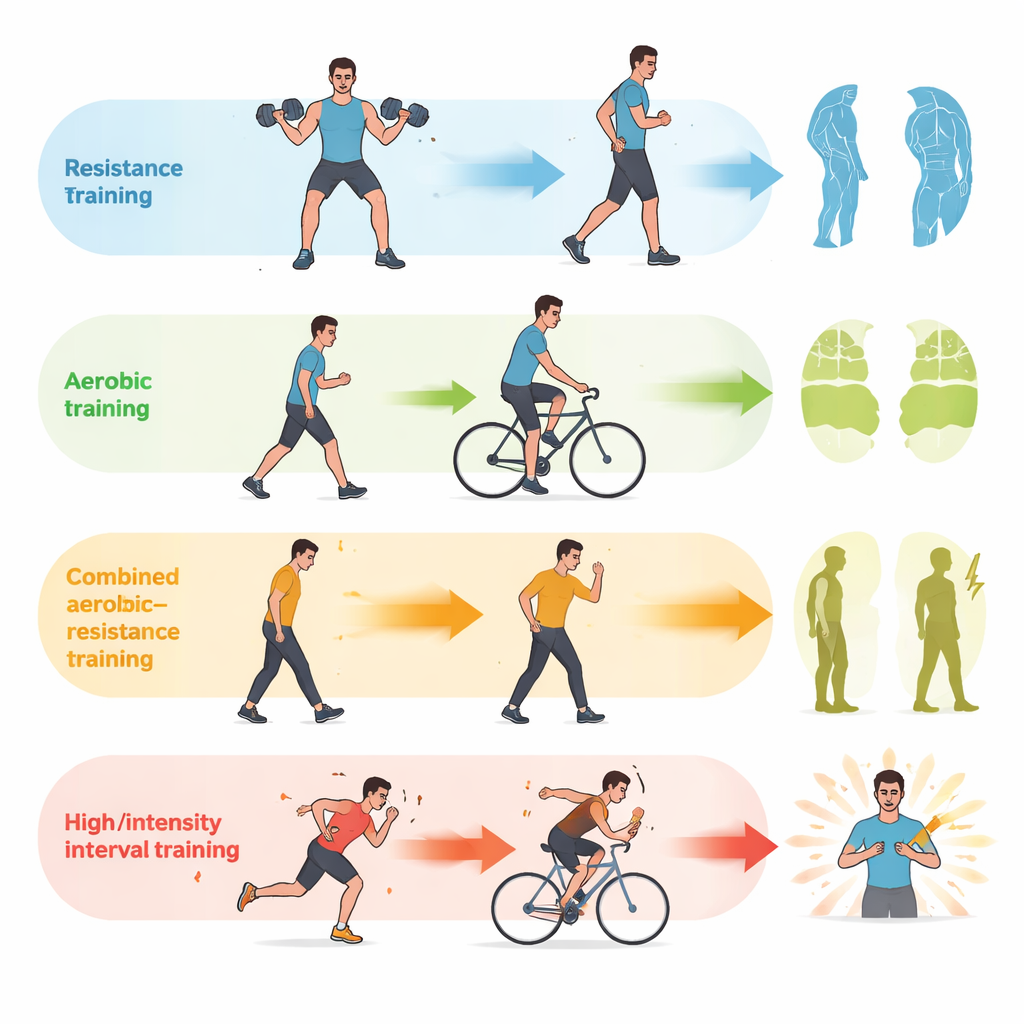
The analysis showed that almost any structured exercise program beat usual care on all major outcomes, and no serious safety problems were reported. But the details mattered. Resistance training, such as weight lifting or band exercises, came out on top for building muscle strength and also led the pack for improving how far and how well men could walk in six minutes—a real‑world measure of getting around independently. Aerobic activities like brisk walking or cycling were best for trimming body fat, a key issue because extra fat is tied to worse cancer outcomes and more treatment side effects. When aerobic and resistance training were combined into one program, the pair worked together to ease fatigue more than usual care and appeared especially helpful for the heavy tiredness many patients report.
Zooming In on Energy and Everyday Function
Why do these patterns appear? Resistance training seems to work mainly by teaching the nervous system to recruit muscles more efficiently and by slightly enlarging key muscle groups, countering the muscle loss often caused by hormone therapy. This stronger base then makes walking and daily tasks less taxing, which shows up as better scores on the six‑minute walk test. Aerobic exercise, in contrast, steadily improves how the body handles sugar and fats, encourages the body to burn rather than store fat, and reduces the deep belly fat linked to health risks. Programs that blend both styles appear to tackle fatigue from multiple angles—boosting heart and lung function, strengthening muscles, and likely easing inflammation and stress that drain energy.
Feeling Better, Not Just Living Longer
Quality of life—the sense of how well life is going overall—also improved with exercise. In this network of studies, high‑intensity interval training, which alternates short bursts of vigorous effort with recovery, showed the strongest signal for better cancer‑related quality of life, particularly in men being closely monitored rather than actively treated. For these men, anxiety and uncertainty can weigh heavily, and the mental lift from challenging but carefully supervised workouts may play a big role. Still, this finding rests on a small number of studies, and not every patient will be suited to high‑intensity routines, especially those who are frail or have heart problems.
What This Means for Men and Their Care Teams
The overall message is clear in everyday terms: moving your body is a powerful, low‑cost partner to medical treatment for prostate cancer. Resistance training is the go‑to choice for rebuilding strength and walking ability, aerobic training is best for shedding extra fat, mixed programs are most promising for fighting fatigue, and carefully tailored high‑intensity intervals may offer an extra boost in how patients feel about their lives. Rather than prescribing "exercise" in general, the authors argue that clinics should offer individualized exercise plans that match the patient’s goals, treatment stage, and physical condition. When done safely and consistently, the right mix of workouts can help men not only live longer after prostate cancer, but live better.
Citation: Liu, J., Li, Q. & Han, Y. The impact of different exercise modes on prostate cancer: a Bayesian network meta-analysis. Sci Rep 16, 11405 (2026). https://doi.org/10.1038/s41598-026-41076-3
Keywords: prostate cancer, exercise therapy, resistance training, aerobic exercise, quality of life