Clear Sky Science · en
Pyrolysis temperature effects of tomato stems biochar on leaching dynamics of ammonium, nitrate, and dissolved organic carbon in sandy soil
Turning Farm Waste into a Soil Helper
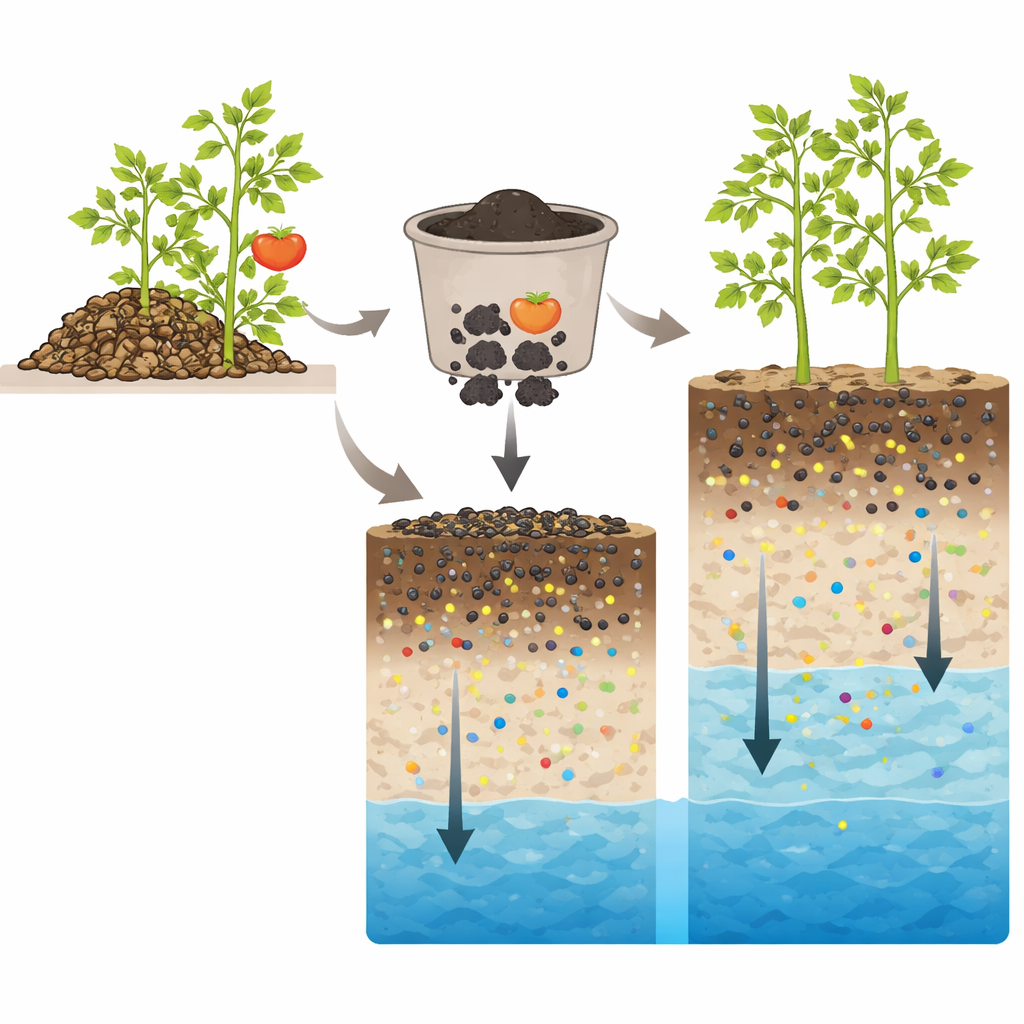
Modern farming depends heavily on nitrogen fertilizers to feed a growing population, but in light sandy soils much of that fertilizer can wash away with rain or irrigation water. This not only wastes money for farmers, it can also pollute groundwater with excess nitrate, a health risk especially for infants. In this study, researchers asked a simple question with big implications: can we transform leftover tomato stems into a charcoal-like material, called biochar, that helps sandy soils hold on to nutrients instead of letting them leak away?
Why Leaky Soils Are a Hidden Problem
Sandy soils act a bit like a sieve. Their large particles leave big spaces for water to rush through, carrying dissolved nutrients such as ammonium and nitrate along for the ride. When nitrogen slips below the root zone, crops can no longer use it, forcing farmers to apply more fertilizer. At the same time, nitrate that reaches groundwater can contribute to environmental and health issues. Finding a way to slow this downward escape of nutrients, especially in sandy regions, is crucial for both food production and clean water.
Giving Tomato Stems a Second Life
The researchers collected leftover tomato stems from farms in southern Egypt and heated them in low-oxygen conditions at three different temperatures: relatively low, medium, and high. This produced three kinds of biochar, each with distinct properties such as how alkaline it was, how much carbon it contained, and how many charged sites it had for attracting nutrients. They then mixed each biochar type into a very sandy soil at three different doses, from a light sprinkle to a hefty addition, and packed the mixtures into tall plastic columns. Over several weeks, they added water and a known amount of ammonium nitrate fertilizer, collecting the water that drained out the bottom to track how much nitrogen and dissolved organic carbon escaped.
How Biochar Changed the Soil and the Leaching
Adding tomato-stem biochar improved several basic features of the sandy soil. The treated soils held more water, contained more organic matter, and had higher cation exchange capacity, a measure of how well soil can hang onto positively charged nutrients. Medium-temperature biochar was especially effective in boosting this capacity, while higher-temperature biochar made the soil more alkaline. All biochar types greatly increased the availability of potassium and phosphorus, key nutrients for plants. These changes show that the charred tomato stems did far more than just sit in the soil; they actively reshaped its ability to store water and nutrients.
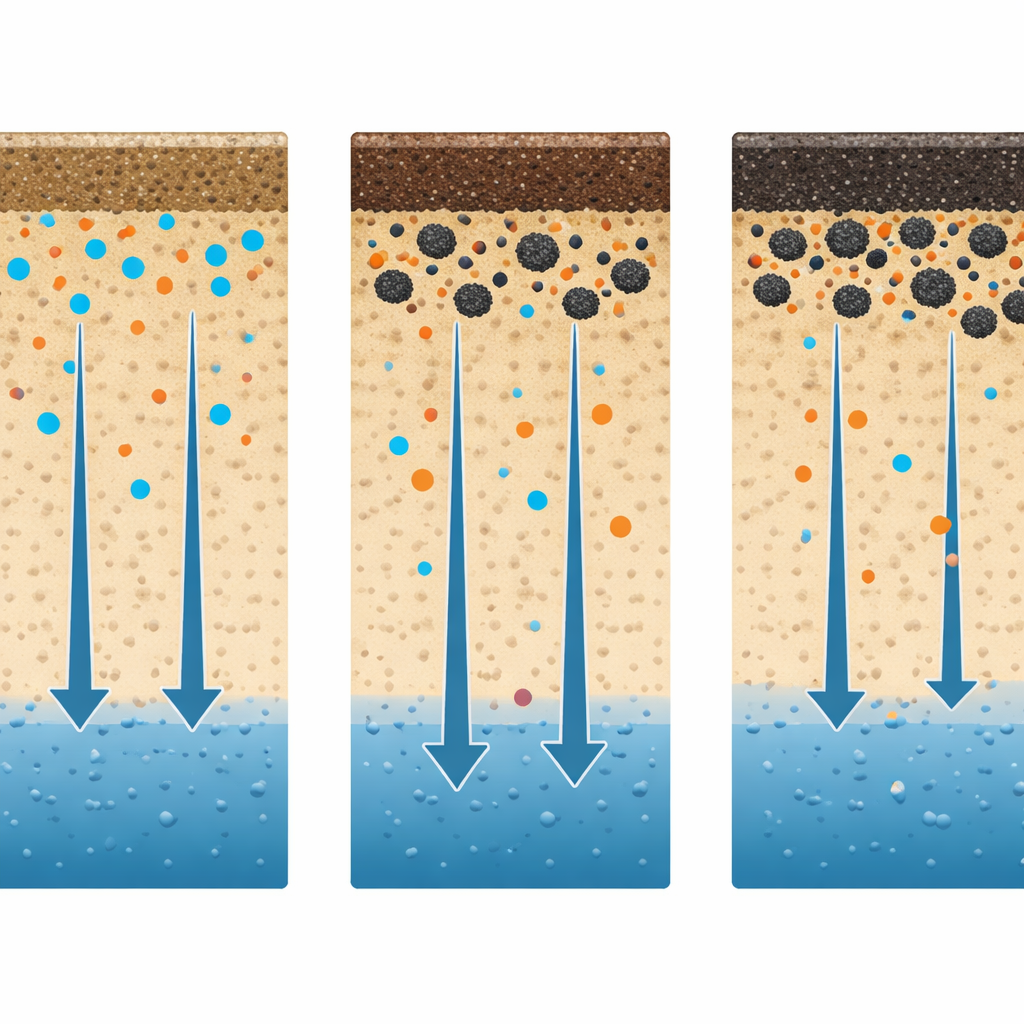
Most importantly, biochar reduced how much nitrogen washed out of the sandy soil. Across all treatments, the total amount of ammonium and nitrate leaving the columns dropped compared with soil that received no biochar. Medium-temperature biochar was best at holding onto ammonium, while the highest-temperature biochar most strongly cut nitrate losses, reducing cumulative nitrate leaching by up to about one-third. At the same time, some of the carbon locked in the biochar itself appeared in the drainage water as dissolved organic carbon, especially when using low-temperature biochar at high doses. This extra carbon mostly declined over time, suggesting that the more easily leached portion was quickly washed out or decomposed.
What This Means for Farmers and Water
By the end of the experiment, soils that received tomato-stem biochar not only lost less nitrogen but also often held more plant-available nitrogen than untreated soil, particularly when medium- and high-temperature chars were applied at higher rates. In practical terms, this means farmers using such amended sandy soils could get more value from the same amount of fertilizer while sending less nitrate toward the aquifer below. The study suggests that carefully produced biochar from a common agricultural residue can turn leaky, nutrient-poor sand into a more efficient and environmentally friendly growing medium.
A Step Toward Cleaner, Smarter Agriculture
For non-specialists, the main message is straightforward: instead of burning or discarding tomato stems, they can be “baked” into a long-lasting soil conditioner that helps keep fertilizer in the field and out of drinking water. The work shows that the temperature used to make biochar matters, because it controls how well the material holds different forms of nitrogen and how much extra carbon it releases. While these tests were done in laboratory columns rather than real fields, they point to a practical path toward more circular agriculture—one where crop leftovers become tools for improving soil health, boosting fertilizer efficiency, and protecting groundwater from pollution.
Citation: Amer, A.E., El-Desoky, M.A., Amin, A.EE.A.Z. et al. Pyrolysis temperature effects of tomato stems biochar on leaching dynamics of ammonium, nitrate, and dissolved organic carbon in sandy soil. Sci Rep 16, 9228 (2026). https://doi.org/10.1038/s41598-026-41017-0
Keywords: biochar, sandy soil, nitrogen leaching, groundwater pollution, tomato crop residues