Clear Sky Science · en
Performance analysis of network automation techniques for dense IP networks
Why faster networks matter to everyday life
Behind every video call, online game, or mobile payment lies a maze of routers that must be set up, configured, and checked by engineers. As networks grow to support 5G, cloud apps, and streaming, this manual work becomes slow, costly, and error-prone. This study asks a simple question with big real-world impact: how much time and effort can we save if we let software handle most of this work, from building test labs to writing device settings and running health checks?
From hands-on wiring to hands-off software help
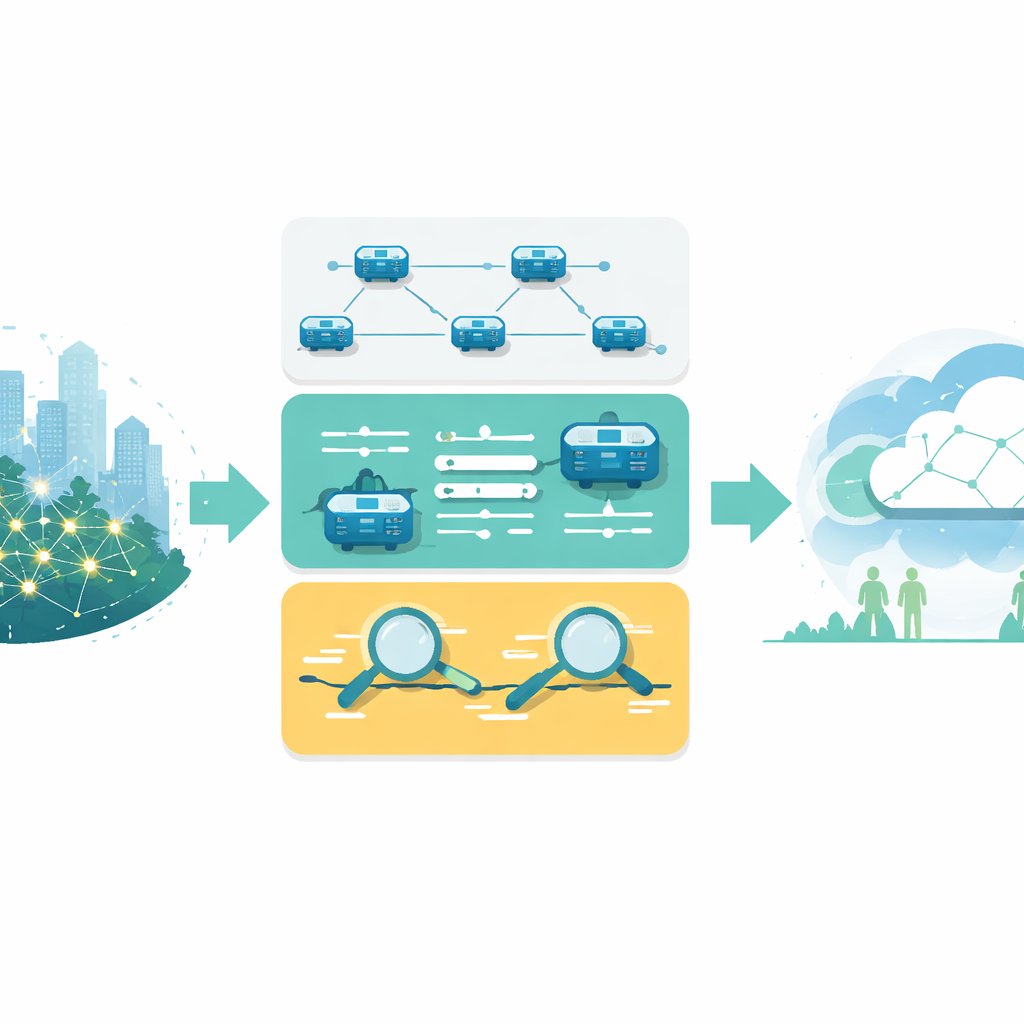
The authors look at “network automation” as a full journey rather than a single trick. They split the process into three stages: first, building a virtual lab that mimics a real network; second, generating the detailed settings that routers need to talk to each other; and third, running repeatable tests to make sure everything behaves as expected. Instead of focusing on a single vendor or tool, they compare several popular options side by side under the same conditions, using a six‑router core network as a realistic but manageable test case.
Building virtual networks in minutes instead of hours
To create the virtual network, the team tried three lab platforms: EVE‑NG, pLlama, and Containerlab. All of them run the same virtual router software so that any differences come from the tools, not the devices. EVE‑NG, which uses heavier virtual machines, took about nine minutes to bring up the six‑router layout. Containerlab, which relies on lightweight containers, was much faster once the authors added a small custom script. This script reads an easy‑to‑edit spreadsheet and automatically builds the topology file that Containerlab needs. With this extra automation step, the setup time dropped to around two minutes—a speedup of roughly four to five times compared with traditional methods. pLlama landed in between but did not match Containerlab’s performance.
Letting templates write the settings for you
Next, the researchers examined how routers get their long, detailed configuration files. They compared three approaches: engineers typing settings by hand (helped by a spreadsheet), Nokia’s “Komodo” configuration tool, and a custom Python script that fills out reusable templates. Manual work took close to an hour for the six routers and produced small but real mistakes—exactly the kind of errors that can later cause outages. Both automated methods cut the time to less than 10% of the manual effort and eliminated configuration errors in their tests. The custom Python approach was slightly faster than the proprietary tool and, because it relies on generic templates, can be adapted to equipment from other vendors, making it attractive for mixed networks.
Testing networks: computers beat copy‑and‑paste
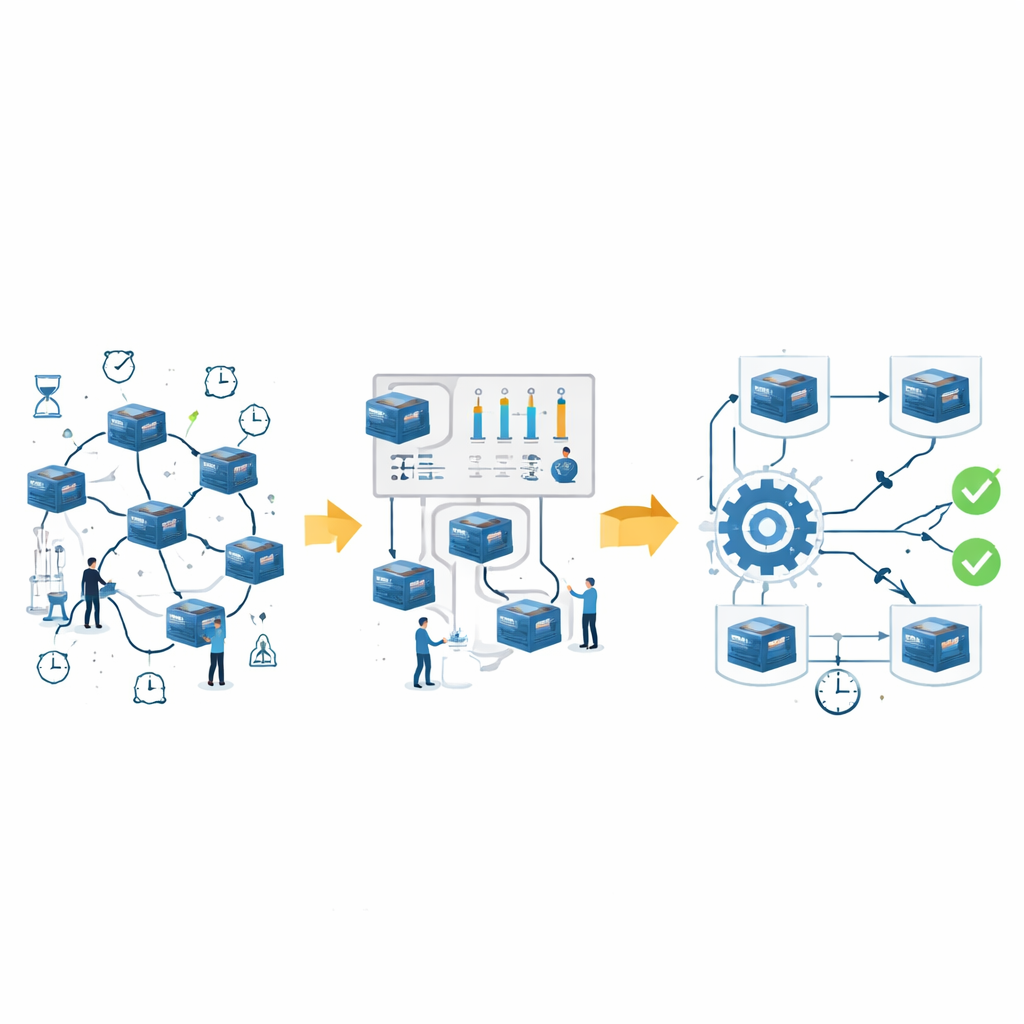
The last stage is checking whether the network actually works. Here, the authors contrast manual command‑line checks with three kinds of automated access to the routers: a traditional interface designed for humans, a more structured “model‑driven” interface, and a modern protocol called NETCONF that is built for automation. They use the same kinds of tests in each case, such as verifying that certain error messages appear when traffic is misrouted or that key services are up. Manual testing can be flexible but took tens of minutes for even simple scenarios. By contrast, automated tests using NETCONF finished in seconds and, across a bundle of cases, were about 10 to 11 times faster than the classic approaches. Because NETCONF returns neatly structured data, computers can parse and compare results reliably, although writing these tests requires more initial effort and care.
What this means for people and businesses
For readers outside the networking world, the message is straightforward: when software takes over repetitive network chores, engineers spend far less time on dull, error‑prone tasks and more time on design and troubleshooting. The study shows that with a modest amount of scripting and the right tools, building test networks can be done in minutes instead of hours, configuration mistakes can be virtually eliminated, and routine checks can run an order of magnitude faster. In practical terms, this means new services can be rolled out more quickly, maintenance windows can be shorter, and everyday users are less likely to notice hiccups when they stream, shop, or work online. Automation does not replace human expertise, but it amplifies it—turning dense, complex IP networks into systems that can keep up with modern digital life.
Citation: Abdellatif, M.M., Desouki, O. & AbdelRaheem, M. Performance analysis of network automation techniques for dense IP networks. Sci Rep 16, 9532 (2026). https://doi.org/10.1038/s41598-026-40975-9
Keywords: network automation, IP networks, software-defined networking, NETCONF, Containerlab