Clear Sky Science · en
Electrochemical characterisation of new textile electrodes based on a conductive silicon yarn for bioelectrical stimulation
Gentle Sparks Through Soft Cloth
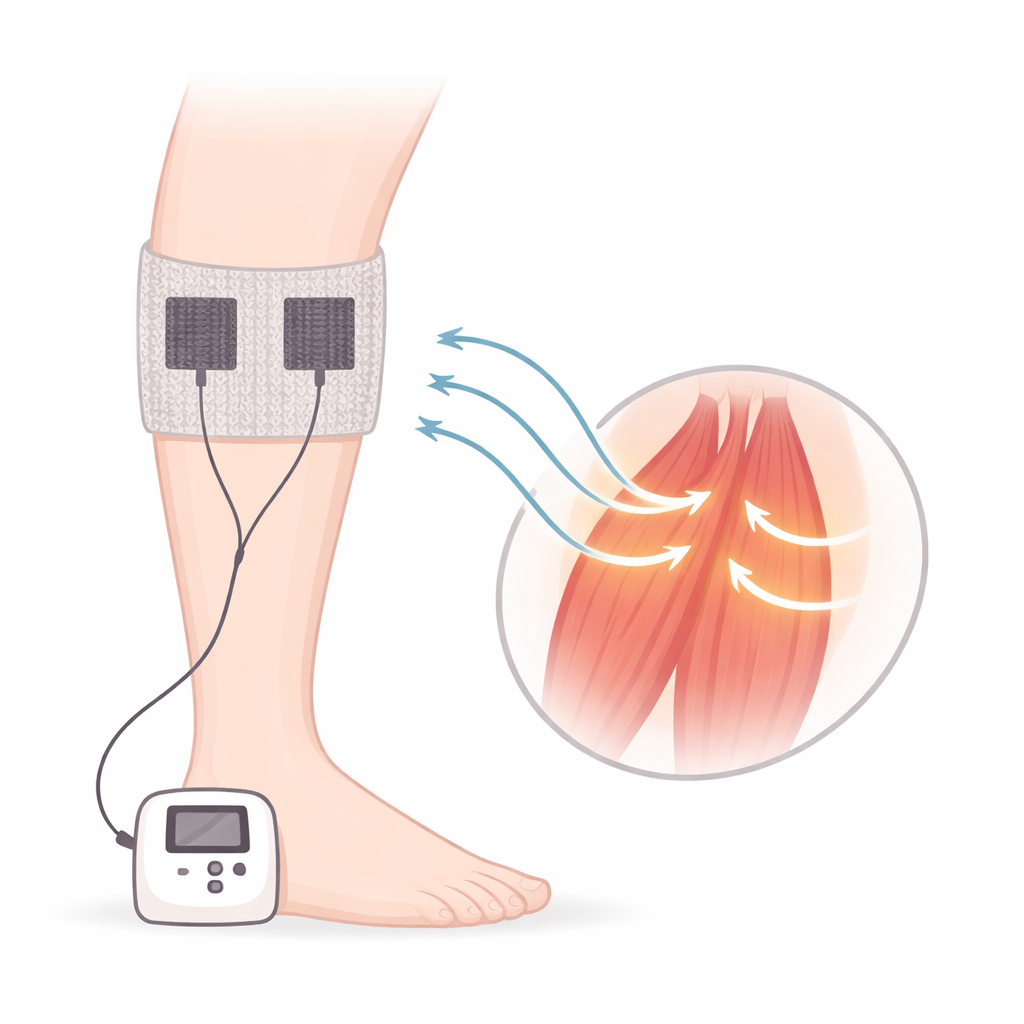
Electrical pulses delivered through the skin can help people move after stroke, ease symptoms of nerve disease, and support rehabilitation. But the success of these therapies often hinges on a humble component: the electrode pressed against the skin. This study introduces a new kind of soft, washable textile electrode made from conductive silicone yarn and tests whether it can deliver current as reliably and safely as today’s standard medical electrodes, while being more comfortable and reusable.
Why Better Electrodes Matter For Patients
Many forms of functional electrical stimulation use flat pads stuck to the skin to send small currents into nerves and muscles. Today, these are commonly made from sticky hydrogels or rubber filled with carbon. Hydrogels are easy to apply but can irritate the skin and wear out quickly. Rubber electrodes are generally skin-friendly, but they often need straps or tape to hold them in place, which is awkward for everyday use and makes it hard for patients to position them themselves. Textile electrodes, which can be built into garments or sleeves, promise quick, repeatable placement and high wearing comfort. However, most existing textile versions rely on metal-coated yarns, often silver, which can release antiseptic ions when current flows and may not be ideal for frequent stimulation.
Weaving Silicone Into Smart Cloth
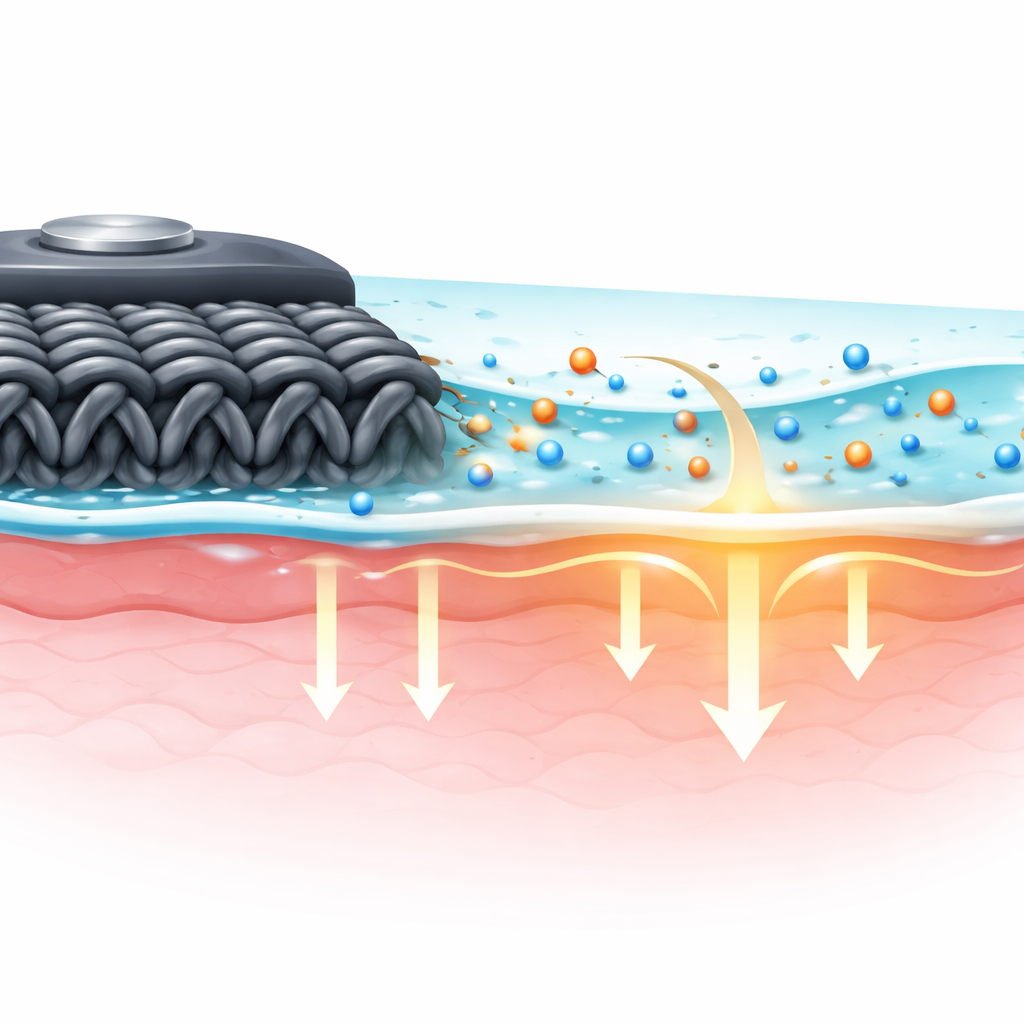
The researchers developed a new textile electrode by knitting carbon-doped silicone yarn into a small square patch, supported by a regular polyamide thread for mechanical strength. Around this, they added a ring of non-conductive silicone yarn acting as a barrier to keep the moist salt solution, used to improve electrical contact, from spreading into the rest of a garment. Inside the knitted pocket they placed a sponge that holds a standard salty solution similar to the body’s fluids. Before use, the sponge is moistened, so ions can move between the electrode and skin. The team tested two ways of connecting cables: one using a metal snap button directly on the electrode, and another where the conductive yarn itself carries the signal to a connector placed away from the wet area—an arrangement that mimics how the material might be built into wearable clothing.
Probing How The Cloth Behaves Electrically
To see how the new electrodes behave, the team immersed them in a 0.9% saltwater solution and performed a series of measurements over many hours. They measured how easily alternating current passes through the electrode over a wide span of frequencies (from a tenth of a hertz up to a million hertz), how the natural electrical potential of the electrode settles over time, and how much random electrical “hiss” or noise it generates. The complete electrode with snap button showed relatively low resistance to current flow: about 19.6 kilo-ohms at very low frequency (0.1 Hz) dropping to roughly 98 ohms at 1 MHz, equal to or better than many textile stimulation electrodes reported in the literature. The yarn-only configuration, without the metal button, had higher resistance, especially at low frequencies, reflecting the added length and less conductive pathway. In both designs, the measurements remained stable over 24 hours, suggesting the electrodes behave reliably during extended use.
Keeping The Signal Steady And Quiet
The authors also examined how the electrode’s own voltage drifts and how much small random fluctuations it adds, since both influence how cleanly medical devices can stimulate or record signals such as heart or brain activity. The yarn-only electrode settled to a potential of around 350 millivolts, while the version with a stainless-steel snap button ended up much closer to zero. This difference arises because the metals in the button naturally sit at lower electrical potentials, shifting the overall value. Importantly, both versions remained within ranges typical of established electrode materials. When they analysed noise, both types produced similar levels of current noise, but the snap-button version showed markedly lower voltage noise—close to the noise of the measurement system itself—indicating that the metal contact actually helps smooth out fluctuations compared with the yarn alone. Overall, the noise levels were modest and comparable to those of many conventional electrodes used in research and clinics.
From Lab Bench To Wearable Therapy
Putting all these measurements together, the study shows that textile electrodes knitted from conductive silicone yarn can match or outperform existing textile stimulation electrodes in how easily they pass current, how stable their electrical potential is, and how little noise they add. Because silicone-based materials are already known to be gentle on skin, and the electrodes can be integrated into washable garments, these devices could enable more comfortable, sustainable, and user-friendly electrical stimulation therapies at home and in clinics. Future work will have to confirm how they perform on real skin, under pressure and movement, and in long-term wear, but the results suggest that tomorrow’s rehabilitation devices may look and feel more like everyday clothing than medical hardware.
Citation: Lange, I., Kalla, T., Wegert, L. et al. Electrochemical characterisation of new textile electrodes based on a conductive silicon yarn for bioelectrical stimulation. Sci Rep 16, 8261 (2026). https://doi.org/10.1038/s41598-026-40950-4
Keywords: textile electrodes, functional electrical stimulation, conductive silicone yarn, wearable medical devices, bioelectrical stimulation