Clear Sky Science · en
Association between body composition and dyslipidemia in middle-aged and elderly ethnic minorities in Guangxi
Why where we store fat matters for heart health
As people grow older, many worry about conditions like high blood pressure or diabetes. Less visible, but just as important, are changes in blood fats—cholesterol and triglycerides—that quietly raise the risk of heart attacks and strokes. This study looked at how different "shapes" of body fat, not just overall weight, relate to unhealthy blood fats in middle-aged and elderly adults from four ethnic minority groups in Guangxi, China. Understanding these patterns can help doctors spot trouble early and tailor advice for men and women more precisely.
Who was studied and what was measured
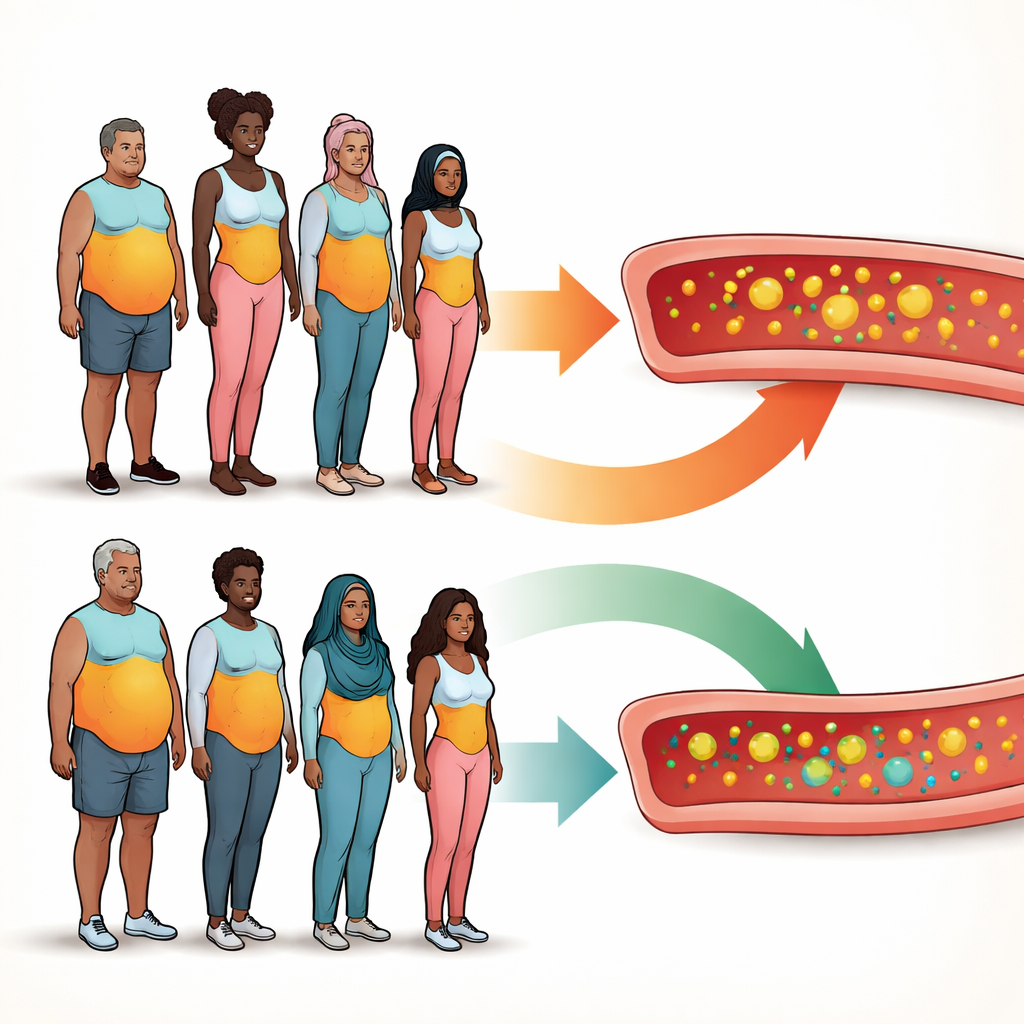
The researchers surveyed 1,652 adults aged 45 and older from the Maonan, Mulao, Miao, and Yao ethnic groups in several counties of Guangxi. All participants could trace their ancestry for three generations within the same group, helping the team focus on long-standing community patterns rather than recent migration. Trained staff collected information on lifestyle habits such as smoking, drinking, tea consumption, exercise, and sleep, and also measured height, weight, waist and hip size. A specialized scale that passes a weak current through the body estimated how much fat was stored in the trunk, arms, and legs, as well as deeper "visceral" fat around the organs.
Unhealthy blood fats are common in this community
Blood tests were taken after an overnight fast to measure total cholesterol, "bad" LDL cholesterol, "good" HDL cholesterol, and triglycerides. Using national Chinese guidelines, anyone with at least one abnormal value was considered to have dyslipidemia, or unhealthy blood fats. Nearly six in ten participants met this definition—a strikingly high level for communities that are often less studied in national health surveys. People with dyslipidemia, on average, had higher body weight, larger waist-to-hip ratios, and more fat in every region of the body than those with normal blood fats.
Different fat patterns, different risks for men and women
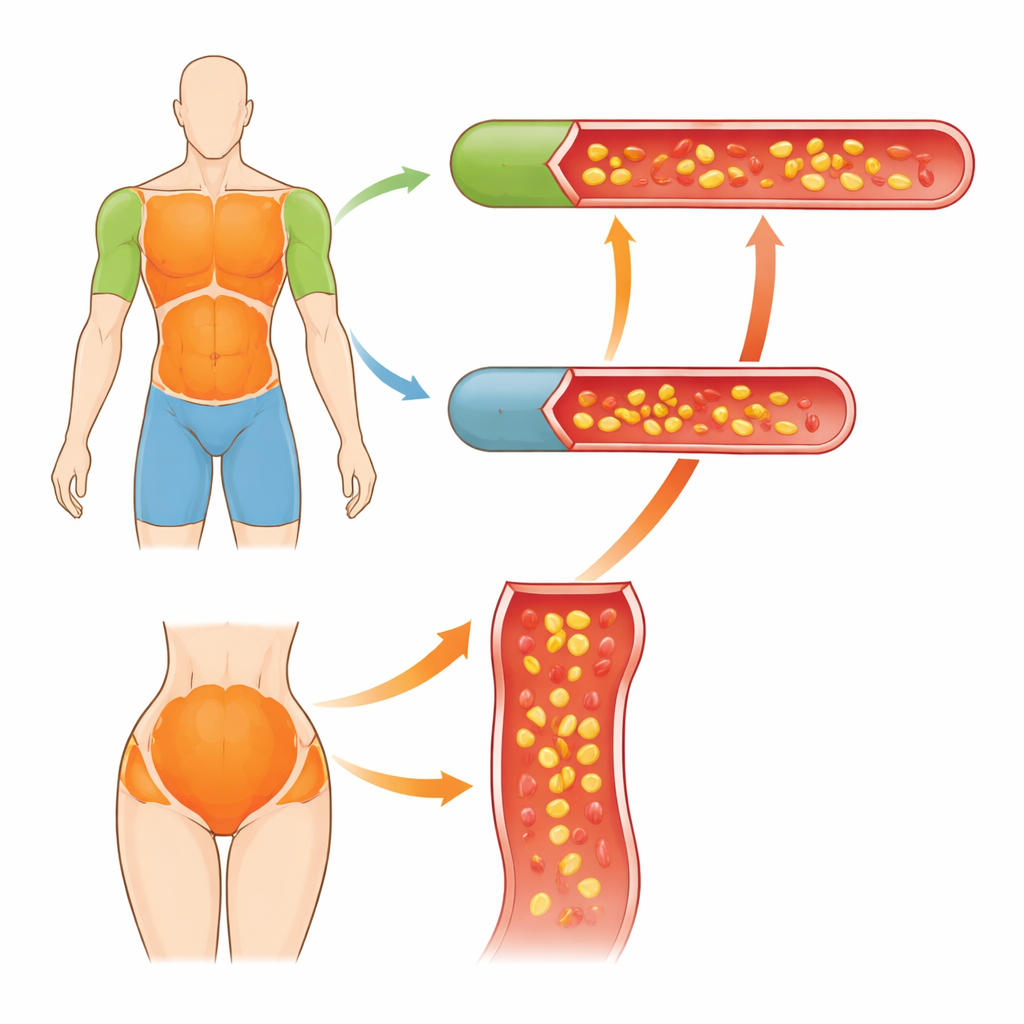
When the team examined which specific fat measures best predicted dyslipidemia, they found clear differences between men and women. In women, the single strongest signal was waist-to-hip ratio—a simple tape‑measure comparison of waist size to hip size. Women with the highest waist-to-hip ratios were more than three times as likely to have unhealthy blood fats, even after accounting for age, ethnicity, education, and lifestyle factors. In other words, for women in these groups, a thicker waist relative to the hips was a clearer warning sign than detailed measurements of fat in the arms, legs, or trunk.
Hidden risk zones in men’s bodies
In men, risk was tied less to simple body shape and more to how fat was distributed in particular regions. Men with the most trunk fat and those with the most fat stored in their legs were much more likely to have dyslipidemia, even after adjusting for many other factors, suggesting that both belly and lower‑body fat can be harmful in this setting. Surprisingly, men with more fat in their arms appeared less likely to have unhealthy blood fats. This hints that some fat depots may act as relatively "safe" storage, while others more readily disturb blood fat levels, though the authors caution that small numbers in some groups make these estimates imprecise and in need of confirmation by future research.
What this means for prevention and screening
Overall, the study shows that in these Guangxi minority communities, it is not just how much fat a person carries, but where they carry it, that matters for blood fat health—and that the key locations differ for men and women. For women, a growing waistline compared with the hips should prompt attention even if overall weight seems moderate. For men, build‑up of fat in the trunk and legs may be an overlooked danger zone, while arm fat might not carry the same risk. These insights support more tailored screening: simple waist and hip measures for older women, and closer attention to regional fat distribution in men, could help identify people at risk of heart disease earlier and guide lifestyle advice before serious problems develop.
Citation: Yu, H., Deng, Q., Deng, Y. et al. Association between body composition and dyslipidemia in middle-aged and elderly ethnic minorities in Guangxi. Sci Rep 16, 9956 (2026). https://doi.org/10.1038/s41598-026-40937-1
Keywords: dyslipidemia, body fat distribution, cardiovascular risk, ethnic minorities in China, gender differences