Clear Sky Science · en
Implementation of a 1021-gene liquid biopsy assay for real-world tumor genomic profiling in oncology practice
Why a Blood Test for Cancer Matters
Most people know that doctors often need to remove a piece of a tumor to understand a patient’s cancer. But this traditional biopsy is invasive, can be painful, and may not capture the full picture of a disease that has already spread. This study explores a different approach: using a simple blood draw to scan for genetic changes across more than a thousand cancer‑related genes. By showing how well this large blood test works in everyday oncology clinics, the researchers highlight a future in which treatment choices, monitoring, and even inherited risk can be guided by a tube of blood rather than a scalpel.
From Needle in the Tumor to Needle in the Vein
Cancer sheds tiny fragments of its DNA into the bloodstream as tumor cells die and break apart. These fragments, called circulating tumor DNA, are mixed with normal DNA from healthy cells. The team studied 1,110 people with metastatic (advanced) cancers of many types, including lung, breast, colorectal, pancreatic, prostate, ovarian, and others. They used an extensive test that reads 1,021 genes from a blood sample, and, when available, compared those blood results to DNA from the patient’s tumor tissue. They also sequenced white blood cells taken from the same blood draw to distinguish true tumor signals from age‑related changes in blood‑forming cells. 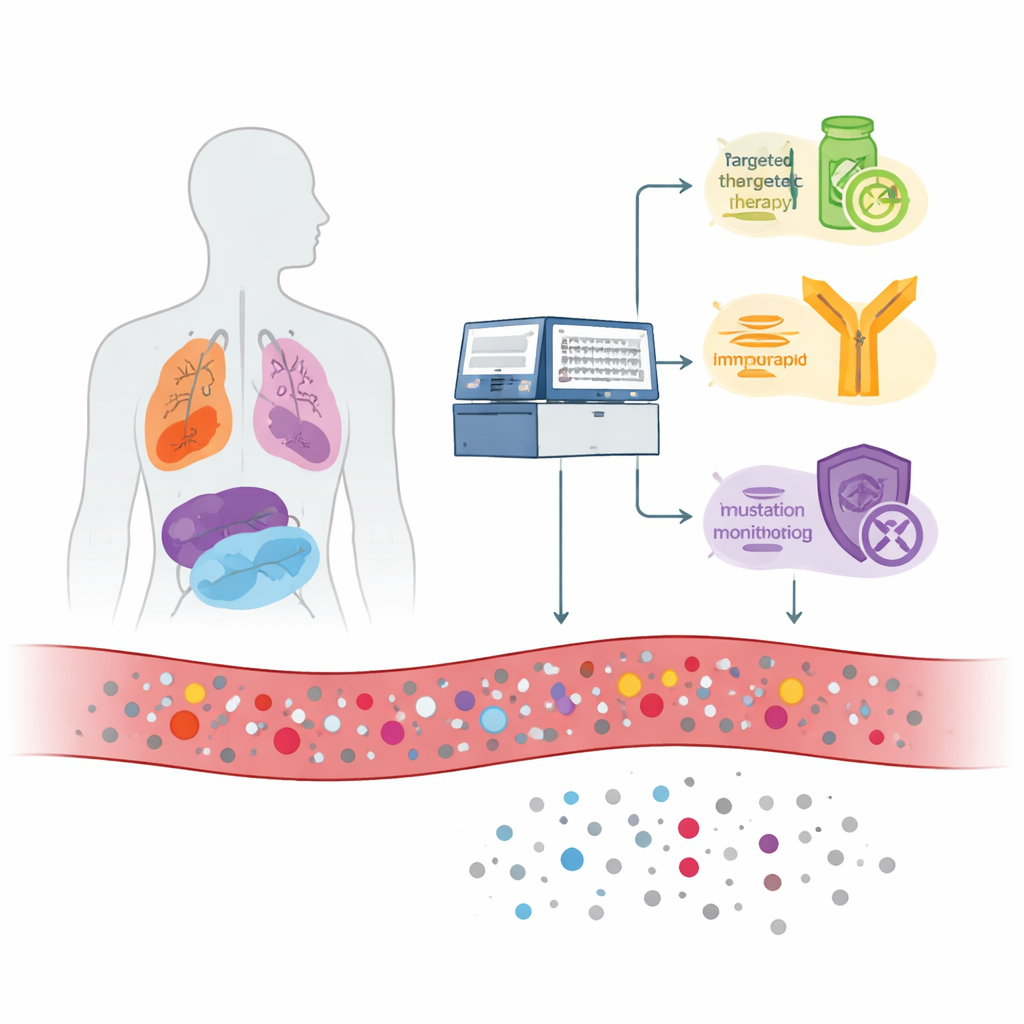
What the Blood Revealed About Tumors
The blood test detected cancer‑related DNA changes in roughly two‑thirds of patients. Many of these changes pointed directly to treatment opportunities. In about 16% of patients, the test found “on‑label” targets—mutations linked to drugs already approved for that specific cancer type, such as certain alterations in EGFR in lung cancer or PIK3CA and ESR1 in breast cancer. When the researchers also counted “off‑label” targets (mutations with drugs approved in other cancers), changes being studied in clinical trials, and mutations known to cause drug resistance, more than half of all patients had at least one potentially useful finding. The test also calculated two broader DNA features—tumor mutational burden and microsatellite instability—that can flag patients who might respond to immune checkpoint inhibitors; nearly 9% of patients appeared to be candidates for such immunotherapy based on their blood alone.
Different Cancers, Different Signal Strength
Not all tumors release DNA into the blood to the same degree. Cancers such as colorectal, prostate, and breast often shed enough DNA that the test can readily detect multiple changes, while brain tumors and many sarcomas shed very little, partly because of physical barriers like the blood–brain barrier or because their DNA changes are of types that are harder to pick up. The researchers estimated, for each patient, the fraction of cell‑free DNA in the blood that came from the tumor. This “tumor fraction” was generally low—about 2% on average—likely because many patients were already receiving treatment, which reduces tumor burden and the amount of tumor DNA in circulation. Even so, the wide gene panel helped confirm when tumor DNA was truly present, making a “negative” result more trustworthy in cancers that shed at moderate levels.
Following Cancer Over Time and Uncovering Inherited Risk
A subset of patients had their blood tested more than once. For some who were initially negative, later tests turned positive as tumor DNA levels rose, suggesting disease progression rather than the sudden appearance of resistance. In others, new mutations appeared on later tests that are known to cause resistance to targeted or hormone therapies, illustrating how serial blood draws can catch the tumor’s escape routes earlier than scans alone. At the same time, sequencing white blood cells allowed the team to pick up inherited (germline) mutations in cancer‑risk genes such as BRCA1 and BRCA2. Around 11% of patients carried such inherited changes, which could influence both their own therapy—such as eligibility for PARP inhibitors—and the screening recommendations for their families. 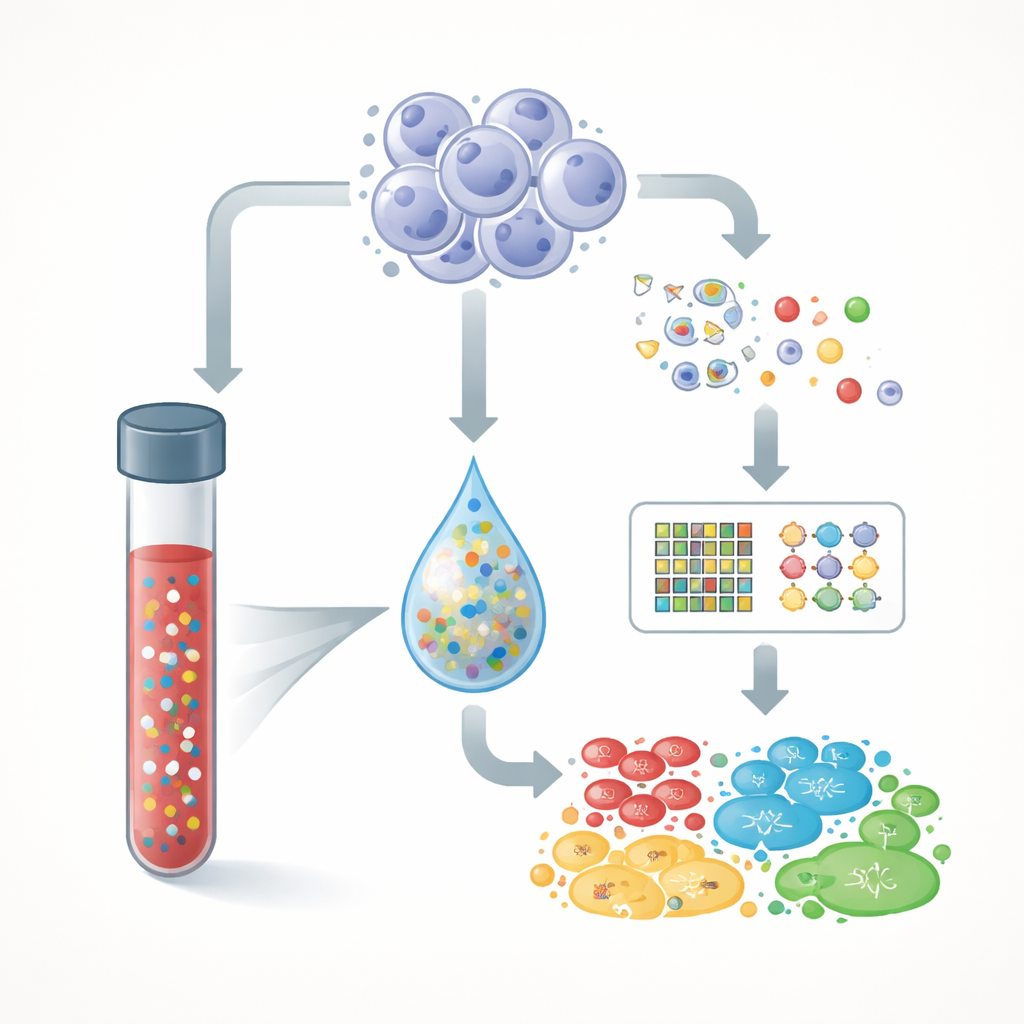
How Blood Tests and Tissue Work Together
For 145 patients, the researchers could compare blood results directly to tumor tissue. For the most important drug‑linked mutations, the match between blood and tissue was strong: about 90% of the time, they agreed on whether a key target was present or absent. In some cases, blood testing picked up resistance changes that the earlier tissue sample missed, likely because the tumor had evolved under treatment. In others, tissue revealed changes that were not detectable in blood, often in cancers that shed little DNA. This pattern suggests that blood and tissue are not rivals but partners: tissue remains essential when little tumor DNA circulates, while liquid biopsy offers speed, less invasiveness, and the ability to repeat testing as the disease changes.
What This Means for Patients
To a layperson, the message of this study is that a single blood draw can now provide a surprisingly complete genetic portrait of many advanced cancers. By casting a wide net over more than a thousand genes and carefully separating tumor signals from background and inherited changes, the test uncovered treatment options and resistance clues in the majority of patients, and flagged nearly one in ten as possible candidates for immunotherapy. When combined with traditional tissue analysis, this approach increases the chances of finding an actionable target, helps oncologists choose and adjust therapies more quickly, and can uncover inherited risks that matter for entire families. While it does not replace all biopsies—especially in cancers that release little DNA into the blood—it shows how liquid biopsy is becoming a powerful, practical companion to standard care in real‑world oncology practice.
Citation: Florou-Chatzigiannidou, C., Papadopoulou, E., Metaxa-Mariatou, V. et al. Implementation of a 1021-gene liquid biopsy assay for real-world tumor genomic profiling in oncology practice. Sci Rep 16, 10064 (2026). https://doi.org/10.1038/s41598-026-40923-7
Keywords: liquid biopsy, circulating tumor DNA, cancer genomics, targeted therapy, immune checkpoint inhibitors