Clear Sky Science · en
EGFR and AR expression and co-expression in Indian triple-negative breast cancer with patient outcome association
Why this study matters
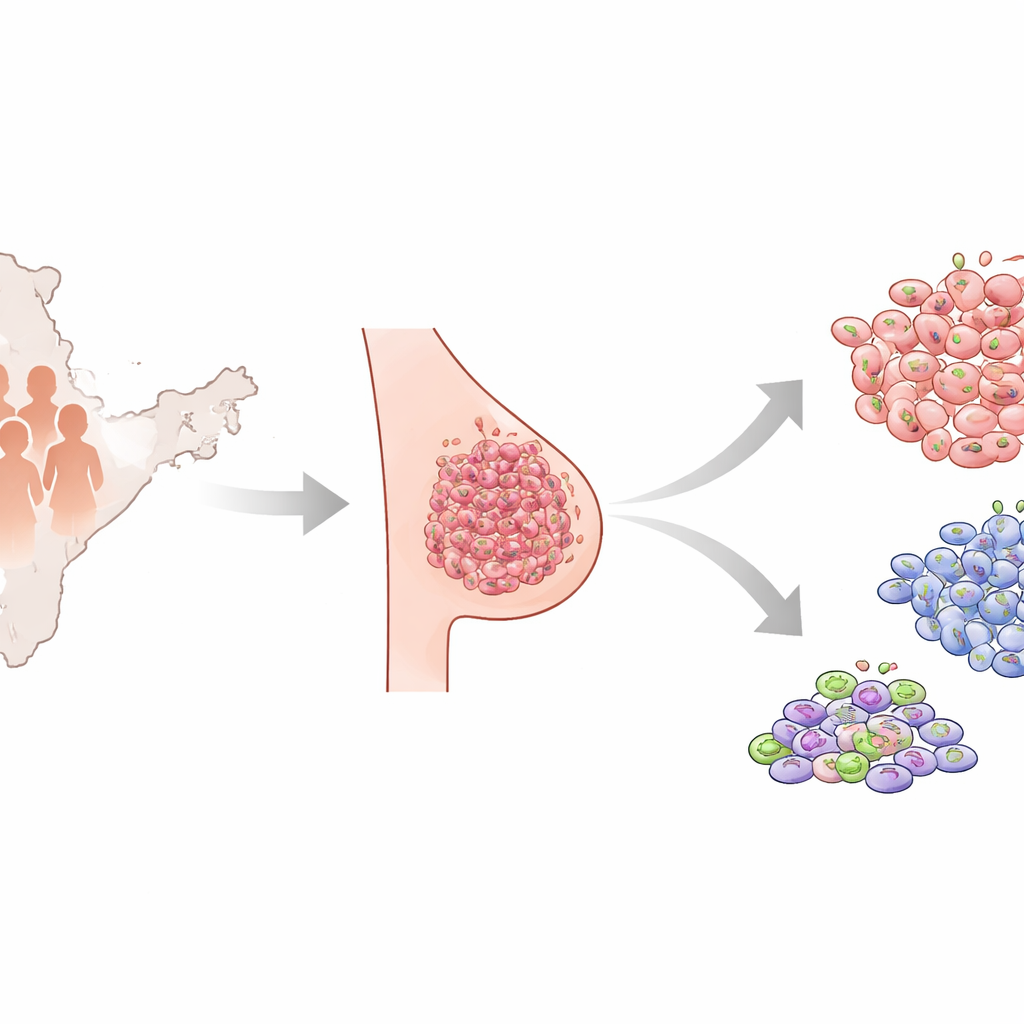
Triple-negative breast cancer is one of the most aggressive forms of breast cancer and is especially common among Indian women. Unlike other breast cancers, it lacks the hormone and HER2 targets that many modern drugs use, leaving chemotherapy as the main option. This study looks closely at two other molecules on cancer cells—EGFR and the androgen receptor (AR)—to see how often they appear in Indian patients, how they relate to each other inside tumors, and whether they might explain why some women fare worse than others.
A closer look at a hard-to-treat cancer
Triple-negative breast cancer (TNBC) accounts for only about one in six breast cancers worldwide, but for roughly one in four in India. It tends to strike at younger ages, grow quickly, and return early after treatment. In India, most patients still receive standard chemotherapy, and only about a third show a strong response. The researchers assembled 93 TNBC tumor samples from Indian women treated in a single cancer center, along with detailed records on their diagnosis, treatment, and follow-up. Using specialized staining methods on preserved tumor tissue, they measured the presence of EGFR, a growth factor receptor linked to fast-growing tumors, and AR, better known as the receptor that responds to male hormones but also present in many breast cancers.
Two key markers and what they reveal
The team found that about two-thirds of the tumors carried EGFR and a little over a third carried AR. EGFR-positive tumors were more likely to be high grade, at a later stage, and to show features of a more mobile, invasive cell type. These EGFR-rich cancers tended to come back sooner after treatment, even though they were somewhat more likely to shrink completely with chemotherapy. AR-positive tumors, in contrast, showed less of the invasive cell marker, hinting at a more settled cell state. Yet women whose tumors carried AR did not do better; if anything, they showed a trend toward shorter survival, especially when chemotherapy left behind residual disease.
When both signals appear in the same tumor
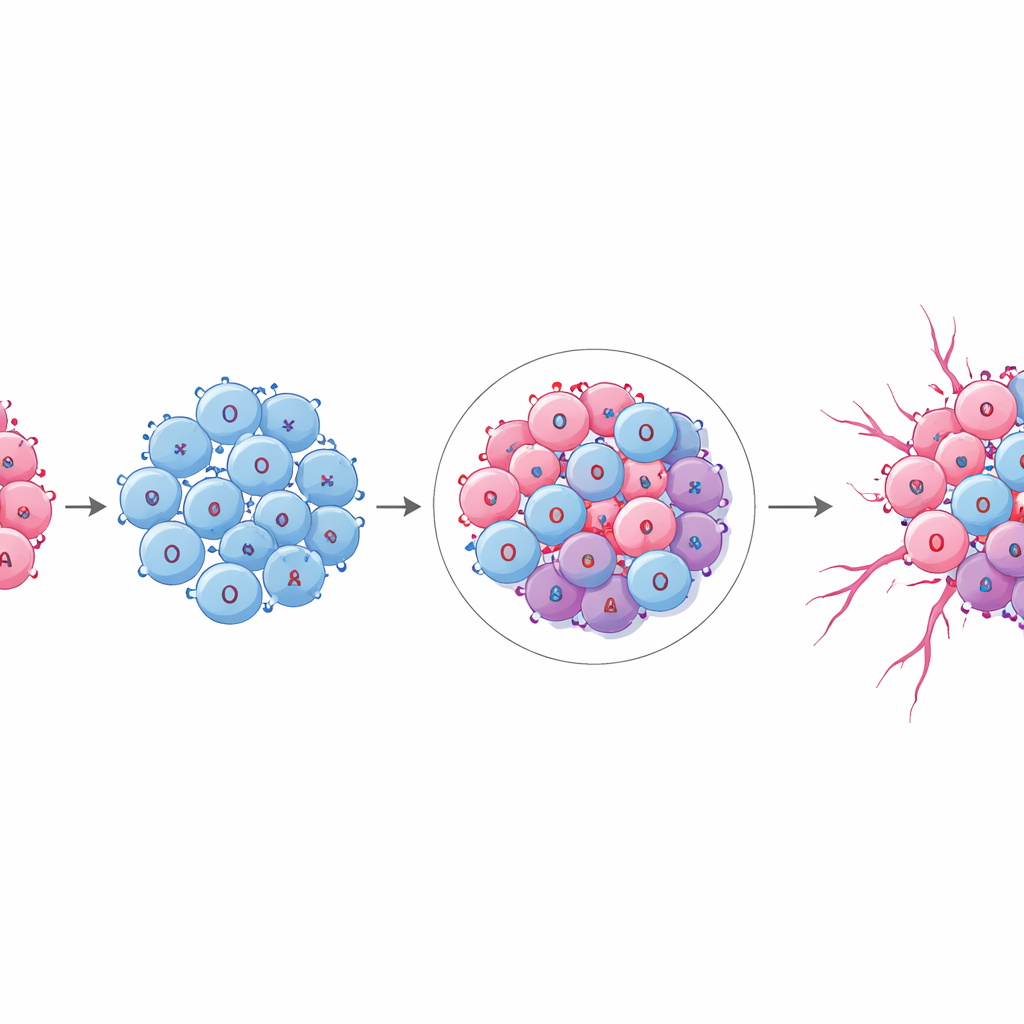
One of the most striking observations was that more than a quarter of the tumors showed both EGFR and AR when viewed across the whole tissue section. To discover whether the same cells carried both signals, or whether different cells within the tumor carried each one separately, the researchers used multiplex immunofluorescence—a technique that can color-code multiple markers in the same slice of tissue. They found that in about 15% of cases, individual cancer cells indeed carried both EGFR and AR. Patients whose tumors contained these “double-positive” cells had a tendency toward earlier recurrence and shorter survival than those whose tumors showed only one or neither marker.
Confirming rare cell types one cell at a time
To check whether these double-positive cells were unique to their patients or part of a broader pattern, the scientists re-analyzed public single-cell RNA sequencing datasets from TNBC tumors studied elsewhere in the world. These high-resolution data capture gene activity in thousands of individual cancer cells per tumor. In both outside datasets, they found cells that expressed both EGFR and AR, though generally at lower frequencies than in the Indian cohort. This suggests that such hybrid cells are a real and recurrent feature of triple-negative breast cancer, but may be more common—or more prominent—in Indian patients.
What this could mean for future care
For people living with or at risk for triple-negative breast cancer, the message from this work is that not all TNBCs are the same, especially in the Indian context. Tumors that are rich in EGFR—and particularly those that harbor cells carrying both EGFR and AR—appear more prone to come back after treatment. Although this study is too small to change care immediately, it highlights a distinct subgroup of tumors that might benefit from therapies aimed at both EGFR and androgen pathways together. In the long run, such population-specific molecular profiling could help move TNBC treatment beyond one-size-fits-all chemotherapy and toward more tailored, targeted approaches.
Citation: Vaid, P., Puntambekar, A., Kanse, P. et al. EGFR and AR expression and co-expression in Indian triple-negative breast cancer with patient outcome association. Sci Rep 16, 11010 (2026). https://doi.org/10.1038/s41598-026-40913-9
Keywords: triple-negative breast cancer, EGFR, androgen receptor, tumor heterogeneity, Indian breast cancer