Clear Sky Science · en
Molecular signatures of oocyte viability identified by follicular fluid proteomics
Why the Health of an Egg Matters
For many women today, waiting longer to have children collides with the biological clock of the ovaries. Every woman is born with thousands of tiny fluid‑filled sacs called follicles, each holding an immature egg. Yet fewer than 1% of these eggs will ever be released and have a chance at becoming a baby. This study asks a simple but crucial question: what makes one follicle nurture a healthy egg while another quietly fails? By examining the liquid that bathes these eggs, the researchers uncover molecular clues that may help doctors better protect and support female fertility.
A Closer Look Inside the Ovaries
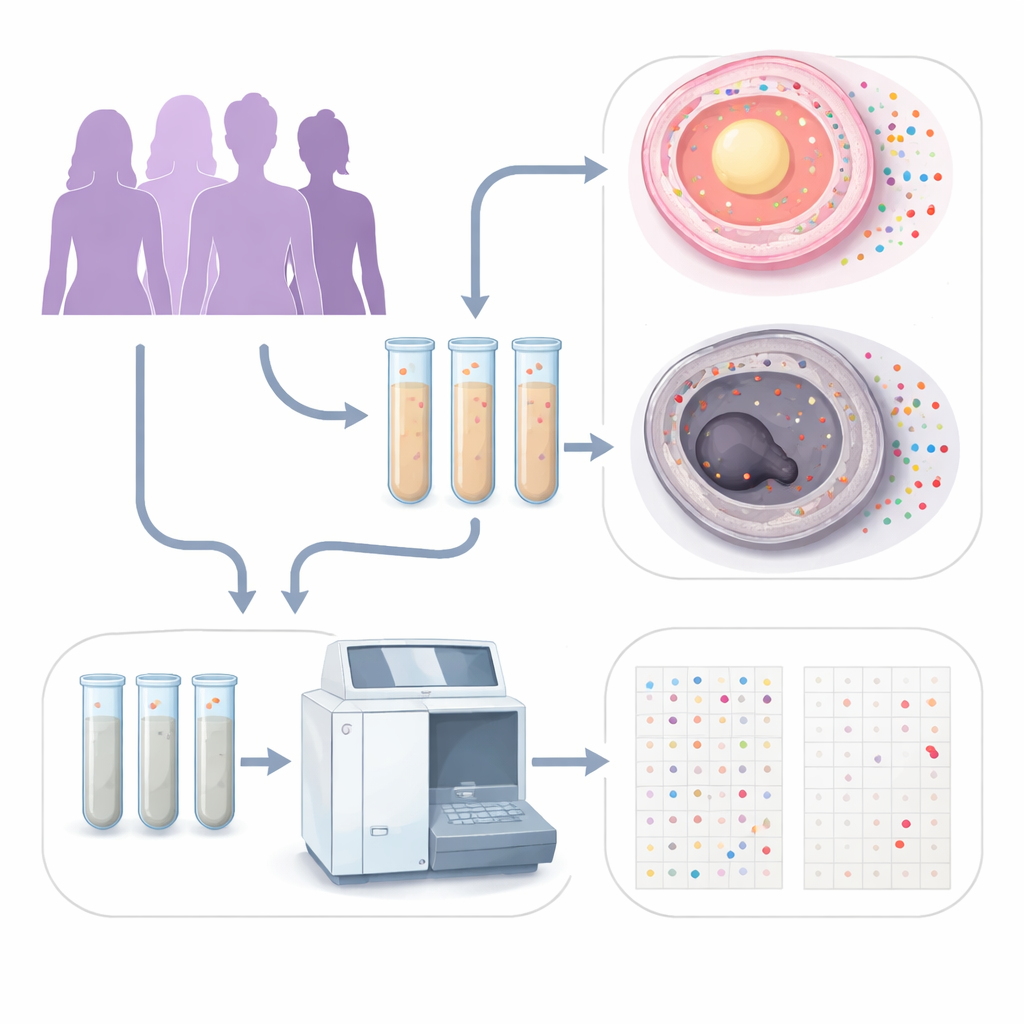
Each ovarian follicle is like a small, self‑contained world. At its center sits the egg, surrounded by helper cells and a specialized liquid known as follicular fluid. This fluid carries nutrients, protective molecules, and chemical signals. The team behind this study took advantage of a rare medical situation: young women having one ovary removed and frozen before cancer treatment. From each woman, they collected fluid from two small follicles of similar size—one containing a healthy‑looking egg and one containing a clearly deteriorating egg. This clever “paired” design allowed them to compare successful and failing environments within the very same person, avoiding many of the usual differences between patients.
Reading the Molecular Fingerprints
To decode what was happening in these tiny worlds, the scientists used advanced mass spectrometry, a tool that can identify and measure hundreds of proteins at once. Across just 20 fluid samples, they found almost 1,500 different proteins. Ninety‑six of these clearly differed between healthy and failing follicles. Strikingly, the fluid around healthy eggs was rich in a wide variety of proteins, while only three proteins were consistently higher in fluid from failing follicles. This uneven pattern suggests that keeping an egg alive and developing is an active, demanding task that requires many support systems working together, whereas follicle failure is driven by a much narrower set of molecular changes.
A Nurturing Versus a Hostile Environment
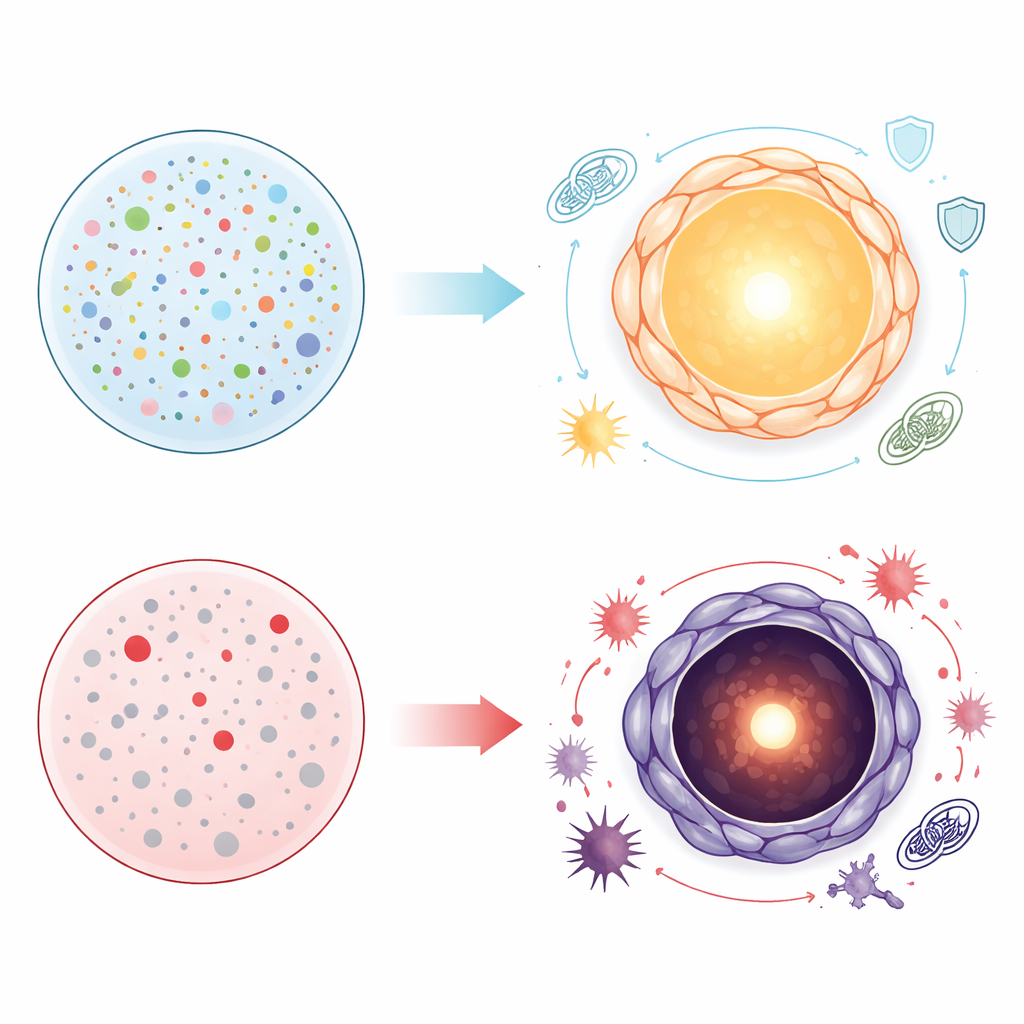
Zooming in on the details, healthy follicles showed high levels of proteins that fuel energy production and guard against damage from reactive oxygen species—highly reactive forms of oxygen that can harm cells if left unchecked. The fluid also contained more structural proteins and molecules that help cells stick together and communicate, hinting at strong physical support and close conversation between the egg and its surrounding cells. In contrast, fluid from failing follicles carried a distinct inflammatory fingerprint. The few proteins that were more abundant there are known from immune responses and tissue breakdown. When the researchers looked at groups of proteins rather than single ones, they again saw a clear split: healthy follicles favored energy, maintenance, and repair pathways, while failing follicles lit up pathways linked to inflammation and immune activity.
From Basic Insight to Future Fertility Care
These molecular fingerprints do more than satisfy scientific curiosity; they offer a roadmap for improving fertility treatments. Today, many assisted reproduction procedures try to mature eggs outside the body, yet often fail to recreate the supportive conditions of the natural follicle. The catalogue of proteins found in healthy follicular fluid points to ingredients—such as energy‑boosting enzymes and antioxidant defenders—that might be added to lab culture solutions to better protect developing eggs. At the same time, the inflammatory markers seen in failing follicles could serve as warning signals, helping doctors identify eggs with poor potential or design treatments that calm damaging immune activity and oxidative stress.
What This Means for Women’s Reproductive Futures
In everyday terms, this work shows that the fate of an egg is not left to chance. A thriving follicle is one whose fluid is bustling with energy supplies, protective shields, and sturdy connections; a failing follicle is marked by the rise of inflammatory signals and the loss of that supportive network. By turning these invisible molecular patterns into concrete markers and targets, the study lays the groundwork for tests that could better gauge egg quality and for more “nature‑inspired” fertility treatments. Ultimately, understanding and recreating the chemistry of a healthy follicle may help more women preserve their fertility and improve their chances of having children when the time is right.
Citation: Kristensen, S.G., Subiran Adrados, C., Elsner, K. et al. Molecular signatures of oocyte viability identified by follicular fluid proteomics. Sci Rep 16, 10010 (2026). https://doi.org/10.1038/s41598-026-40907-7
Keywords: female fertility, oocyte quality, follicular fluid, proteomics, assisted reproduction