Clear Sky Science · en
Association between neck circumference to height ratio and coronary heart disease: a case–control study in a Northern Chinese female population
Why the Neck Might Hint at Heart Trouble
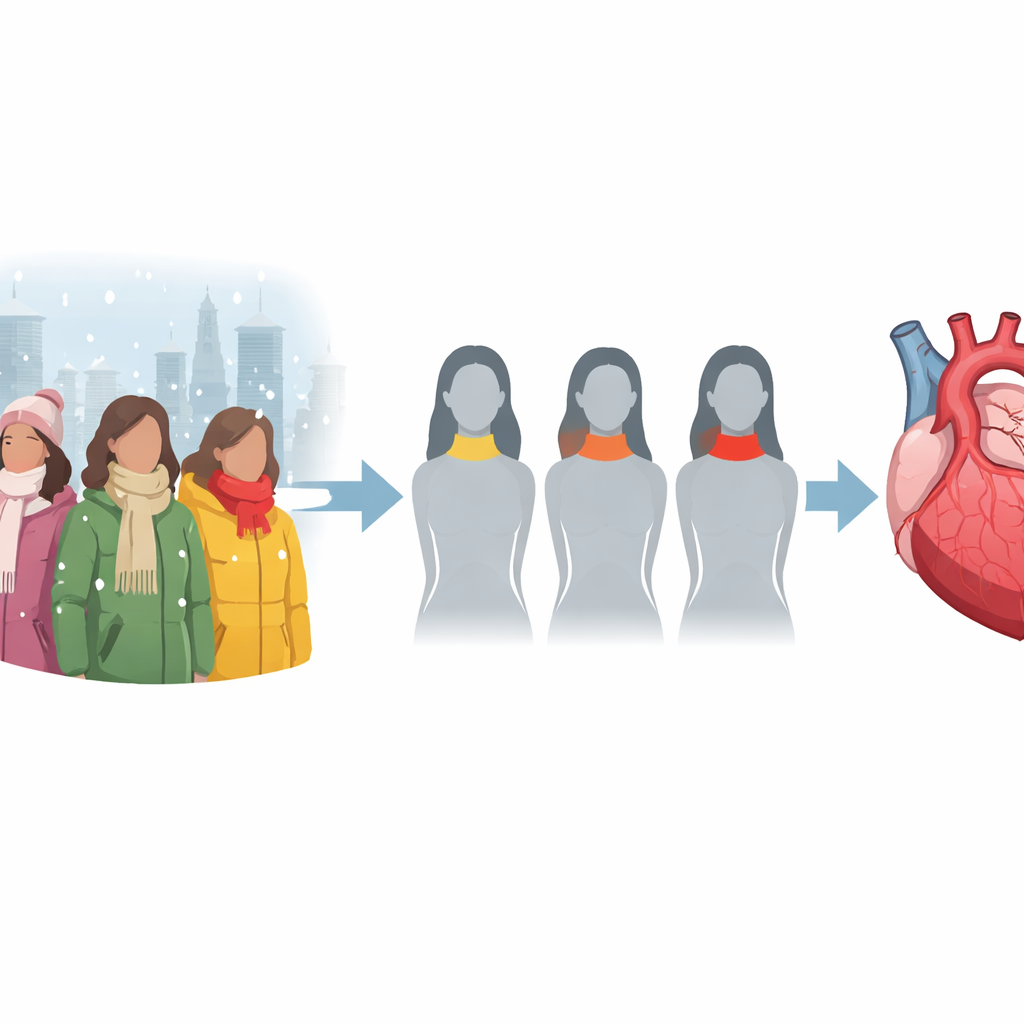
Doctors have long measured blood pressure and cholesterol to judge heart health. This study asks a surprisingly simple question: could the size of a woman’s neck, relative to her height, offer an extra clue about her risk of coronary heart disease? Focusing on women living in the colder northern regions of China, the researchers tested whether a quick tape‑measure check around the neck could help flag those more likely to have clogged arteries in the heart.
A Simple Measure with a New Twist
Instead of looking at neck size alone, the team used a ratio: neck circumference divided by height, called the neck circumference‑to‑height ratio (NHtR). This helps account for the fact that taller people naturally tend to have larger necks. The researchers enrolled 553 women who came to a hospital with chest pain and were undergoing coronary angiography, a detailed X‑ray test that shows whether the heart’s main arteries are narrowed. Based on this test, women were classified into two groups: those with coronary heart disease and those without it.
What the Hospital Data Revealed
When the researchers compared the two groups, they found that women with confirmed coronary heart disease were, on average, older and more likely to have high blood pressure, diabetes, to smoke, and to have slightly worse kidney function. Importantly, these women also had a higher NHtR than those without diseased arteries. Neck size on its own mattered, but the neck‑to‑height ratio did a better job of distinguishing between women with and without heart disease. Using statistical models, the team showed that as NHtR rose, the odds of having coronary heart disease also climbed, even after taking age, smoking, blood pressure, diabetes, and kidney function into account.
Neck Size, Body Fat, and Hidden Risk
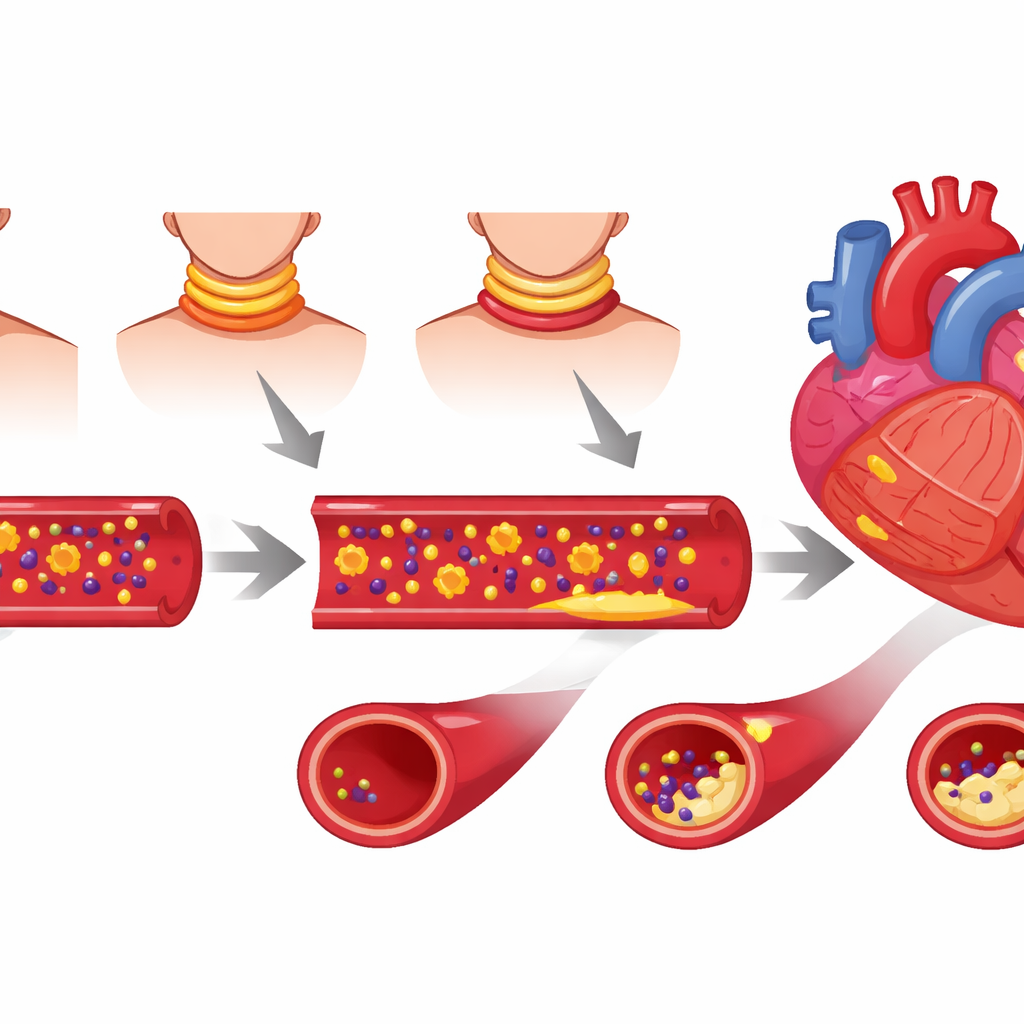
The neck is rich in a type of fat that lies just under the skin. This upper‑body fat is very active metabolically and can release large amounts of fatty substances into the bloodstream. These substances can promote insulin resistance, disturb cholesterol balance, damage blood vessel linings, and fuel long‑term, low‑grade inflammation—all changes that encourage fatty plaques to build up in the coronary arteries. Earlier research on neck circumference alone produced mixed results, possibly because it did not adjust for height. By using NHtR, this study tried to correct for body size and found a clearer link with heart disease in women.
How Strong Is the Signal?
To judge how useful NHtR might be in practice, the authors tested how well a model including this measure could tell apart women with and without coronary heart disease. The overall accuracy, summarized by an area‑under‑the‑curve value of 0.728, showed that NHtR added modest but meaningful predictive power. Women in the highest NHtR group had more than double the risk of coronary heart disease compared with those in the lowest group. This relationship held steady across different subgroups, including younger versus older women and those with or without high blood pressure, diabetes, or smoking.
What This Could Mean for Women’s Heart Care
Because NHtR is calculated from two measurements that are already part of routine check‑ups—neck circumference and height—it costs nothing extra and is easy to apply, especially in busy clinics or community screenings. The authors emphasize that NHtR should not replace traditional risk factors like age, blood pressure, or blood tests, but it could serve as a low‑tech add‑on to highlight women who might otherwise be overlooked. For women in northern China, where heart disease burden is high and winters are harsh, this simple ratio may help doctors spot risk earlier and prompt more detailed evaluation and preventive care. Larger, long‑term studies will be needed to confirm whether tracking NHtR over time can actually forecast future heart attacks, but this work suggests that the neck may quietly reflect what is happening in the heart.
Citation: Guo, R., Sun, M., Lin, W. et al. Association between neck circumference to height ratio and coronary heart disease: a case–control study in a Northern Chinese female population. Sci Rep 16, 9762 (2026). https://doi.org/10.1038/s41598-026-40895-8
Keywords: neck circumference, coronary heart disease, women’s heart health, body fat distribution, cardiovascular risk screening