Clear Sky Science · en
An internet-based parent management training program (Net PAMA) improves parenting outcomes in a multicenter randomized controlled trial
Helping Parents Help Their Children
Many families struggle with children’s tantrums, worry, restlessness, or defiant behavior, but in-person parenting classes can be hard to reach—especially during busy times or public health crises. This study tested a new online course, called Net PAMA, that teaches parents simple, everyday strategies for encouraging good behavior and easing conflict at home. By delivering these tools over the internet to families across Thailand, the researchers asked a timely question: can a well-designed digital program really strengthen parenting and improve children’s well‑being—and do parents gain anything extra from live online support groups?
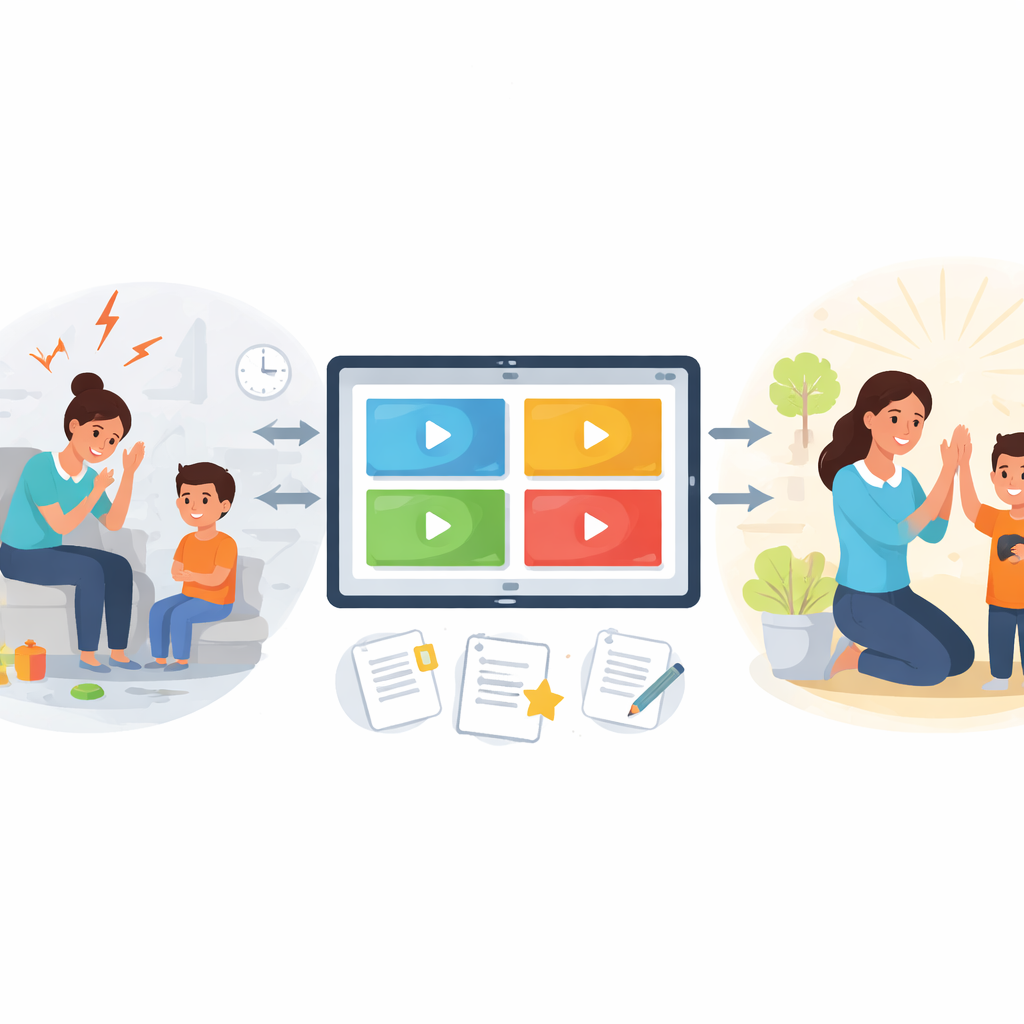
Why Child Behavior and Parenting Matter
Behavior and emotional problems in childhood are common worldwide and can lead to school failure, social rejection, and even criminal behavior later in life if left unaddressed. While genes play a role, the way adults respond to children day after day—through warmth, clear rules, and consistent follow‑through—strongly shapes how those children develop. Parent Management Training (PMT) is a well-established approach that coaches caregivers to replace harsh or inconsistent discipline with positive attention, praise, and fair limits. Traditional PMT, however, usually requires repeated clinic visits led by trained professionals, which can be costly and difficult to access, particularly in low‑ and middle‑income countries.
A Parenting Course Delivered Through a Screen
Net PAMA adapts the principles of PMT into a six‑chapter online course for parents of 6‑ to 12‑year‑old children. Each week, parents watched roughly two hours of video lessons and completed short exercises and daily homework with their child. The chapters introduce core skills: understanding how behavior changes, using better listening and communication, giving effective praise, rewarding helpful behavior, applying calm, non‑violent consequences, and using simple point‑based reward systems. To keep parents engaged, the course mixes case examples, practice activities, and game‑like interactive tasks. Some parents were randomly assigned to take Net PAMA alone; others took the same course plus two three‑hour live group meetings with child psychologists and fellow parents, where they could share experiences and receive feedback. A third group was placed on a wait‑list and did not receive the course until after the study.
Testing Changes in Families Over Time
More than 300 Thai parents volunteered online, and 290 completed the study. Families came from several regions and mostly reported stable relationships and no major medical problems in their children, although about one in five parents said their child already showed some emotional or behavioral difficulties. Everyone filled out questionnaires before starting, halfway through, at the end of the course, and again two months later. These surveys, answered by both parents and children, measured how often parents used positive parenting practices, how common children’s emotional and behavior symptoms were, and how oppositional the children seemed at home. The researchers then compared how scores changed over time in each of the three groups.
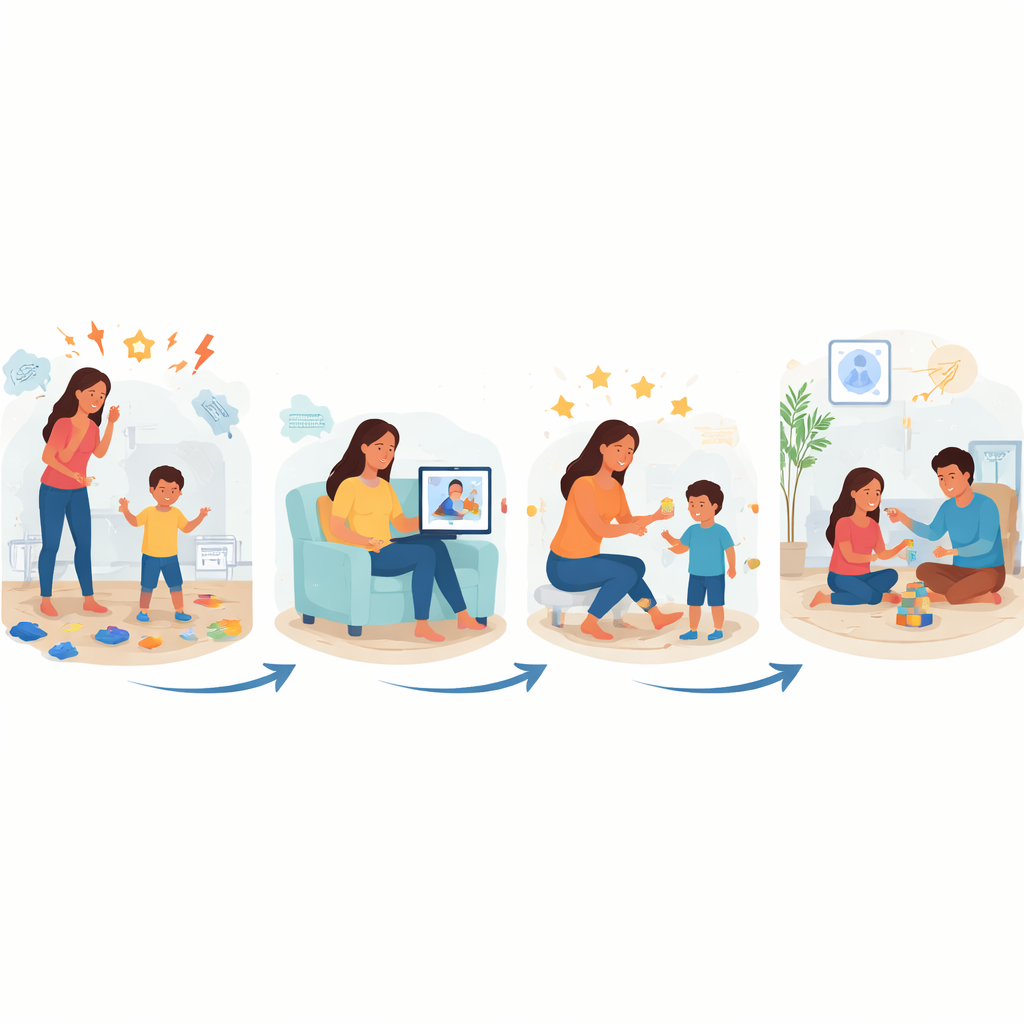
What Improved—and What Did Not Need a Group
Parents who took Net PAMA, with or without support meetings, reported clear gains in positive parenting skills, and their children largely agreed. Compared with the wait‑list group, intervention families showed more warm, respectful interactions and clearer rules, with small to medium improvements that were still present two months after finishing the course. At the same time, both parents and children reported fewer behavior and emotional problems, including reduced signs of anxiety, sadness, attention difficulties, and conduct issues. Levels of defiant behavior also tended to be lower in the Net PAMA groups than in the control group. Surprisingly, adding online group meetings did not produce better child or parenting outcomes than the self‑paced online course alone, although parents who had access to group meetings were slightly more likely to stay with the program to the end.
What This Means for Families
For families who may never set foot in a clinic, Net PAMA shows that a carefully built online course can nudge everyday parenting in a more positive direction and modestly ease children’s emotional and behavior problems, at least over a few months. The results suggest that most of the benefit comes from the structured video lessons and home practice themselves, not necessarily from added live meetings—though such meetings may help some parents stick with the program. Because the study focused on generally healthy families rather than children with serious diagnoses, Net PAMA is best viewed as a preventive tool that supports positive habits before problems become overwhelming. With further research in more diverse and clinical groups, internet‑based parenting programs like this could become an important part of community mental health care worldwide.
Citation: Chanpen, S., Chaiudomsom, C., Jeerasup, N. et al. An internet-based parent management training program (Net PAMA) improves parenting outcomes in a multicenter randomized controlled trial. Sci Rep 16, 9716 (2026). https://doi.org/10.1038/s41598-026-40857-0
Keywords: online parenting program, child behavior problems, positive parenting, internet mental health, parent training