Clear Sky Science · en
ICD-10 Diagnoses prior to ME/CFS diagnosis in children and young people suggest potential early diagnostic indicators
Why spotting this illness early matters
For many children and young adults, crushing fatigue, brain fog and unexplained pain can quietly derail school, work and social life for months or years before anyone has a name for what is happening. This study asks a practical question with real‑world consequences: are there common patterns in the medical records of young people before they are finally diagnosed with myalgic encephalomyelitis/chronic fatigue syndrome (ME/CFS)? If doctors and health systems could recognize these early warning signs, they might shorten today’s long, frustrating journeys to a proper diagnosis.
Looking back in health records
Researchers in Germany examined the insurance records of more than seven million people aged 6 to 27. Among them, just over 6,000 were newly diagnosed with ME/CFS between 2020 and 2022. Each of these young people was compared with five similar peers of the same age, sex and region who did not receive an ME/CFS diagnosis. The team focused on all diagnoses coded in the year before ME/CFS appeared in the records, looking for conditions that were more or less common in the group who later developed ME/CFS.
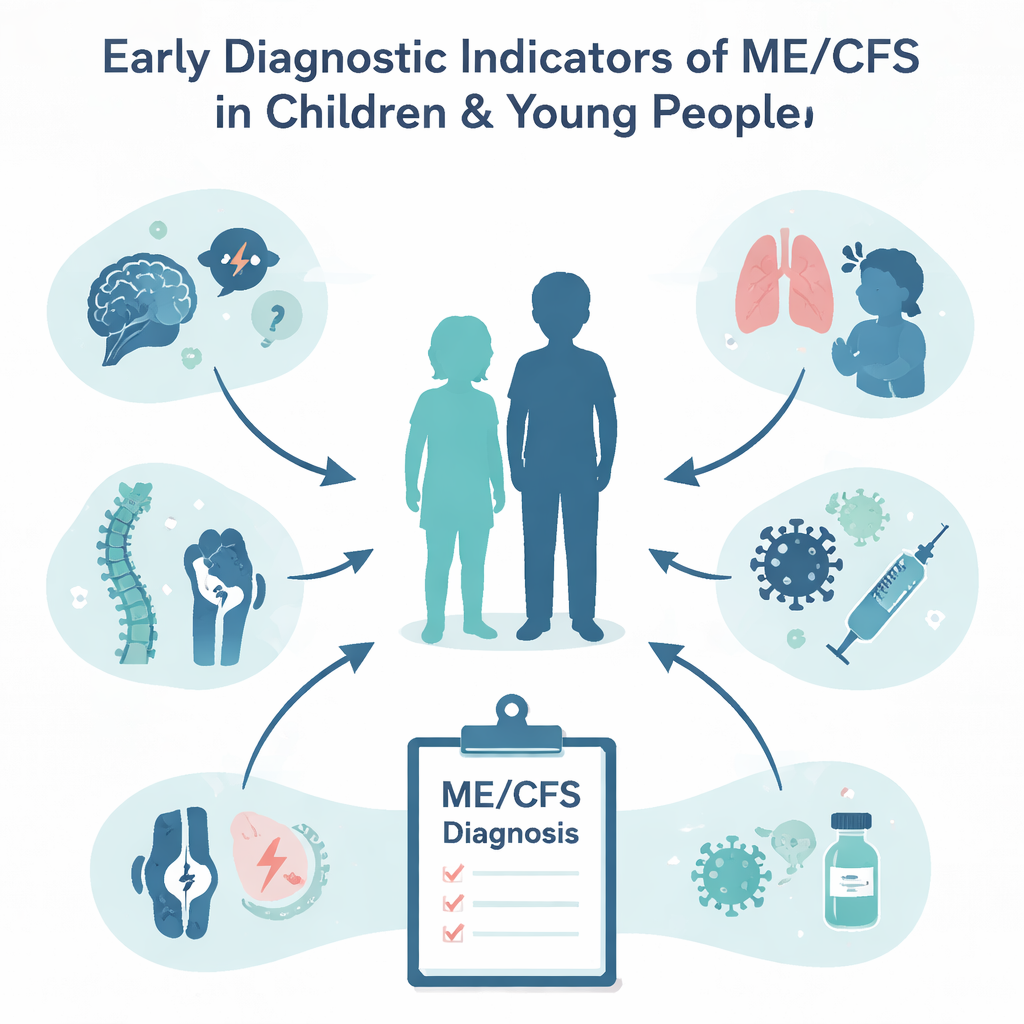
Clusters of warning signs
The analysis revealed 48 groups of diagnoses that were linked to a later ME/CFS diagnosis. Many fell into three broad areas: mental and behavioral problems, breathing‑related illnesses, and musculoskeletal issues such as back pain or spine problems. Fatigue itself stood out strongly—young people who had been coded with fatigue were more than twice as likely to later be diagnosed with ME/CFS. Pain conditions, including generalized pain and fibromyalgia, were also more frequent, as were headaches and migraines. Depression, somatoform disorders (physical symptoms without a clear medical cause) and sleep problems were common in the year before diagnosis, suggesting that some early ME/CFS symptoms may initially be labeled as mood or stress‑related conditions.
Signals from infections and COVID‑19
Repeated respiratory infections and allergy‑related breathing problems also appeared more often in future ME/CFS patients. Codes for sore throats, sinus infections, bronchitis and asthma were all slightly more common in the ME/CFS group. In the era of COVID‑19, the researchers paid special attention to coronavirus‑related entries. Young people whose records included a post‑COVID condition code had nearly four times the odds of receiving a later ME/CFS diagnosis, and those with a documented history of COVID‑19 infection were also at increased risk. By contrast, several vaccination‑related codes, including general vaccinations, were linked to a slightly lower chance of later ME/CFS, suggesting that infections themselves, rather than vaccines, are more relevant triggers.
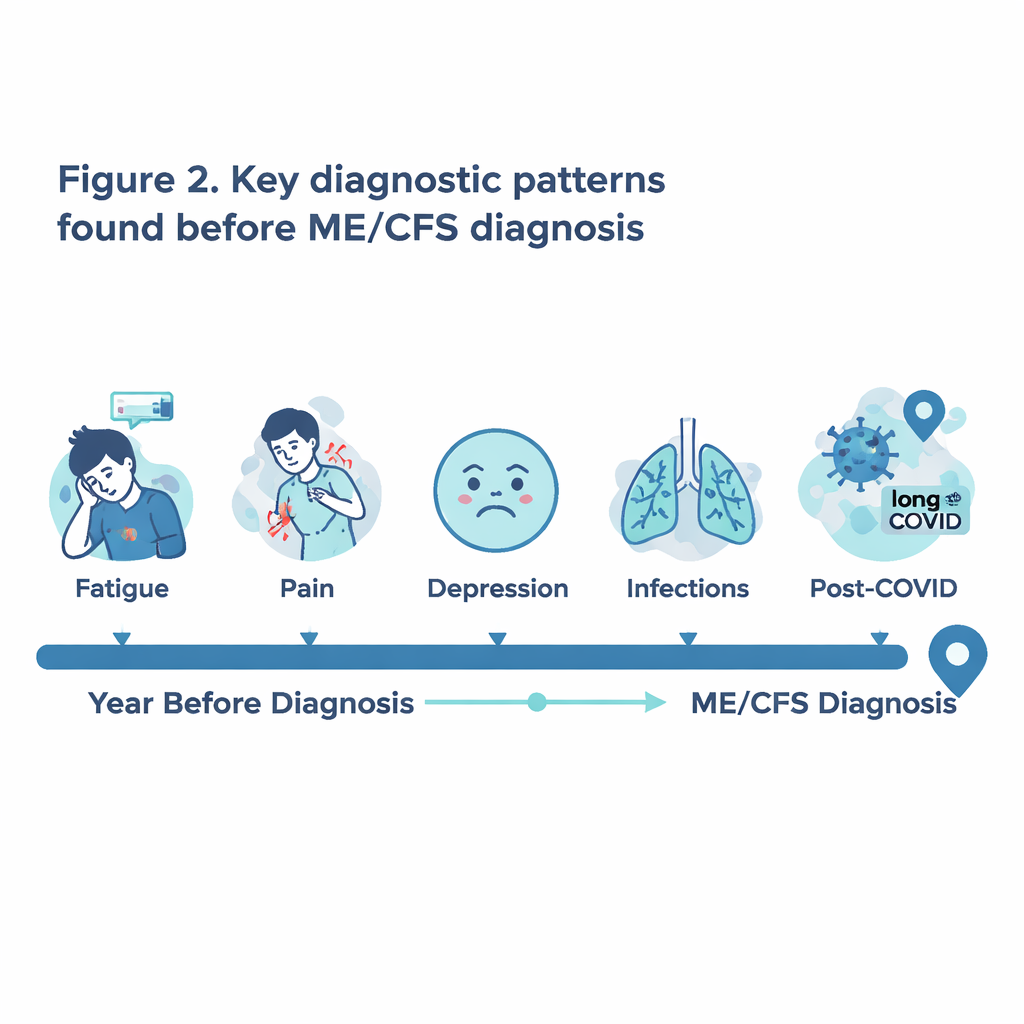
Many paths to the same diagnosis
The picture that emerges is not of a single clear pathway, but of overlapping patterns. Some young people had earlier diagnoses of fatigue, pain and mild cognitive difficulties; others cycled through respiratory problems or functional gut disorders such as irritable bowel syndrome. Many had multiple types of codes in the year before diagnosis, and a sizeable minority of comparison patients did too. This overlap underscores how easily early ME/CFS symptoms can be mistaken for other conditions, or scattered across different specialist visits, before someone connects the dots.
What this means for patients and families
For families and clinicians, the study’s message is both cautionary and hopeful. On one hand, the findings do not prove that any of these conditions directly cause ME/CFS; they are associations seen in insurance data, not proof of a chain reaction. On the other hand, they highlight a set of red flags—persistent fatigue, widespread pain, depression or anxiety, repeated infections, and lingering problems after COVID‑19—that should prompt doctors to consider ME/CFS sooner, especially in teenagers and young adults. Earlier recognition could reduce unnecessary tests, shorten years of uncertainty and open the door to better support and management for young people living with this disabling illness.
Citation: Wirth, M., Haastert, B., Linnenkamp, U. et al. ICD-10 Diagnoses prior to ME/CFS diagnosis in children and young people suggest potential early diagnostic indicators. Sci Rep 16, 7736 (2026). https://doi.org/10.1038/s41598-026-40848-1
Keywords: chronic fatigue in youth, ME/CFS diagnosis, post-COVID fatigue, early warning signs, health insurance data