Clear Sky Science · en
Exploring the Impact of Physical Activity Metrics on Calorie Consumption: A Machine Learning Approach Combined with SHAP Analysis
Why Daily Movement Matters More Than You Think
For anyone who wears a fitness tracker or wonders how many calories their workout really burns, this study offers a peek under the hood. The researchers asked a simple but important question: how do different kinds of movement throughout the day add up to calorie burn, and can computers turn the jumble of tracker data into clear, trustworthy guidance for better health?
From Simple Step Counts to Smart Predictions
Traditional methods estimate calorie burn using average values for broad activity types such as walking or running. These rules of thumb ignore how much people differ in body size, movement style, and activity patterns. With the spread of wrist-worn devices, we now collect rich streams of data on steps, distance, and time spent in different activity levels. This study used real data from 30 Fitbit users over two months to see whether more advanced computer models could take these daily activity records and more accurately predict how many calories people expend.
Putting Four Learning Machines to the Test
The team compared four kinds of machine learning models that each “learn” patterns in different ways: a support vector regression model, a radial basis function neural network, and two popular tree-based methods known as random forest and XGBoost. They trained the models on part of the data and then tested them on unseen days to see how well predictions held up. One model stood out: support vector regression offered the best balance between fit and realism, explaining about three quarters of the variation in calorie burn on new data. Some of the more complex models looked excellent on the training data but stumbled on test data, a sign they were memorizing noise rather than capturing true patterns. 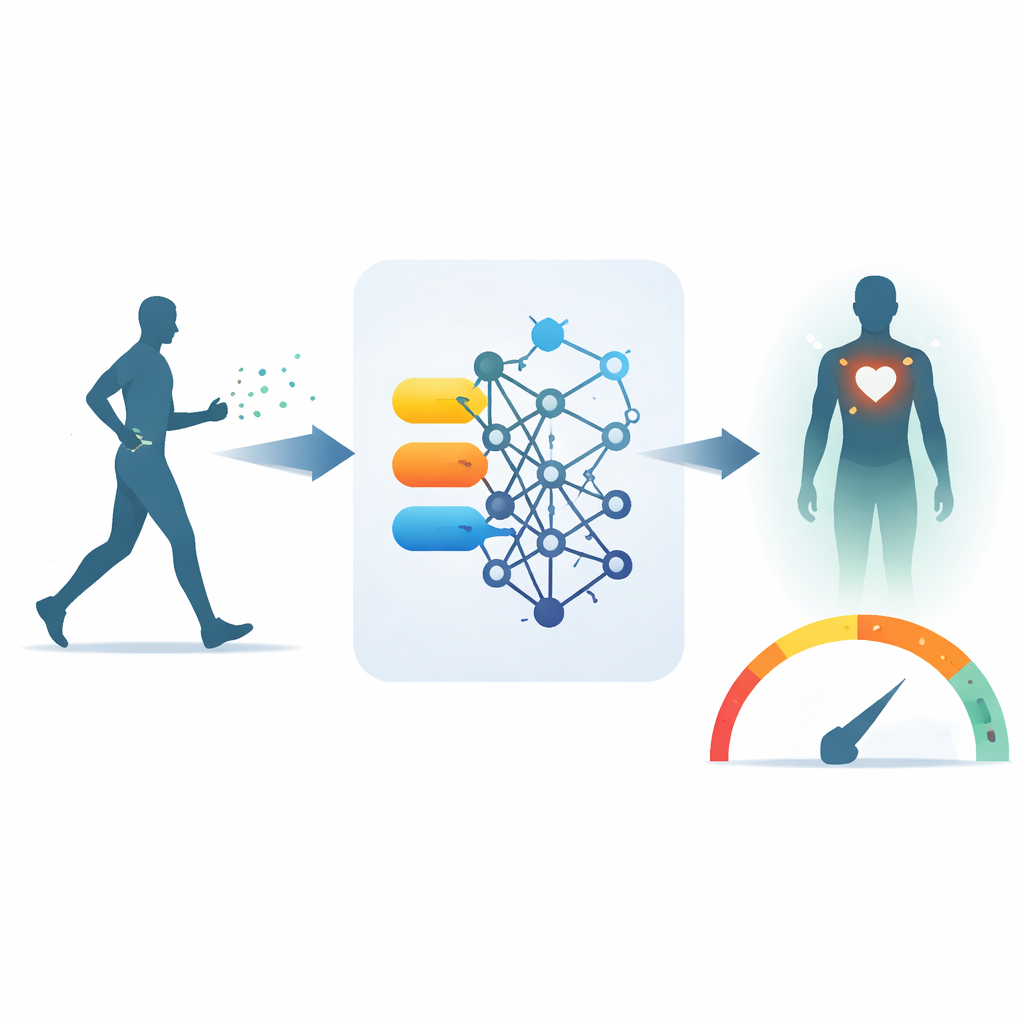
What Really Drives Calorie Burn
Beyond accuracy, the researchers wanted to know which aspects of movement matter most. They used a technique called SHAP, which treats each activity measure like a player in a team and calculates how much that player contributes to the final score. Two features clearly dominated: total distance covered and total steps taken in a day. People who moved farther and took more steps typically burned far more calories. Time and distance spent in very intense activity—fast walking, running, or similar—also had a strong positive impact, especially once those values climbed above the middle of the group. In contrast, light activity and time spent sitting were weakly linked to calorie burn, and long sedentary periods often nudged predicted energy use downward.
When More Steps Are Not Always Better
Digging deeper, the study found that step count and distance are tightly linked but not identical. High step counts without much distance—think of short, shuffling steps—did not always translate into large calorie burn. The explanation is intuitive: distance reflects how much ground you actually cover and often lines up with higher speed and effort. The model suggested a kind of efficiency threshold: once a basic level of movement is reached, simply adding more low-effort steps gives diminishing returns unless stride length or pace increase as well. This nuance helps explain why two people with similar step counts can see different results on the scale.
Turning Insights Into Everyday Advice
By combining prediction and explanation, the study points toward more personalized exercise guidance. For people short on time, brief bursts of very active movement appear far more effective for calorie burn than longer stretches of gentle walking. For those already hitting high step counts, focusing on walking a bit faster or farther may matter more than pushing the raw step number higher. And while light movement and breaks from sitting are still important for long-term health, they contribute relatively little to immediate energy use compared with sustained, higher-intensity activity. 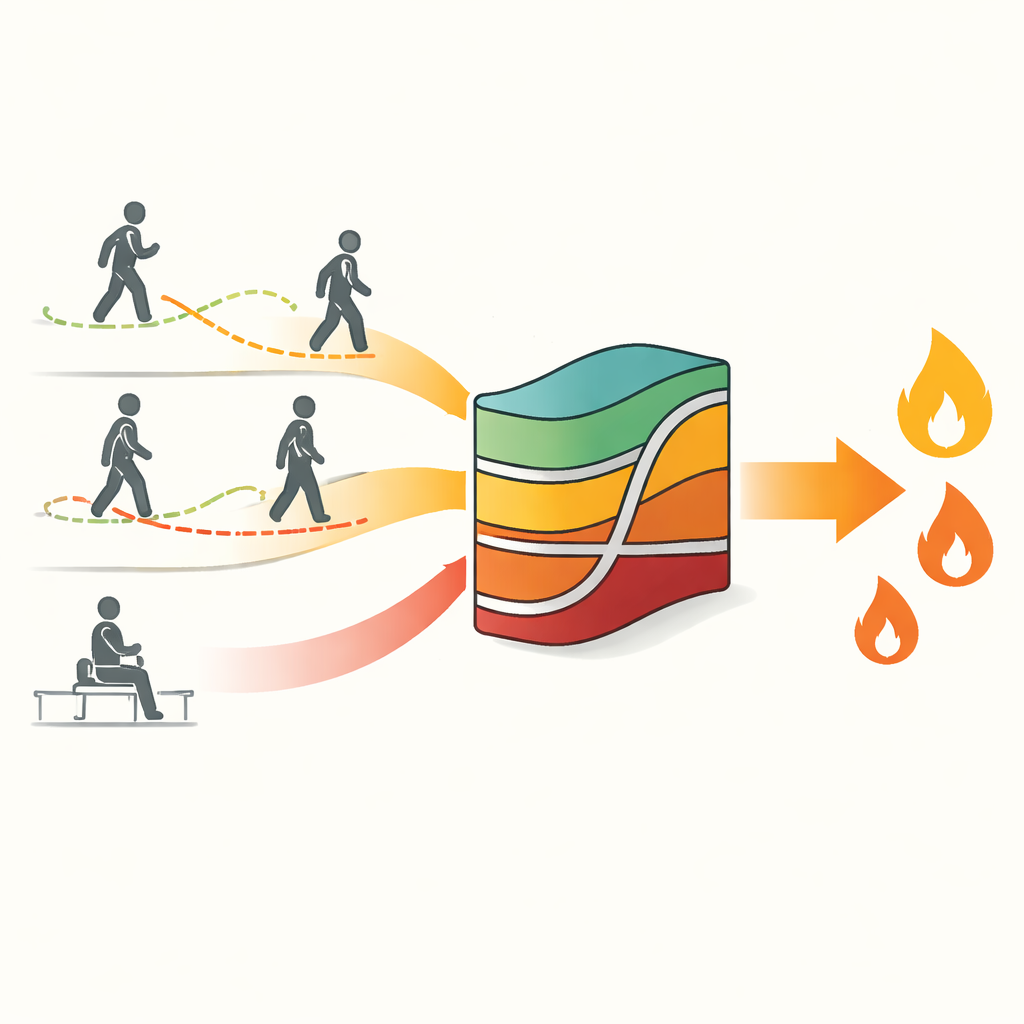
What This Means for Your Daily Routine
In plain terms, the findings suggest that not all movement is created equal. Total distance, total steps, and especially time spent in vigorous motion are the main drivers of daily calorie burn, while light strolling and long stretches of sitting do much less. The support vector model, made transparent with SHAP analysis, shows that smart use of your limited active minutes—going a bit farther and harder instead of just more often—can make your tracker’s numbers more meaningful and your efforts more effective in managing weight and overall health.
Citation: Lin, S., Zhang, Y. Exploring the Impact of Physical Activity Metrics on Calorie Consumption: A Machine Learning Approach Combined with SHAP Analysis. Sci Rep 16, 11053 (2026). https://doi.org/10.1038/s41598-026-40830-x
Keywords: physical activity, calorie expenditure, wearable fitness trackers, machine learning, exercise intensity