Clear Sky Science · en
Evaluation of the phenolic profile and biological activities of Boletus speciosus extracts optimized with response surface methodology and artificial neural networks-genetic algorithm
Why a Colorful Forest Mushroom Matters
Many people think of mushrooms simply as ingredients in a meal, but some wild species act more like miniature pharmacies. This study looks at Boletus speciosus, an edible mushroom found in Turkish forests, and asks a practical question: if we change how we extract its ingredients, can we unlock more of its natural health‑supporting power—especially for protecting our cells, brains, and possibly even guarding against cancer?
From Forest Floor to High‑Tech Lab
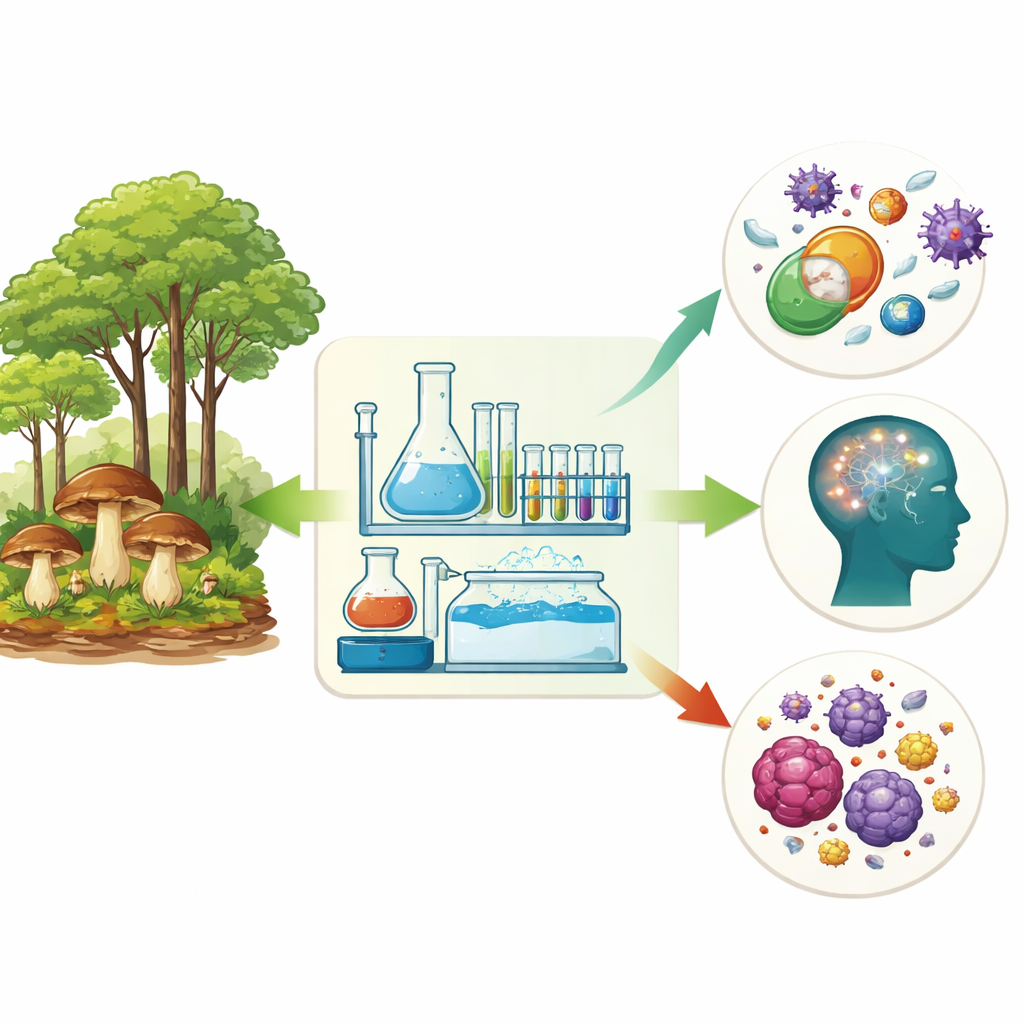
Researchers began by carefully collecting Boletus speciosus from mixed chestnut, oak, and beech forests. In the lab, the mushrooms were dried, ground into powder, and mixed with an alcohol–water solvent under controlled conditions of temperature and time. Instead of guessing which conditions might work best, the team used two systematic approaches to tune the process: a traditional statistical method and a newer artificial‑intelligence‑assisted method that combines artificial neural networks with a genetic algorithm. Both methods aimed to find the specific combination of temperature, time, and solvent mix that would pull out the most beneficial compounds.
Testing the Mushroom’s Protective Power
Once the best extraction conditions were set for each method, the resulting liquids were put through a battery of tests. To probe overall “cell shield” strength, the team measured how well the extracts neutralized reactive molecules linked to wear and tear in the body. They also checked how strongly the extracts slowed two enzymes that break down a key brain messenger; slowing these enzymes is one strategy used in some treatments for memory‑related diseases. Finally, the scientists exposed three types of human cancer cells—lung, breast, and prostate—to different extract doses to see whether the cells kept multiplying or their growth slowed down.
What AI‑Guided Extraction Changed
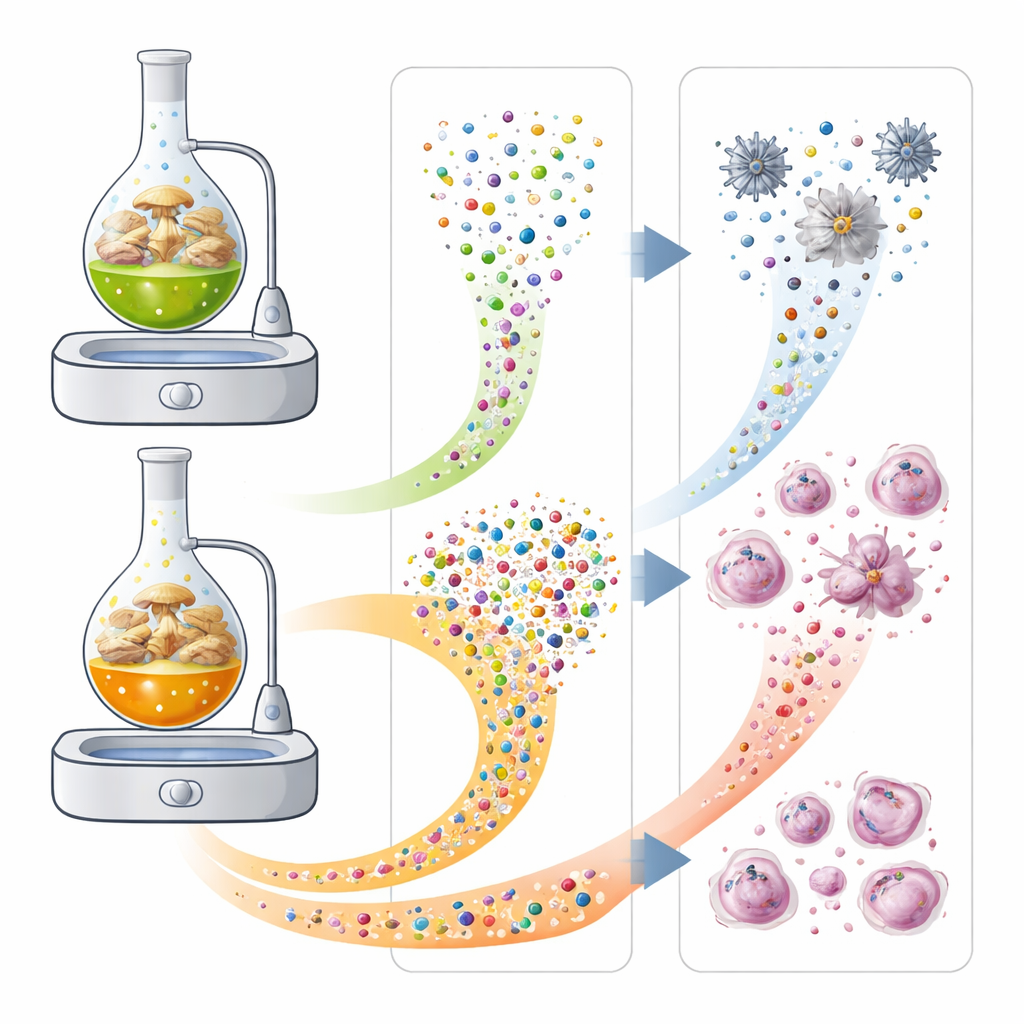
The artificial‑intelligence‑optimized extract consistently outperformed the traditionally optimized one. It showed slightly higher total antioxidant capacity and greater ability to quench damaging radicals, along with a lower level of oxidant by‑products. In simple terms, under the microscope this version of the extract shifted the balance more clearly toward protection rather than damage. It also blocked the brain‑related enzymes more strongly, meaning smaller amounts of extract were needed to reach the same level of slowdown. In cancer cell tests, this extract reduced cell viability more sharply and more steadily as the dose increased, across all three cell lines tested.
The Role of Special Plant‑Like Compounds
To understand why the AI‑guided extract worked better, the team used a sensitive instrument to map out its small chemical ingredients, focusing on a family of molecules known as phenolic compounds that are common in plant‑based foods and are often linked to health benefits. Both extraction methods pulled out several well‑known phenolics, but the AI‑optimized method produced clearly higher levels of key players such as gallic acid, protocatechuic acid, caffeic acid, quercetin, and catechin hydrate. These molecules are known from other foods and herbs to contribute to antioxidant, nerve‑protecting, and anti‑cancer effects. The richer mix in the AI‑optimized extract lined up with its stronger performance in all biological tests.
What This Means for Everyday Health Products
For non‑specialists, the central message is that not all “mushroom extracts” are created equal; how they are made can dramatically change their potency. In this study, the artificial‑intelligence‑guided approach produced a Boletus speciosus extract with a more powerful antioxidant profile, greater potential to support nerve signaling, and a stronger ability to slow the growth of cancer cells in the lab, largely by enriching specific phenolic compounds. While these findings come from controlled laboratory experiments—not from human trials—they suggest that combining traditional natural resources with smart optimization tools could lead to more effective functional foods, supplements, or future therapies built from a humble forest mushroom.
Citation: Korkmaz, A.F. Evaluation of the phenolic profile and biological activities of Boletus speciosus extracts optimized with response surface methodology and artificial neural networks-genetic algorithm. Sci Rep 16, 9706 (2026). https://doi.org/10.1038/s41598-026-40827-6
Keywords: medicinal mushrooms, antioxidant extracts, phenolic compounds, artificial intelligence optimization, anticancer potential