Clear Sky Science · en
Development and validation of machine learning models for diagnosing hepatocellular carcinoma risk and survival in patients with diabetic cirrhosis
Why this research matters to people with diabetes and liver disease
People living with both diabetes and advanced liver scarring (cirrhosis) face a double threat: they are much more likely to develop liver cancer and to die from a range of serious complications. Yet doctors currently lack tools tailored to this high‑risk group that can reliably flag who is most likely to develop liver cancer and who is at greatest risk of dying. This study shows how routinely collected blood tests and modern computer techniques can be combined into practical charts that help doctors estimate cancer risk and survival for these vulnerable patients.
Linked diseases that amplify each other
Diabetes and cirrhosis interact in a vicious cycle. Diabetes promotes fatty and inflamed liver tissue, which can progress to cirrhosis; cirrhosis in turn makes it easier for diabetes to appear or worsen. When the two conditions coexist, the chance of developing hepatocellular carcinoma, the most common form of primary liver cancer, climbs sharply. At the same time, these patients face high risks of dying from heart disease, infections, liver failure and other complications. Because resources for intensive screening are limited, clinicians need simple ways to identify which patients with diabetic cirrhosis most urgently require close cancer surveillance and aggressive management of other health problems.
Using data and algorithms to spot hidden patterns
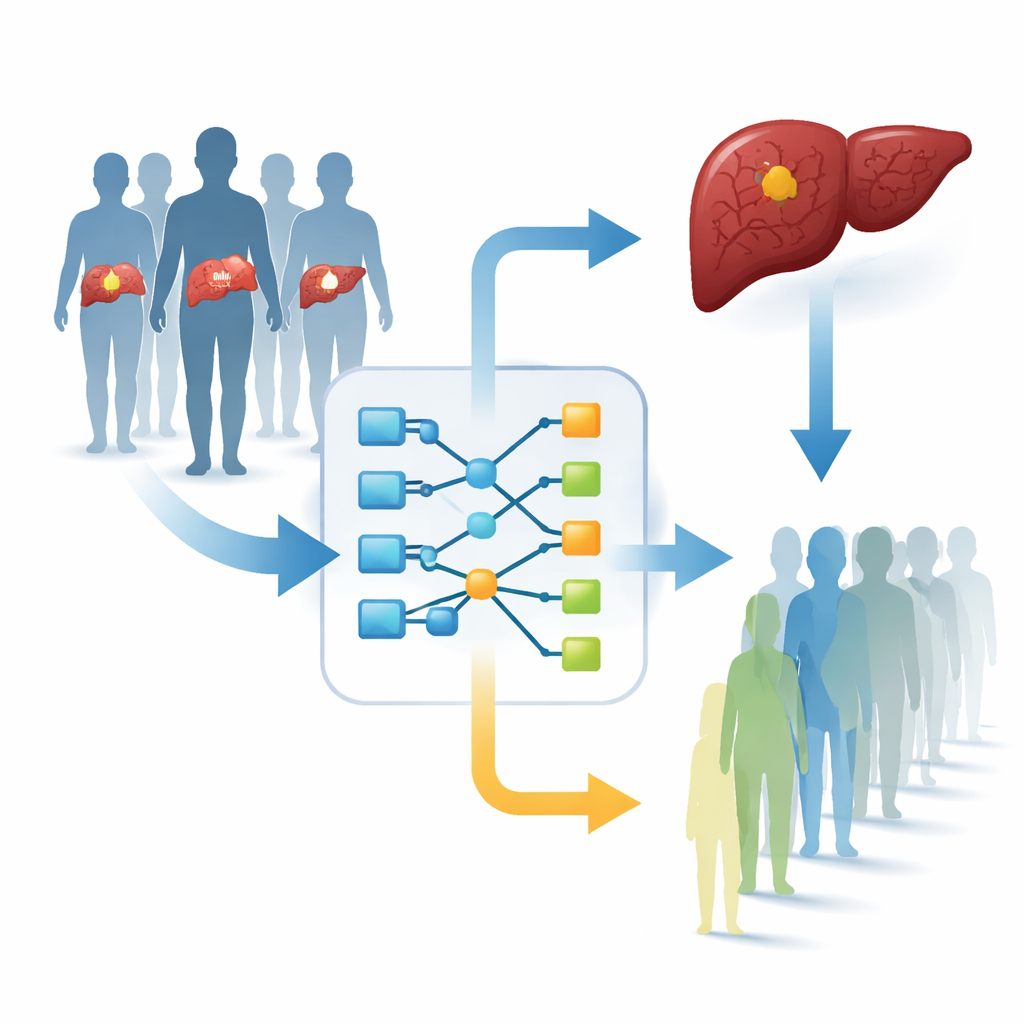
The research team collected detailed clinical information from 307 patients with both type 2 diabetes and cirrhosis treated at a hospital in Jiangsu, China, and followed them for a median of nearly four years. They examined 59 different measurements, mostly from standard blood tests, and applied eight different machine‑learning approaches to see which combinations of factors best distinguished patients who went on to develop liver cancer. A type of model called a gradient boosting decision tree stood out, correctly separating high‑ and low‑risk patients with very high accuracy. The most informative signals came from a small set of blood measures that reflect liver damage, liver synthetic function and salt balance, together with the patient’s sex.
From complex models to bedside‑friendly risk charts
Because highly technical computer models are hard to use in everyday clinics, the authors distilled their findings into a simple "nomogram"—a graphical chart on which a doctor can mark a patient’s values for six routine items (sex, two liver enzymes, two bile‑related pigments and blood sodium) and read off an estimated chance that the patient already has or will soon develop liver cancer. This chart outperformed any single blood test alone, and its accuracy remained stable when tested through internal checks and in a separate group of cirrhosis patients treated at another hospital. Importantly, it worked reasonably well regardless of whether the underlying liver disease was due to hepatitis B, hepatitis C or non‑viral causes, suggesting broad usefulness.
Looking beyond cancer to overall survival
The study did not stop at diagnosing cancer risk. The investigators also asked which factors best predict how long patients with diabetic cirrhosis are likely to live. Using survival‑analysis methods, they found that four features—presence of liver cancer, older age, low levels of the liver enzyme cholinesterase and high levels of lactate dehydrogenase, a marker of tissue stress—were independently linked to poorer survival. Combining these with sex, they created a second nomogram that estimates a patient’s chance of being alive at one, three and five years. This tool also held up well when tested in both internal and external patient groups, suggesting it could help doctors and families weigh treatment options and plan follow‑up.
Uncovering what patients actually die from
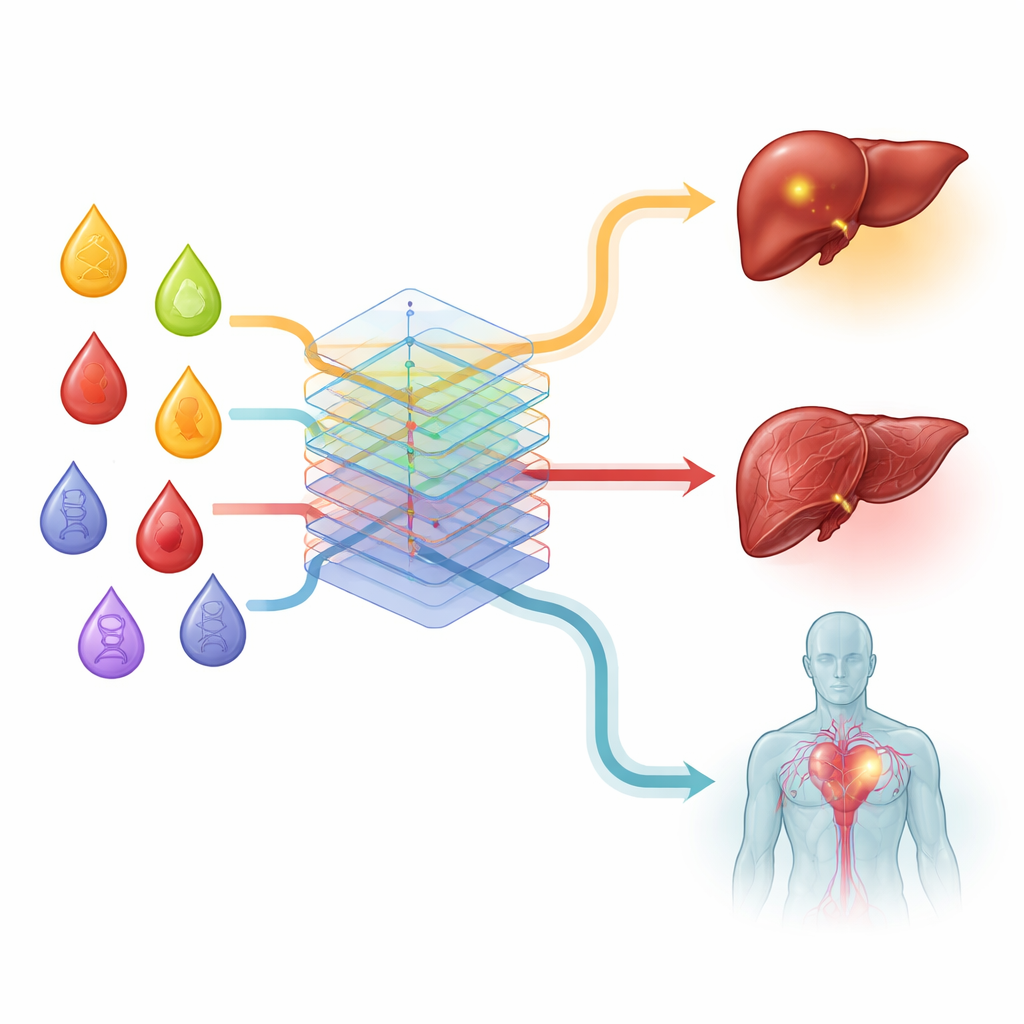
Because people with diabetic cirrhosis can die from many different causes, the researchers built additional models that separated deaths due to liver cancer, deaths due to liver failure and related complications, and deaths driven mainly by diabetes and its systemic effects. They found that, over many years, far more patients died from non‑cancer causes than from liver cancer itself. Specific blood test patterns, such as changes in kidney function, blood sugar and an inflammation‑related ratio linking white blood cells to “good” cholesterol, helped identify who was most likely to die from each type of cause. These findings underline that while cancer surveillance is vital, controlling metabolic and cardiovascular problems is at least as important for improving survival.
What this means for patients and clinicians
In everyday terms, this work shows that information already hidden in common blood tests can be turned into easy‑to‑use charts that help doctors estimate liver cancer risk and overall prognosis in people who have both diabetes and cirrhosis. The models suggest that only a subset of patients need the most intensive cancer monitoring, and that many deaths might be prevented by aggressively treating diabetes, high blood sugar and other complications alongside liver disease. Although these tools still require further testing in larger and more diverse populations before routine use, they point toward a future in which smarter use of routine data helps personalize care for one of the sickest and most complex patient groups.
Citation: Jiang, G., Cai, W., Lv, X. et al. Development and validation of machine learning models for diagnosing hepatocellular carcinoma risk and survival in patients with diabetic cirrhosis. Sci Rep 16, 11102 (2026). https://doi.org/10.1038/s41598-026-40804-z
Keywords: hepatocellular carcinoma, diabetic cirrhosis, machine learning, liver cancer risk, prognostic models