Clear Sky Science · en
Hypnosis reshapes multilevel stress response and enhances executive performance in stressed medical students
Why calming the mind matters for doctors-in-training
Medical school is often described as a pressure cooker: long hours, emotionally charged encounters, and the constant fear of making mistakes. This study asks a timely question with real-world stakes: can a single, tailored session of hypnosis help future doctors keep a cooler head and think more clearly under stress? By looking not only at how students feel, but also at how their bodies and brains respond, the researchers show that hypnosis may quickly turn a threatening situation into a manageable challenge. 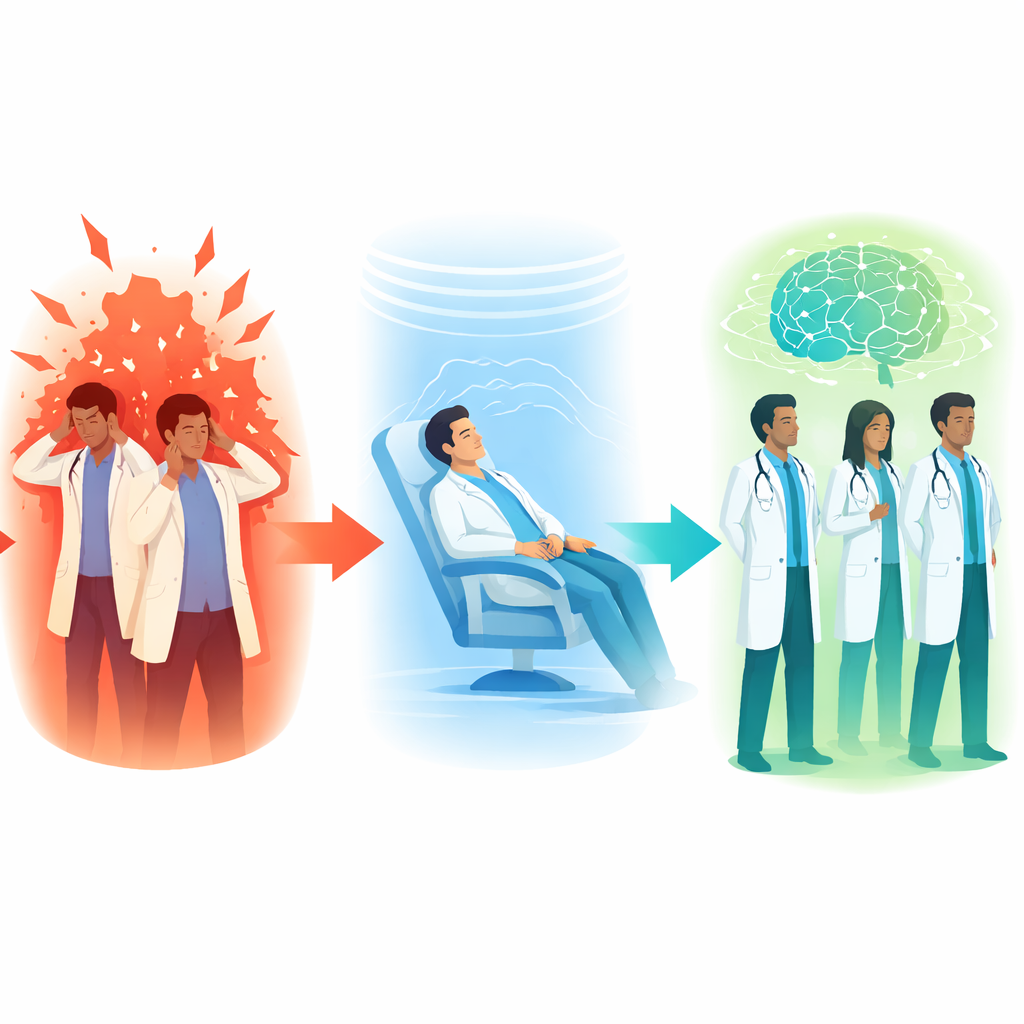
A closer look at stress in medical students
Medical students are known to experience high levels of anxiety, burnout, and emotional strain, often from the very beginning of their training. These pressures can fuel sleep problems, substance use, and even decisions to leave the profession. While many programs now offer mindfulness or stress-management courses, results have been mixed, especially when it comes to lasting change or better performance under pressure. Most previous work has focused on how stressed students say they feel, not on how well they actually think and decide when it matters most.
How the study was set up
The research team recruited forty-nine final-year medical students and placed them into two groups. Both groups were asked to recall a personally difficult event from their medical training—such as a mistake, a tense exam, or a disturbing clinical scene—to reliably trigger stress. Then one group received a brief, personalized hypnosis session that guided them into a focused, pleasant experience (like relaxing on a beach), while the other group practiced a matched period of calm, breath-focused attention without hypnosis. Before and after these procedures, students completed a planning and problem-solving task, rated their own stress and anxiety, and had their heart activity and skin sweating patterns recorded. These body signals reveal how the sympathetic "fight-or-flight" and parasympathetic "rest-and-recover" systems respond over time.
What changed after hypnosis
Students who experienced hypnosis showed clear and meaningful benefits compared with those who only focused on their breathing. On a complex planning task that taps into executive functions such as working memory and problem solving, performance improved in both groups, but the hypnosis group gained significantly more, even after accounting for practice effects. At the same time, their self-reported stress and anxiety dropped, while stress actually increased in the comparison group despite the calm breathing. Physiologically, hypnosis did not simply "switch off" arousal: students showed a pattern of higher steady skin activity but fewer sharp sweating bursts, along with a stronger, more flexible heart rhythm that signals better recovery from stress. This combination suggests a body that is mobilized and engaged, yet not overwhelmed. 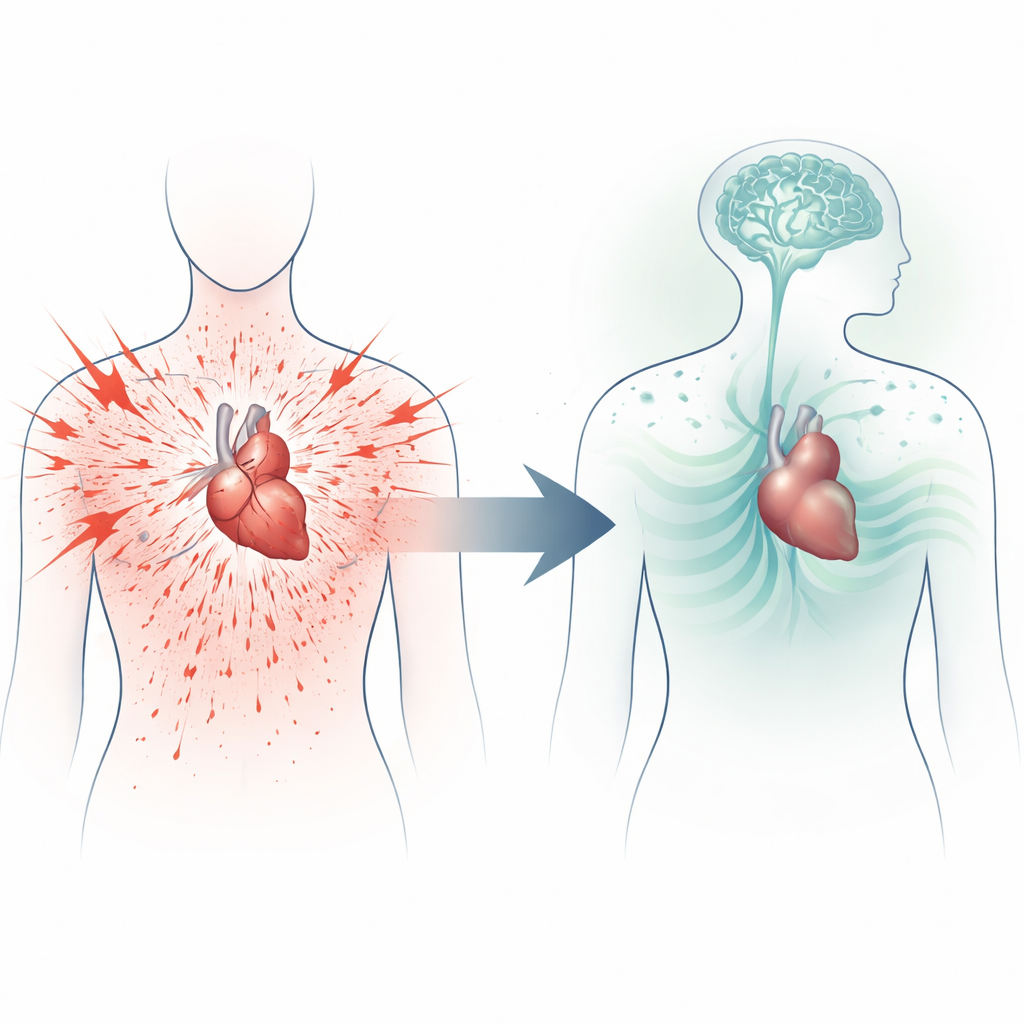
Peeking inside the body’s stress network
To understand how all these pieces fit together, the researchers used network-style analyses and machine learning. They found that one particular measure—overall skin conductance during the stressful memory—acted as a central hub linking bodily arousal to improvements in thinking performance. Heart rhythm changes and the pattern of brief skin responses formed additional bridges between emotional and cognitive shifts. When these body signals were combined with changes in perceived stress, a simple statistical model could correctly identify who had received hypnosis about nine times out of ten. This suggests that hypnosis leaves a recognizable "signature" in the way the body manages stress.
What this means for real-world care
Put simply, the study suggests that a single, personalized hypnosis session can help medical students feel calmer, think more clearly, and respond to stress in a more adaptive way during a difficult memory. Rather than merely relaxing people, hypnosis appears to reorganize how their bodies use energy and attention: stress becomes a challenge to engage with, not a threat to endure. Although more work is needed to test long-term effects and to explore how this might translate to real emergencies, the findings point toward hypnosis as a fast, low-cost tool that could be woven into medical education to support resilience, sharper thinking, and safer care for patients.
Citation: Queirolo, L., Boscolo, A., Cracco, T. et al. Hypnosis reshapes multilevel stress response and enhances executive performance in stressed medical students. Sci Rep 16, 8844 (2026). https://doi.org/10.1038/s41598-026-40770-6
Keywords: hypnosis, medical students, stress management, executive function, autonomic nervous system