Clear Sky Science · en
Hydroponic design influences morphophysiology and mineral uptake in kale (Brassica oleracea var. acephala)
Why the Shape of a Farm Matters
As cities grow and climate change makes traditional farming less predictable, more food is being grown without soil, in stacked racks and tall towers. This study asks a surprisingly simple but important question: does the physical shape of a hydroponic system—whether plants grow on flat shelves or in vertical columns—change how well a popular leafy green, kale, grows and takes up nutrients? The answer helps determine how we design future indoor farms that are both productive and nutritious.
Two Ways to Grow Kale Without Soil
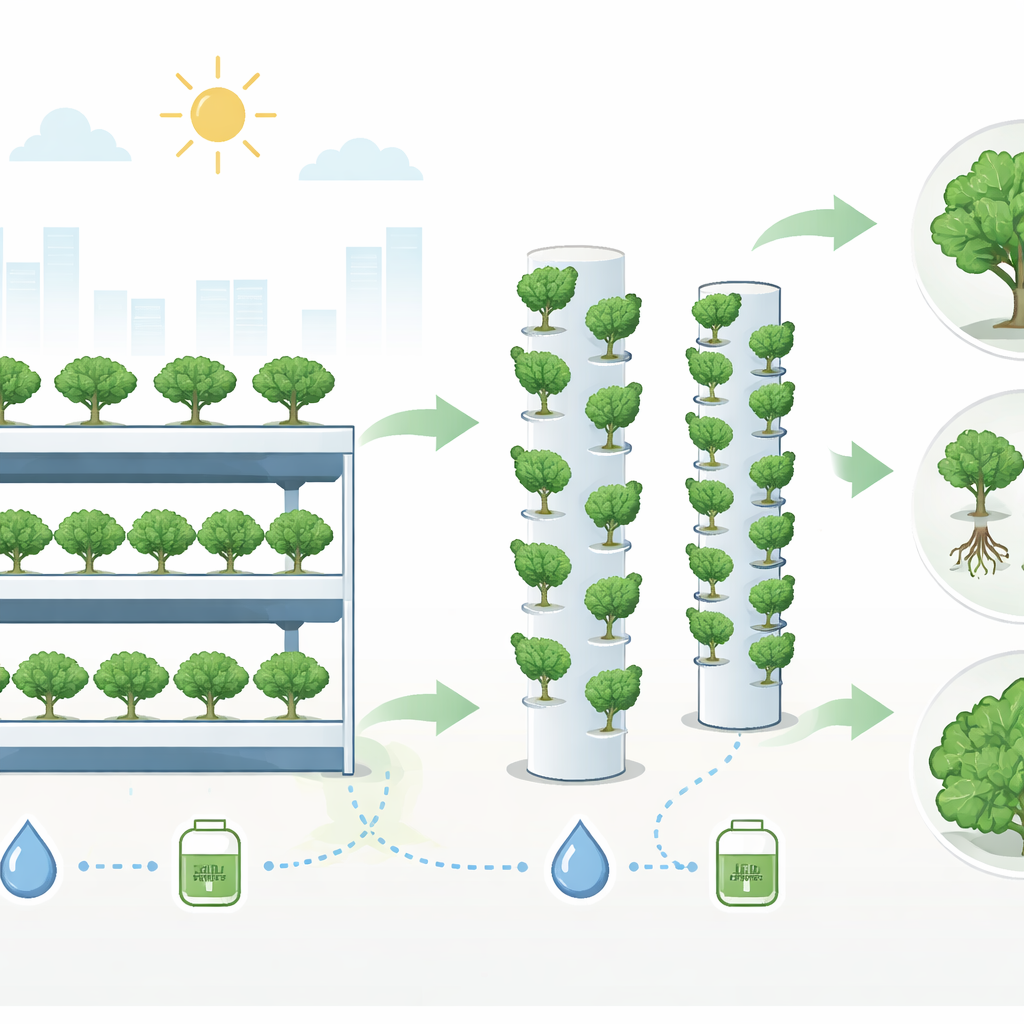
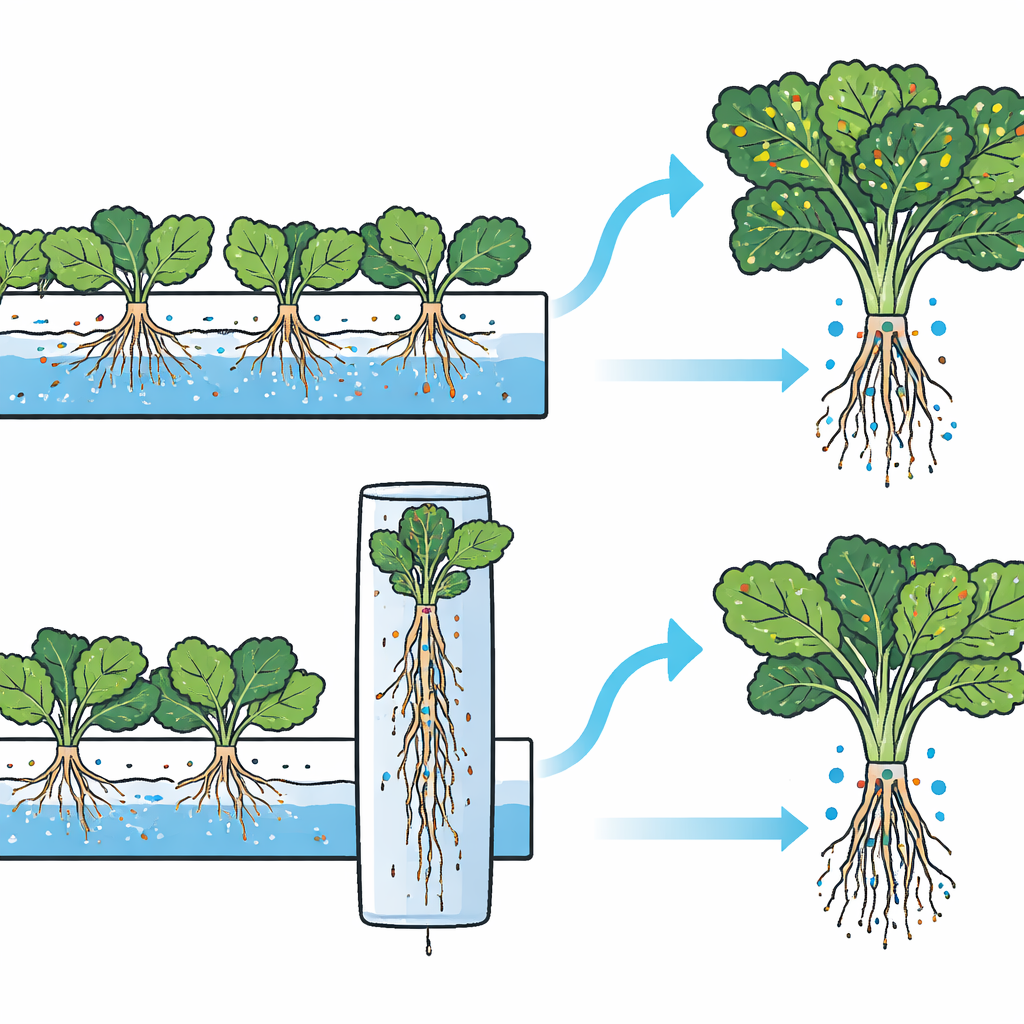
The researchers compared two common layouts for soilless farming inside a greenhouse. One was a three-layer horizontal platform, essentially shallow troughs arranged like bunk beds. The other was a set of vertical towers, with plants poking out of holes along tall cylinders. Both systems held the same total number of plants and used recirculating, nutrient-rich water instead of soil. Two curly kale varieties were tested: Oldenbor F1, with green leaves, and Redbor F1, with purple, pigment-rich foliage. Over a 30-day period, the team carefully measured plant size, leaf shape, root growth, leaf color, and the levels of key nutrients in both leaves and roots.
How System Shape Affects Plant Growth
Across almost every trait that people care about—height, leaf area, root thickness, and fresh and dry weight—the horizontal platform outperformed the vertical tower. Plants on the horizontal shelves grew taller, produced more and larger leaves, and developed longer roots with thicker bases. Oldenbor F1 on the horizontal system was the standout, building the most biomass above and below ground. In contrast, plants in the towers appeared somewhat stunted, likely because of less even light, more mechanical stress on hanging roots, and differences in how water and nutrients flowed past the roots. Statistical analyses confirmed that the overall system layout was a stronger driver of plant performance than the choice of variety alone.
Color, Nutrients, and Hidden Differences
Leaf color offered a window into the plants’ internal physiology. A handheld meter showed that Redbor F1 on the horizontal shelves had especially high chlorophyll readings, consistent with its darker, richer leaf color. Measures of brightness and color tone revealed that leaves grown in the towers tended to be lighter and showed shifts toward yellowish hues, signs that pigments were responding to a different light and stress environment. When the team analyzed nutrients, they found that macronutrients such as nitrogen, phosphorus, and magnesium were generally higher in plants from the horizontal system, particularly in Oldenbor F1. Potassium stayed high and fairly similar across systems, while some micronutrients, like iron, manganese, zinc, and copper, tended to accumulate more in roots—especially in tower-grown plants—rather than being moved up into the leaves we eat.
Matching Plant Variety to Farm Design
By combining dozens of measurements into multivariate maps, the researchers could see patterns that would be hard to spot otherwise. One clear pattern was that samples from the horizontal system clustered together and aligned strongly with traits linked to vigorous growth—big leaves, heavy shoots, and strong roots. Samples from the towers spread out more and were separated from the horizontal group, signaling less consistent performance. Within these broader system effects, the two kale varieties behaved differently: Oldenbor F1 was highly responsive to the favorable conditions of the horizontal setup, while Redbor F1 was more stable between systems but never matched Oldenbor’s yield on the shelves.
What This Means for Future Urban Farms
For growers planning climate-resilient, space-saving farms, this study delivers a clear message: the architecture of a hydroponic system is not just an engineering detail; it strongly shapes how crops grow, what they look like, and how nutritious they become. In this experiment, a three-layer horizontal platform gave kale the best combination of steady water flow, root comfort, and light, resulting in more biomass and better nutrient capture in edible leaves than vertical towers. At the same time, not all varieties responded in the same way, so choosing the right pairing of crop and system can make a big difference. Thoughtful matching of plant genetics with farm layout can help future indoor farms deliver higher yields, better quality, and more efficient use of water and fertilizers.
Citation: Biçici, E., Boyacı, H.F. Hydroponic design influences morphophysiology and mineral uptake in kale (Brassica oleracea var. acephala). Sci Rep 16, 8982 (2026). https://doi.org/10.1038/s41598-026-40756-4
Keywords: hydroponic kale, vertical farming, soilless agriculture, nutrient uptake, controlled environment