Clear Sky Science · en
Performance analysis of a solar desalination system operated by humidification–dehumidification technique
Turning Sunlight into Drinking Water
Clean water is becoming harder to secure in many dry regions, including Egypt, where cities and new resorts near the sea urgently need fresh water but have limited rivers and rainfall. This study explores a small solar-driven device that can turn salty seawater into drinkable water using gentle heating rather than intense boiling. By carefully measuring how this system behaves in real outdoor conditions, the researchers show how to squeeze more fresh water out of the same sunshine while keeping costs and pollution low.
Why This Kind of Desalination Matters
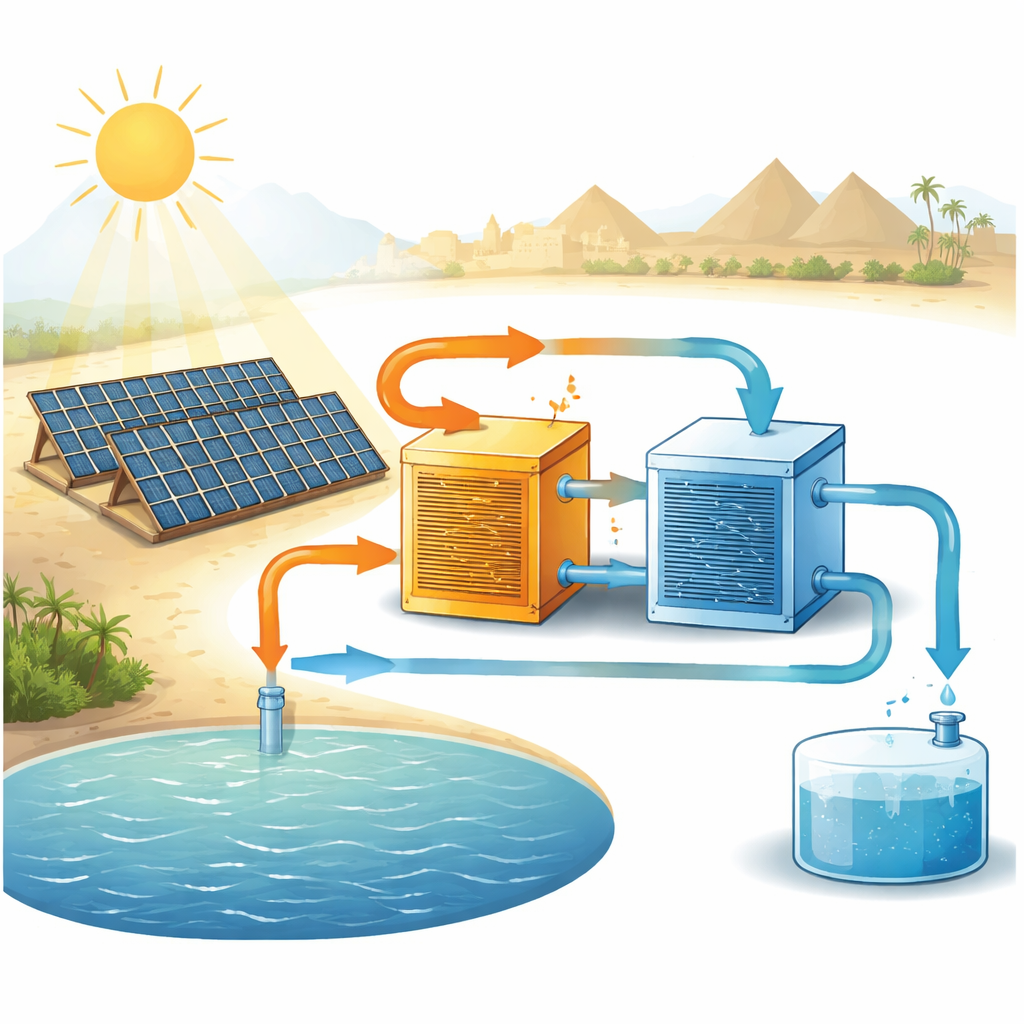
Large desalination plants already supply many coastal cities, but they require high-pressure pumps, complex filters, and a lot of electricity. That makes them expensive and difficult to install in remote villages or small communities. The system tested here uses a different idea called humidification–dehumidification: instead of forcing seawater through fine membranes, it mimics the natural water cycle. Warm salty water evaporates into air, leaving the salt behind, and then that moist air is cooled so pure water condenses and can be collected. Because the temperatures stay well below boiling and the main heat source is the sun, this approach can be simpler, quieter, and cleaner than conventional plants.
How the Test System Works
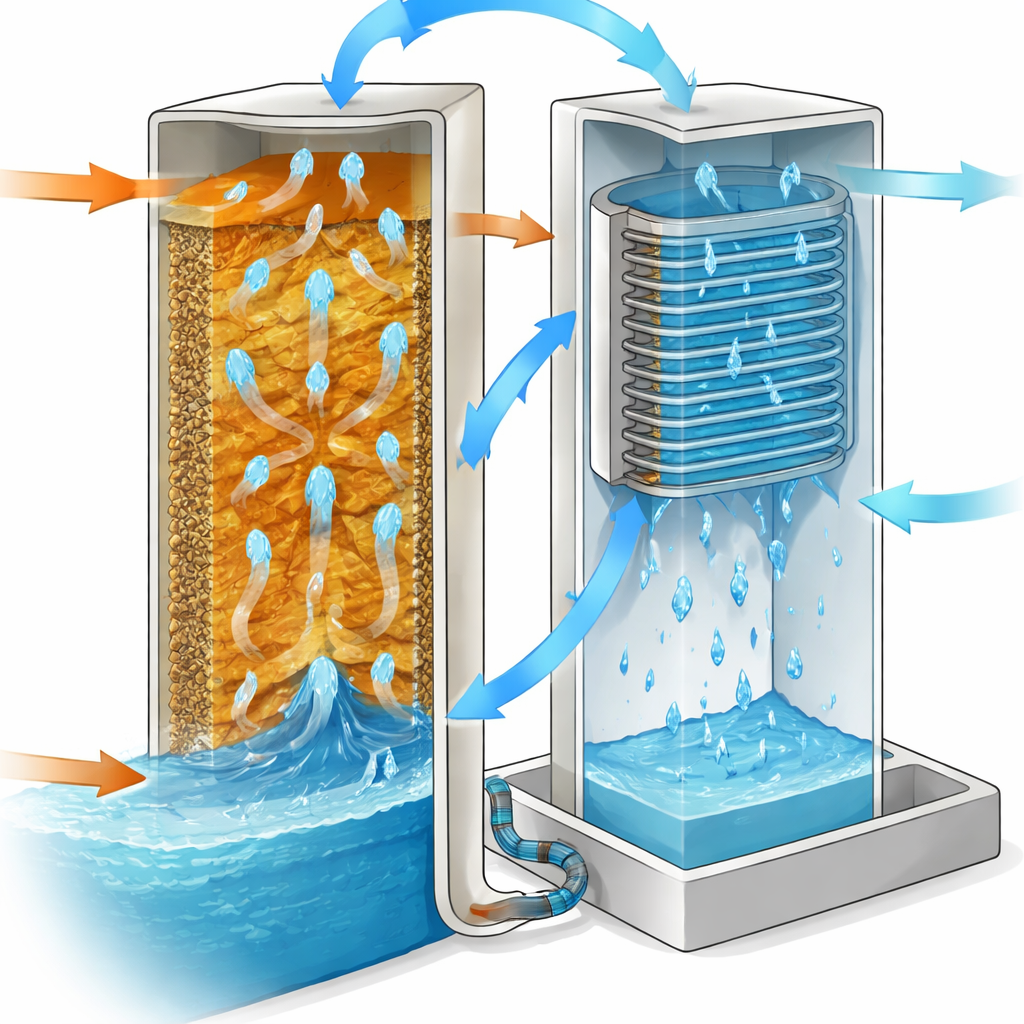
The team built a pilot plant on a rooftop in Cairo and fed it with real Suez Canal water, which is saltier than the global ocean average. Sunlight first heats seawater in an evacuated tube solar collector, raising its temperature to about bathwater levels or higher. This hot salty water is then sprayed over plastic packing material inside a tall box called the humidifier. As it trickles down, a fan blows air upward through the wet surfaces, picking up water vapor and becoming warm, moist air. This air then moves through insulated ducts into a second box, the dehumidifier, where it passes over cold metal coils supplied with cool city water. The vapor condenses on the coils and drips into a basin as distilled water ready for storage and later use.
What the Researchers Measured
From nine in the morning until five in the afternoon, across 36 separate test days in February and March, the researchers varied two main knobs: how fast the seawater flowed and how fast the air circulated. They tracked sunlight, temperatures, air humidity, and the exact amount of fresh water produced each hour. As expected, production rose through the morning, peaked around noon when the sun was strongest, and then declined in the late afternoon. Faster air speeds carried more vapor from the humidifier to the dehumidifier, and higher seawater flow made more warm water available for evaporation. Under the best tested conditions—seawater flow of 0.63 kilograms per second and air speed of 13.2 meters per second—the daily output reached 17.04 kilograms of distilled water, roughly 17 liters, during the eight-hour operating window.
Balancing Yield, Efficiency, and Cost
Beyond simple output, the team examined how efficiently the system used the incoming solar heat. They used a measure called the gain output ratio, which compares the energy stored in the produced fresh water to the thermal energy supplied. This ratio, along with a recovery ratio that compares fresh water produced to seawater fed in, both peaked when seawater flow and air speed were high but still balanced: a particular combination gave the best trade-off between strong evaporation and effective condensation. Under those best conditions, the overall gain output ratio reached 1.22, indicating that internal heat recovery inside the system helped reuse energy. An economic analysis, based on an estimated ten-year life and local financial conditions, showed that each liter of distilled water would cost about 1.7 cents in U.S. dollars, assuming 340 sunny days of operation per year. Because the heat comes from the sun rather than fossil fuels, the authors estimate that roughly six tons of carbon dioxide emissions are avoided over the system’s lifetime.
What This Means for Thirsty Regions
In simple terms, this work shows that a modest, rooftop-sized solar device can reliably turn salty canal water into clean water at low cost without adding greenhouse gases. By fine-tuning how quickly air and seawater move through the system, the researchers identified operating conditions that maximize fresh water output and energy efficiency under real Cairo weather. While the daily volume is too small to feed a large city, it is well matched to the needs of isolated homes, farms, or tourist camps along Egypt’s coasts. The study provides practical numbers that engineers and planners can use to design next-generation small desalination units that are affordable, low-maintenance, and powered mainly by sunshine.
Citation: Gomaa, A., Hassaneen, A.E., Ibrahim, H. et al. Performance analysis of a solar desalination system operated by humidification–dehumidification technique. Sci Rep 16, 9805 (2026). https://doi.org/10.1038/s41598-026-40700-6
Keywords: solar desalination, humidification dehumidification, small-scale water treatment, renewable energy, Egypt water resources