Clear Sky Science · en
Plant-derived gold nanoparticles functionalized with pheophorbide-a for potent photodynamic therapy against A549 lung cancer cells
A greener light-based attack on lung cancer
Lung cancer is one of the world’s deadliest cancers, and many current treatments damage healthy tissues along with tumors. This study explores a gentler, more targeted approach that combines plant-derived gold particles with a light-sensitive dye to selectively destroy lung cancer cells in the lab. The goal is to harness "green" nanotechnology and laser light so that cancer cells are hit hard while nearby healthy cells are largely spared.
Turning a healing plant into tiny gold helpers
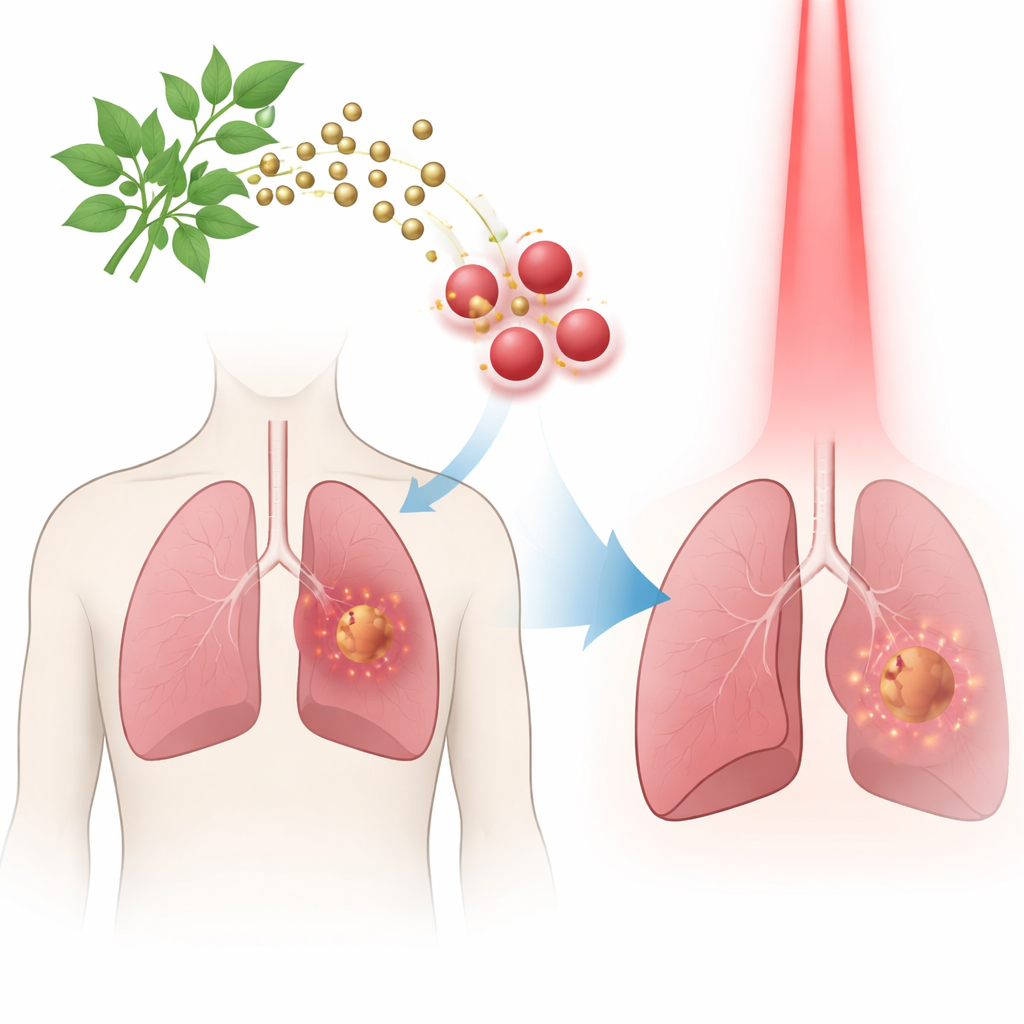
The researchers began with Dicoma anomala, an African medicinal plant traditionally used to treat various ailments. Instead of using harsh chemicals, they used an extract from the plant’s leaves to turn dissolved gold salts into tiny gold nanoparticles. The plant compounds both reduced the gold and coated the particles, creating stable, roughly 90–100 nanometer spheres with a negative surface charge that helps keep them from clumping together. This eco-friendly process produced uniform, long‑lasting particles that are well suited for medical use.
Loading the particles with a light-activated drug
Next, the team attached a photosensitizer called pheophorbide‑a, a dye that becomes toxic only when illuminated with red light, to the surface of the gold nanoparticles. Using a thin‑film hydration method, they formed a nanoconjugate in which about 40 percent of the added drug became stably associated with the particles. Detailed measurements confirmed that both the gold core and the dye were present and chemically linked, rather than just mixed together. The resulting complex stayed dispersed in water, an important feature for any potential injection into the bloodstream.
Testing the cancer-killing power of light
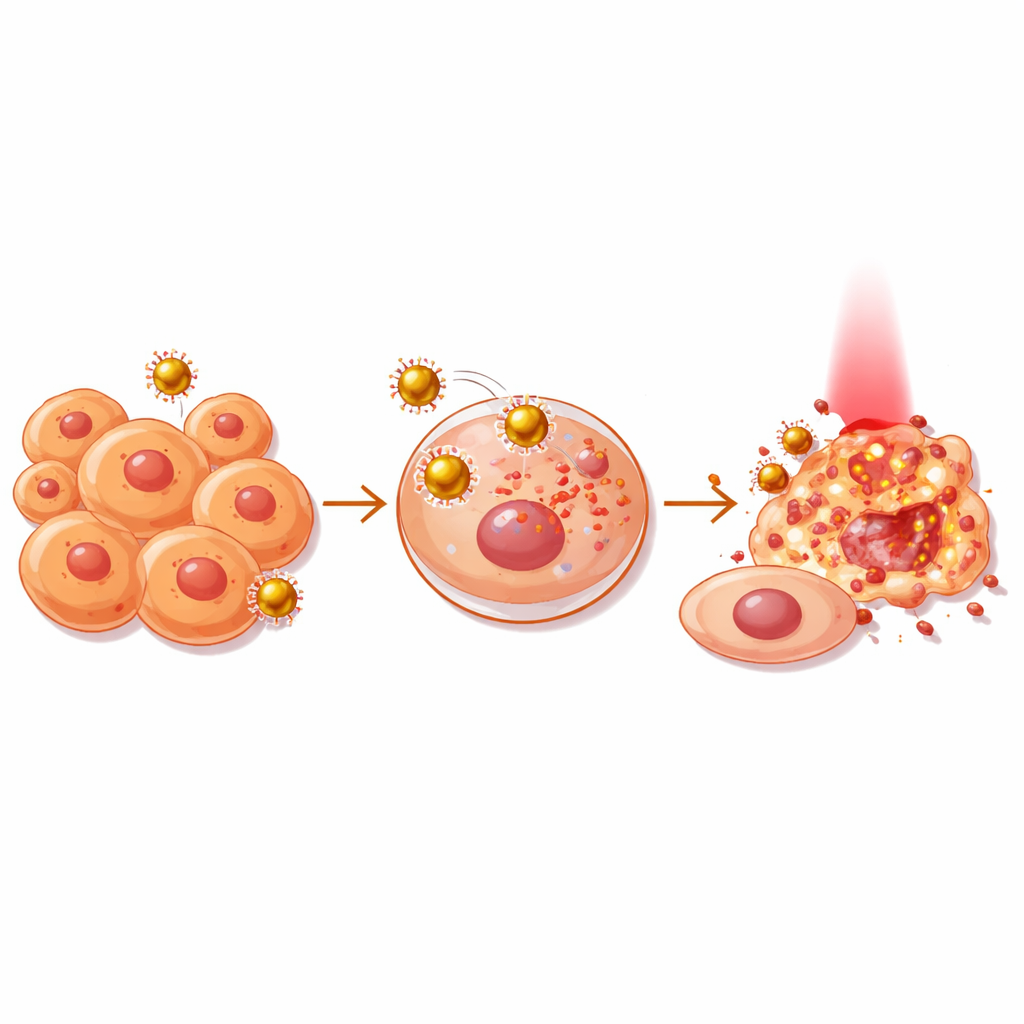
To see whether this hybrid material could fight cancer, the scientists exposed human A549 lung cancer cells growing in dishes to different doses of the nanoconjugate. Some cells were kept in the dark, while others were illuminated with a red laser tuned to a wavelength that strongly activates pheophorbide‑a and can penetrate tissue better than shorter wavelengths. In the dark, the treated cells looked and behaved much like untreated cells: their shape remained normal, their energy levels stayed high, and few died. Once the laser was switched on, however, cell metabolism fell sharply, and the lung cancer cells began to shrink, detach, and break apart in a dose‑dependent fashion.
How the particles trigger cell suicide
The key to this selectivity is reactive oxygen species—short‑lived, aggressive oxygen‑based molecules produced when the loaded gold particles absorb red light. The team measured a strong rise in these molecules only in illuminated samples, showing that the treatment is largely inactive until light is applied. Staining tests and flow‑cytometry, which sorts cells based on their fluorescence, revealed that many of the treated cancer cells entered apoptosis, a programmed form of cell suicide that is often preferred over messy, uncontrolled cell death. At the same time, normal skin‑derived cells exposed to the same treatment remained much more resistant, yielding a favorable selectivity index that points to a therapeutic window where cancer cells are hit harder than healthy ones.
What this could mean for future lung cancer care
This laboratory study suggests that combining plant‑derived gold nanoparticles with a light‑activated dye can create a smart therapy that is stable, largely harmless in the dark, and strongly toxic to lung cancer cells when illuminated. While the work was done in flat cell cultures rather than animals or patients, it lays important groundwork for a treatment that could be more precise and less damaging than many standard options. With further testing in three‑dimensional tumor models and living systems, this green nanotechnology platform could one day support lung cancer therapies that shine light only where it is needed—and let the rest of the body remain in the dark.
Citation: Zahra, M., Abrahamse, H. & George, B.P. Plant-derived gold nanoparticles functionalized with pheophorbide-a for potent photodynamic therapy against A549 lung cancer cells. Sci Rep 16, 9819 (2026). https://doi.org/10.1038/s41598-026-40697-y
Keywords: lung cancer, photodynamic therapy, gold nanoparticles, green nanotechnology, nanomedicine