Clear Sky Science · en
Research on enhancing short-term wind power forecasting through feature fusion in a hybrid deep learning framework
Why Forecasting the Wind Matters
Electricity from wind turbines is clean, but the wind itself is fickle. When the output of a wind farm suddenly rises or falls, power grid operators must react quickly to keep lights on and equipment safe. This study explores a new way to predict, just a few hours ahead, how much power a wind farm will produce. By squeezing more information out of weather data and past turbine performance, the authors show that smarter forecasting can make wind power a more reliable backbone of future energy systems.
The Challenge of Taming Gusty Power
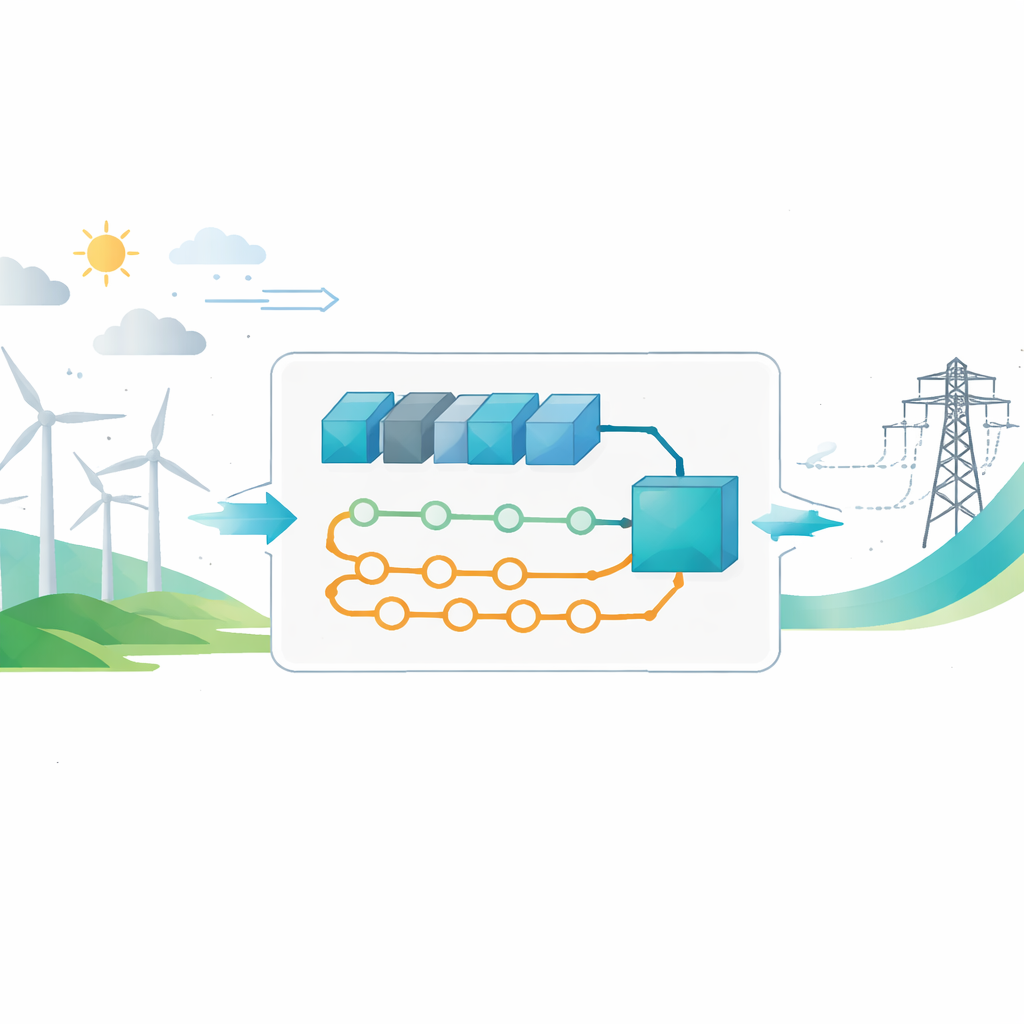
Wind power has grown rapidly worldwide and now supplies a significant share of electricity in many regions. Unlike coal or gas plants, however, wind farms cannot be turned up or down at will. Their output swings with changing weather, sometimes jumping by half their rated capacity within only a few hours. These fast swings, called ramp events, are particularly troublesome because many existing forecasting tools struggle to track them. Models also tend to work well at one site or season but stumble when conditions shift, and they often fail to fully exploit the many weather measurements now available from modern forecasting systems.
A New Way to Read the Wind
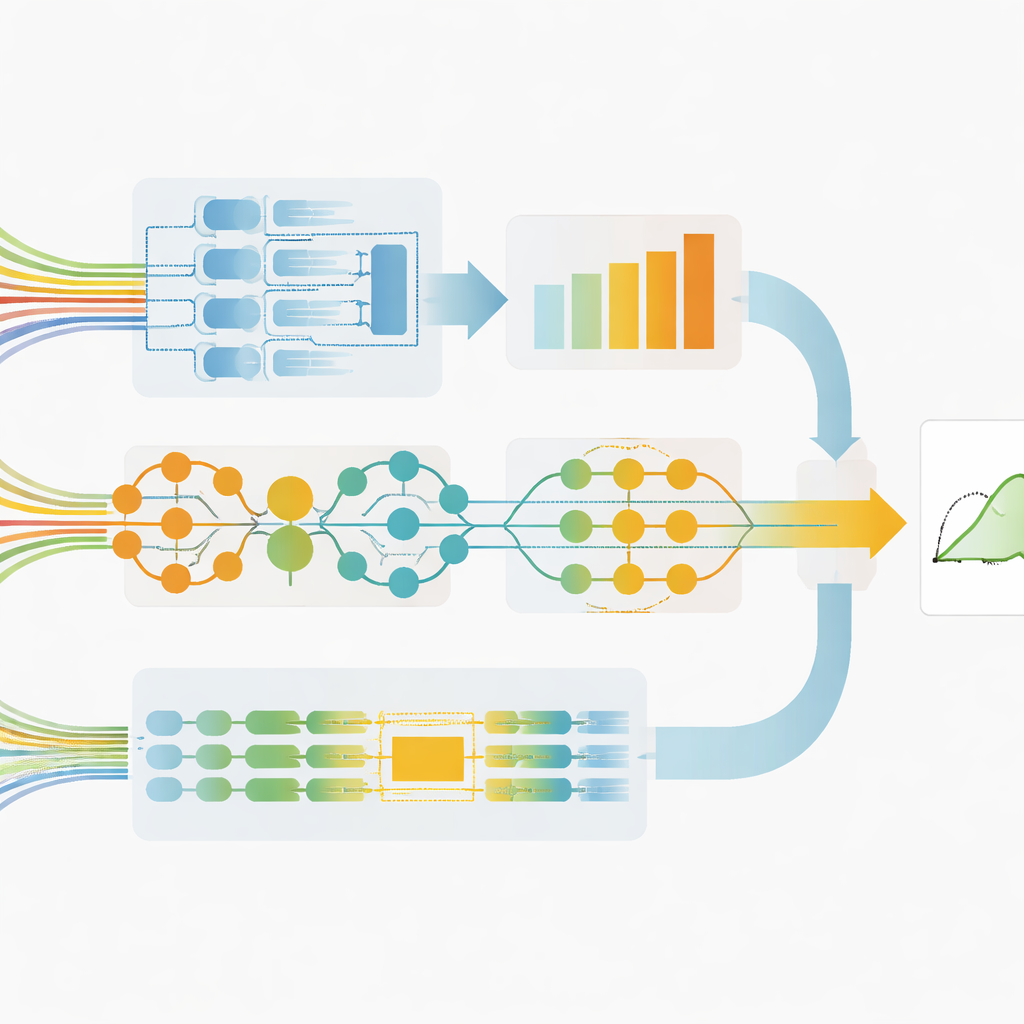
The authors propose a hybrid deep learning framework designed specifically to address these weaknesses. Instead of relying on a single type of neural network, their model combines two complementary branches. One branch uses a special form of convolution to scan long stretches of past data, efficiently capturing patterns that unfold over minutes to hours. A built-in weighting mechanism strengthens the influence of the most informative weather variables—such as measured wind speed under stormy winter skies—while damping noisy or less useful signals. The second branch focuses on how the wind power sequence evolves over time, looking both forward and backward during training to better understand how gradual drifts and sudden ramps develop.
Letting the Model Pay Attention
On top of this dual structure, the researchers add an attention mechanism, a tool widely used in modern language and image models. Here, attention helps the network decide which past moments matter most for a particular forecast. Instead of fixating only on the most recent readings, the method gently spreads its focus over a broader window, so that early warning signs of a ramp are not ignored. The outputs of the two branches are then fused into a single, compact representation that feeds a final prediction layer, producing the short-term power forecast for the wind farm.
Testing on a Year of Real Wind
To see how well the approach works in practice, the team applied it to data from a large wind farm in Inner Mongolia, China, covering a full year with measurements every 15 minutes. They carefully cleaned the data, removing impossible values—such as power with zero wind or wildly shifting temperatures—and used established techniques to select the most important weather features. The new model was then compared against several strong contenders, including popular transformer architectures and other hybrid deep learning setups, across four representative months capturing winter, spring, summer, and autumn conditions.
Sharper Forecasts Across the Seasons
Across all seasons, the hybrid model consistently produced smaller errors than the simpler versions and outperformed or matched more advanced alternatives. Its forecasts tracked sharp rises and drops in power more closely and showed fewer large mistakes. In numerical terms, the model cut average squared error to less than one fifth of that from a basic convolutional setup, with goodness-of-fit scores close to perfection for this particular wind farm. Statistical tests confirmed that in the most volatile months, where forecasting is hardest and most important, its advantage over a leading transformer-based method was unlikely to be due to chance.
What This Means for Everyday Energy Use
For non-specialists, the takeaway is straightforward: smarter use of deep learning can make wind power more predictable on the time scales that matter for operating the grid. By blending different neural network types and allowing them to adapt to changing seasons and weather patterns, this framework delivers more stable and accurate short-term forecasts for the studied site. While the work focuses on a single wind farm and point forecasts rather than full uncertainty ranges, it points toward forecasting tools that can help grid operators rely more confidently on wind, cut backup costs, and support a cleaner, more resilient energy system.
Citation: Su, X., Gao, J., Han, K. et al. Research on enhancing short-term wind power forecasting through feature fusion in a hybrid deep learning framework. Sci Rep 16, 10043 (2026). https://doi.org/10.1038/s41598-026-40689-y
Keywords: wind power forecasting, renewable energy, deep learning, power grid stability, time series prediction