Clear Sky Science · en
Mechanical, thermal, structure and radiation shielding efficiency of natural kaolinite-based composites reinforced with heavy metal oxides
Safer Walls for a Radioactive World
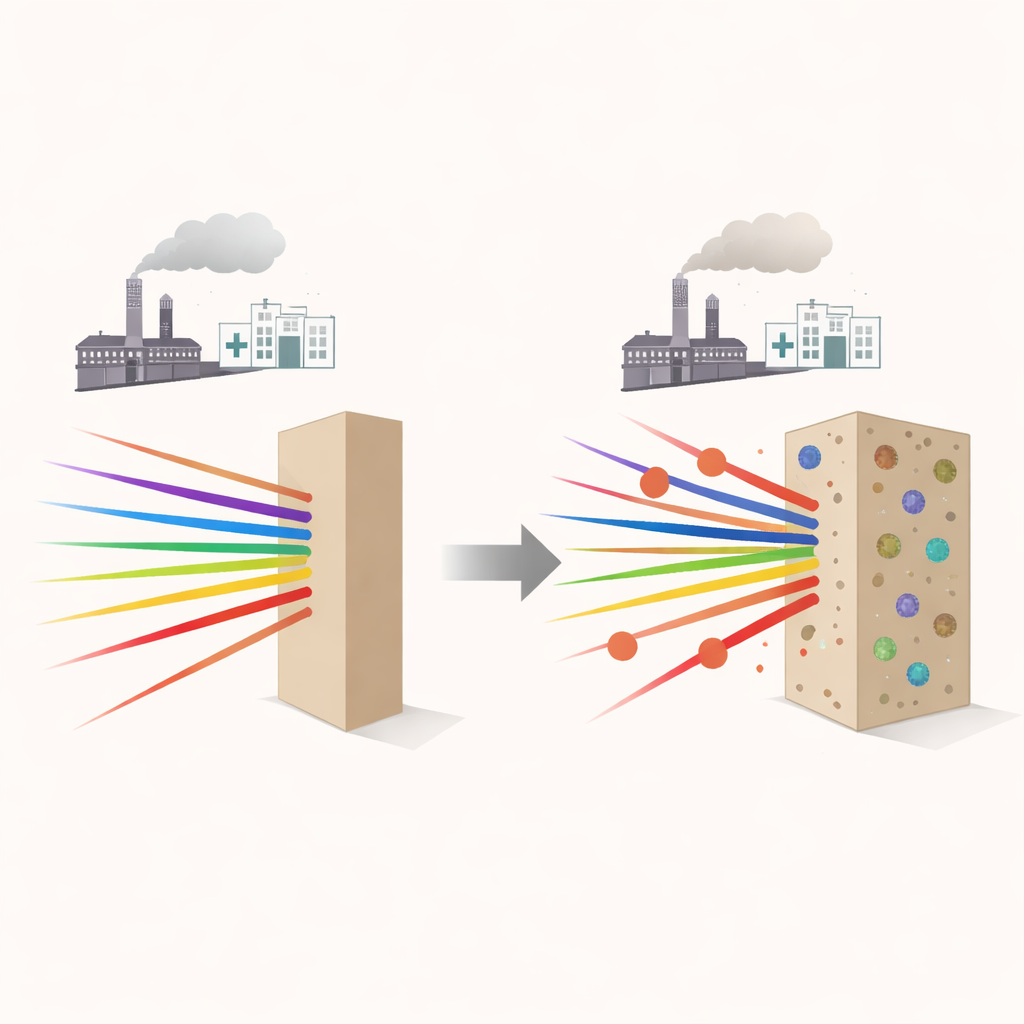
Hospitals, research labs, and nuclear facilities all need walls that can safely block harmful radiation, yet many of today’s shielding materials rely on toxic, heavy metals like lead. This study explores whether something as ordinary as clay, upgraded with industrial waste and safer metal additives, can be turned into strong, low-cost building blocks that stop gamma rays just as well—while being kinder to people and the environment.
Building a Better Brick
The researchers started with kaolinite, a common clay used in ceramics and construction, and blended it with gypsum (a major ingredient in drywall) and ground marble waste from stone-cutting factories. This mixture formed the basic “reference” material. They then reinforced it by adding 30 percent by weight of different heavy metal oxides: titanium, iron, copper, tungsten, or bismuth compounds. Each combination was shaped into small cylindrical samples and heated in stages up to 650 °C, much like firing pottery, to create solid, durable test pieces.
Looking Inside the New Material
To see what they had actually made, the team used several lab techniques that act like different kinds of microscopes and chemical fingerprints. X-ray diffraction and infrared spectroscopy confirmed that the expected minerals—quartz from the clay, calcite from the marble, gypsum, and the various metal oxides—were all present and well formed. Scanning electron microscopy revealed a complex internal landscape: needle-like gypsum crystals, plate-like clay particles, and scattered heavy oxide grains, along with tiny voids that can weaken the structure but also affect how radiation passes through.
Heat, Strength, and Everyday Use
The composites were also tested for how they behave under heat and pressure. When heated, the samples lost only a small fraction of their weight, and those containing tungsten, iron, or bismuth held up better than the plain clay mix, showing improved thermal stability—an important trait near hot reactors or equipment. In compression tests, the unmodified clay was actually the strongest, but adding copper oxide came close, suggesting a good balance between strength and shielding. Bismuth-enhanced clay, while the best at blocking radiation, was more porous and less mechanically robust, a trade-off that designers would need to consider when choosing where and how to use it.
Putting the Bricks in the Beam
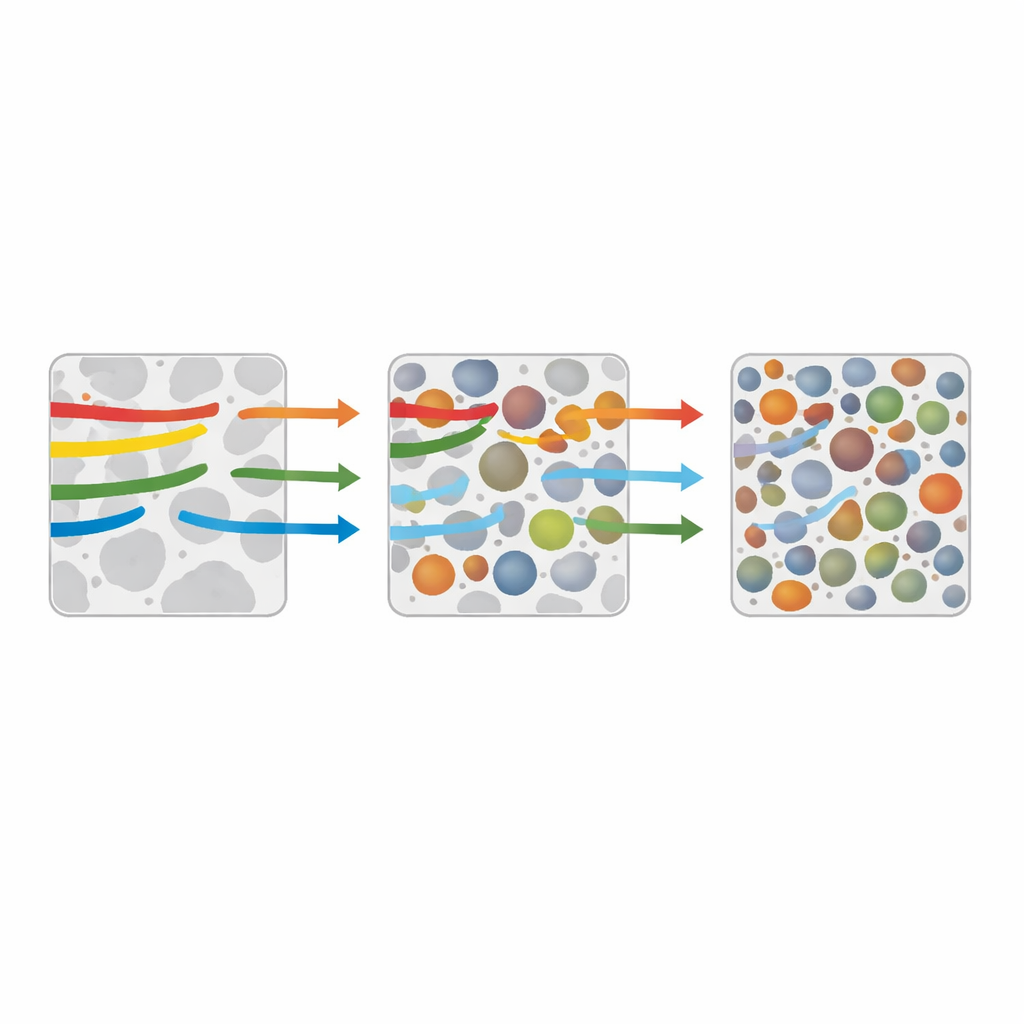
The heart of the study was how well these materials stopped real gamma rays. Using standard radioactive sources at four energies, the team measured how much of the radiation passed through different samples and thicknesses. Every metal oxide improved the clay’s shielding, but the effect varied. At low energy, the bismuth-rich composite absorbed far more radiation than the plain clay—its ability to stop gamma rays jumped by about 85 percent—and tungsten performed almost as well. Even at higher energies, where radiation is harder to block, these heavy-oxide mixes needed less thickness to achieve the same protection compared with ordinary clay or titanium-based composites.
What This Means for Future Buildings
For a layperson, the bottom line is simple: by smartly mixing common clay with recycled marble powder and safer heavy metals like tungsten and bismuth, engineers can create bricks and panels that act as effective radiation shields without relying on toxic lead. Thicker pieces of any of the new composites can block over 90 percent of low-energy gamma rays, and even thin layers of the best-performing mixes work well for certain applications. While some versions trade a bit of mechanical strength for superior shielding, the study shows a clear path toward affordable, eco-friendly walls and barriers that could make medical, industrial, and research facilities both safer and more sustainable.
Citation: Elsafi, M., Alawaideh, S.E., Hamada, M.A. et al. Mechanical, thermal, structure and radiation shielding efficiency of natural kaolinite-based composites reinforced with heavy metal oxides. Sci Rep 16, 9226 (2026). https://doi.org/10.1038/s41598-026-40686-1
Keywords: radiation shielding, clay composites, heavy metal oxides, building materials, gamma rays