Clear Sky Science · en
Integrated evaluation of groundwater irrigation suitability using hydrochemical indices and irrigation water quality index (IWQI) in Aksum, Tigray, Ethiopia
Why good water matters for farmers
In dry and semi-dry regions, farmers often rely on wells rather than rivers to grow their crops. But not all groundwater is equally helpful: if it contains too much salt, it can slowly poison the soil and shrink harvests. This study looks at groundwater around the historic town of Aksum in northern Ethiopia and asks a simple but vital question: is the water in local wells safe to use for irrigation over the long term?
The setting: farms on thirsty volcanic ground
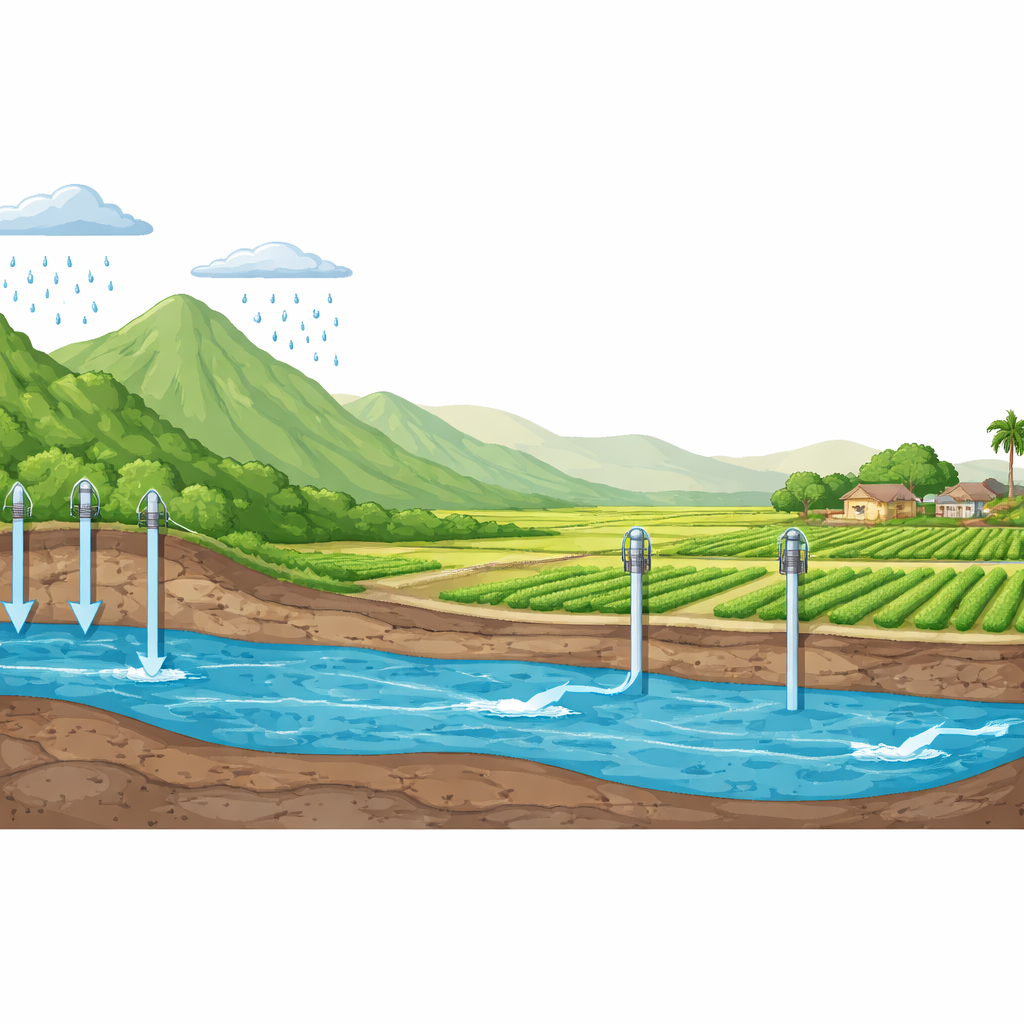
Aksum and its surroundings lie in a rugged volcanic landscape of hills, plateaus, and valleys. Rain falls only a few months of the year, so farmers depend heavily on groundwater stored in fractured basalt and other rocks beneath their fields. Earlier research in the area had shown that some wells did not meet standards for drinking. However, almost no one had checked in a systematic way whether this same water could damage soils or crops when used for irrigation. Because Ethiopia already struggles with widespread salt-affected soils, understanding the irrigation risks in Aksum is crucial for protecting food production and rural livelihoods.
How the water was tested and scored
The researchers collected 19 water samples from deep and shallow wells, hand-dug wells, a spring, and one surface source. In the laboratory they measured common dissolved ingredients in the water, such as calcium, magnesium, sodium, sulfate, chloride, and bicarbonate, as well as overall salt content. From these measurements they calculated several standard yardsticks used worldwide to judge irrigation water, including total dissolved solids, electrical conductivity, and different ways of comparing sodium to other elements that help protect soil structure. They then combined the most important factors into a single score called the Irrigation Water Quality Index, or IWQI, which rates water from “no restriction” to “severe restriction” for farm use.
What they found beneath the fields
The chemical fingerprints of the water showed that it mainly comes from rain soaking into volcanic rocks and dissolving minerals such as carbonates and sulfates along the way. Calcium and magnesium were the dominant positively charged elements, while bicarbonate and sulfate were the main negative ones. This balance is good news for soils, because it keeps sodium—a key driver of soil crusting and poor drainage—at relatively low levels. Measures of sodium risk, including the sodium adsorption ratio, sodium percentage, residual sodium carbonate, and Kelley index, all placed every single sample in the safe range for irrigation. In other words, the water is unlikely to cause the clay particles in the soil to swell, seal, or lose their structure.
Where salinity starts to be a concern
The picture was slightly less perfect when the team looked at overall saltiness. Most samples had modest electrical conductivity and total dissolved solids, meaning they were either fresh or only mildly salty. However, about 5 percent of the samples—mainly from one deep well in the southwest—were salty enough to pose some risk for sensitive crops or poorly drained soils. A related indicator called the permeability index also flagged this area as less suitable. When the scientists mapped their results, a clear pattern emerged: groundwater used for irrigation is generally better in the northeast and becomes saltier toward the southwest, reflecting longer flow paths and more intense water–rock interaction in that direction.
A single score and what it means for farmers
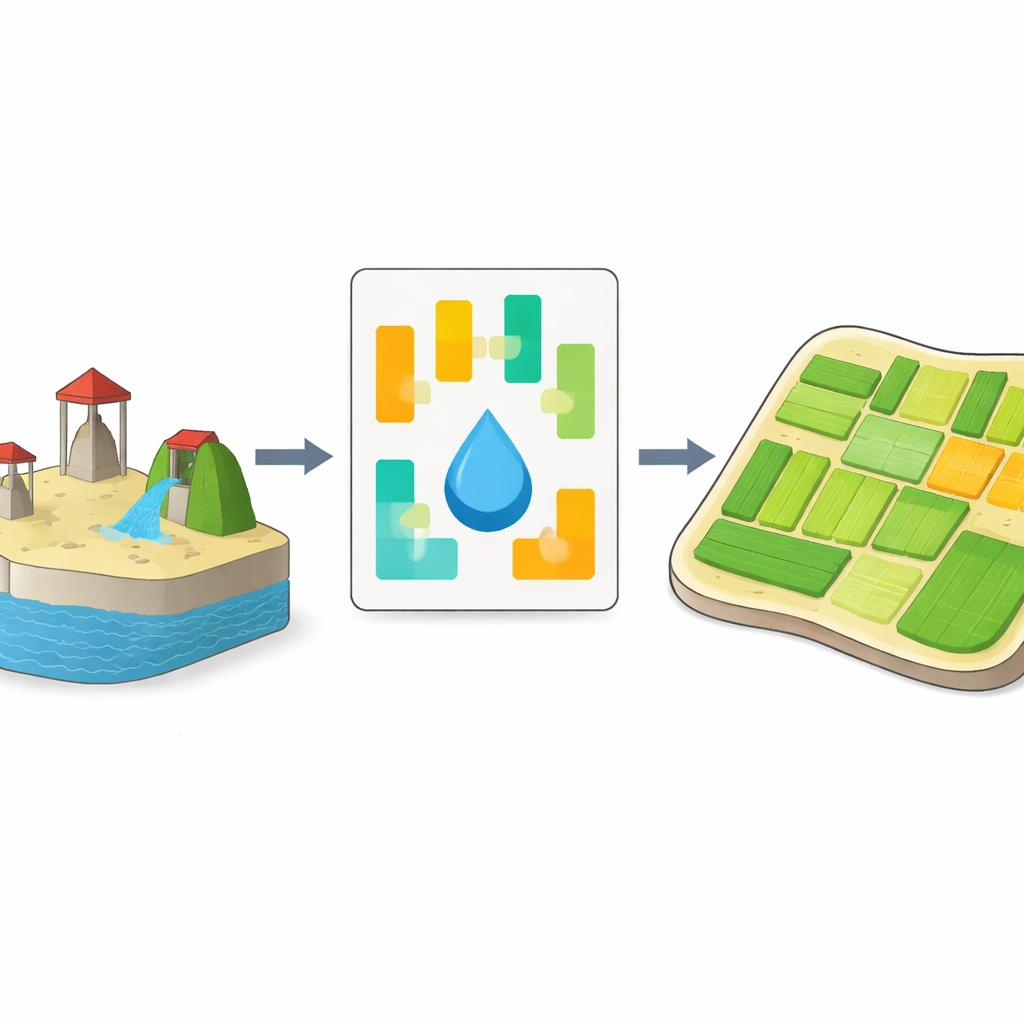
When all key measures were combined into the IWQI, nearly 95 percent of the samples fell into the best class, meaning they can be used on most soils with little worry about salt or sodium build-up, as long as farmers allow some extra water to flush salts downward. Only one sample landed in the “low restriction” group, suggesting caution on heavy clay soils and the need to avoid very salt-sensitive crops such as beans, carrots, onions, lettuce, strawberries, peppers, and maize there. Overall, the study concludes that groundwater around Aksum is generally safe for irrigation, with only small areas requiring careful management. By turning complex chemistry into clear maps and a simple index, the work gives local planners and farmers practical guidance to protect their soils, choose appropriate crops, and use their scarce water resources more sustainably.
Citation: Ataklti, B., Tesema, F.W. & Berhe, B.A. Integrated evaluation of groundwater irrigation suitability using hydrochemical indices and irrigation water quality index (IWQI) in Aksum, Tigray, Ethiopia. Sci Rep 16, 11072 (2026). https://doi.org/10.1038/s41598-026-40682-5
Keywords: groundwater irrigation, water quality, salinity, Ethiopia, sustainable agriculture