Clear Sky Science · en
ITGA8 suppresses proliferation and metastasis of lung adenocarcinoma through the inhibition of glycolysis
Why this lung cancer study matters
Lung adenocarcinoma is one of the most common and deadly forms of lung cancer, and many patients do not benefit from today’s targeted drugs or immunotherapies. This study uncovers an unexpected natural “brake” inside lung tumors—a molecule called ITGA8—that slows cancer growth and spread by dialing down how voraciously tumor cells burn sugar. Understanding this built‑in brake could open new ways to predict which patients will do poorly and to design treatments that starve the most aggressive tumors.
A hidden brake in lung tumors
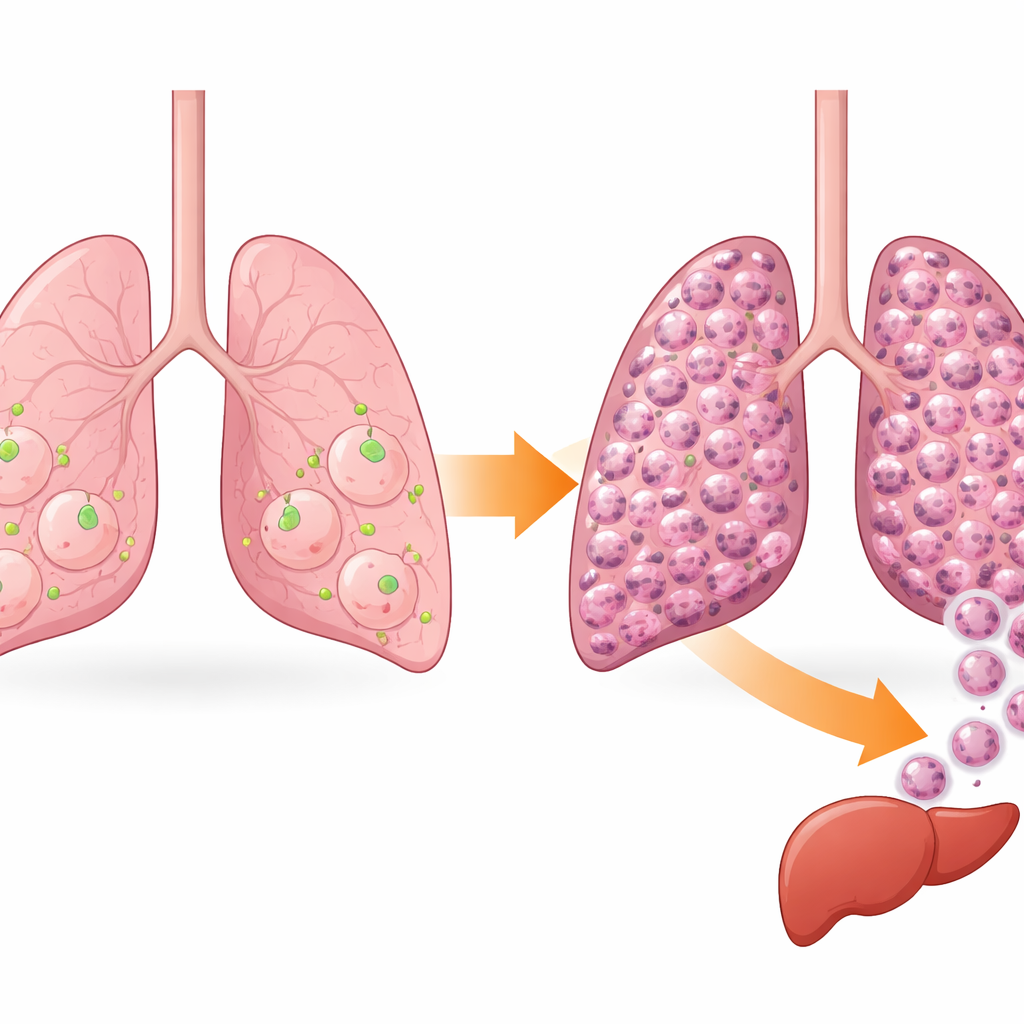
Our cells use surface proteins called integrins to sense and attach to their surroundings. In many cancers, certain integrins are turned up and help tumors invade and resist therapy. The authors began by surveying large public cancer databases to see how different integrins behave in lung adenocarcinoma. They found that, unlike its cancer‑promoting relatives, the integrin subunit ITGA8 is strikingly reduced in tumor tissue compared with normal lung. Patients whose tumors had less ITGA8 tended to have more advanced disease, more lymph‑node and distant spread, and worse survival, suggesting that ITGA8 might act more like a defender than an accomplice in this cancer.
Putting the brake to the test
To move beyond patterns in computer data, the team examined tumor samples from patients and ran experiments in lung cancer cell lines. Using multiple laboratory methods, they confirmed that ITGA8 protein and messenger RNA levels are consistently lower in tumors than in nearby non‑cancerous lung tissue. Then they artificially raised ITGA8 levels in two human lung adenocarcinoma cell lines. The engineered cells formed fewer colonies, divided more slowly, and moved less readily through laboratory barriers that mimic tissue, indicating that extra ITGA8 sharply curbs both growth and invasive behavior. When these modified cells were implanted into mice, the resulting tumors grew more slowly, were smaller and lighter, and showed fewer cells in active division.
How cancer’s sugar appetite is restrained
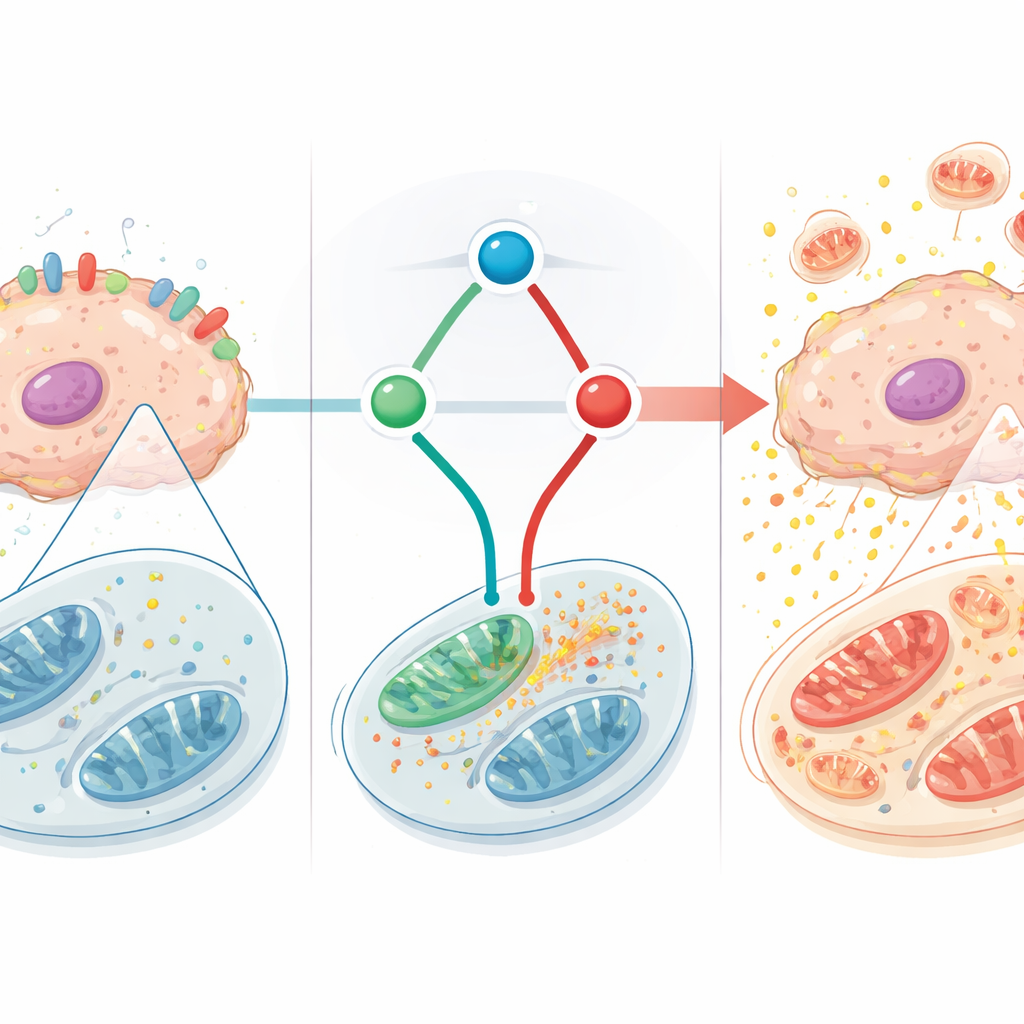
Cancer cells often rely on an altered form of sugar burning known as aerobic glycolysis—the so‑called “Warburg effect”—to fuel rapid growth. By analyzing gene activity patterns, the researchers noticed that low ITGA8 levels went hand‑in‑hand with heightened activity in energy‑hungry pathways, including glycolysis. They then directly measured metabolism in cells with or without ITGA8 overexpression. Cells rich in ITGA8 showed a lower acidification rate of their surroundings, took up less glucose, and released less lactate, all signatures of dampened glycolysis. At the molecular level, ITGA8 switched on an energy‑sensing enzyme called AMPK and, in turn, turned down a growth‑promoting hub known as mTOR and its downstream targets. Blocking AMPK with a drug removed this effect: glycolysis bounced back, and the cells regained much of their aggressive growth and movement. This chain of events shows that ITGA8 acts as a metabolic gatekeeper, using AMPK to keep the mTOR growth switch in check.
Shaping the tumor’s neighborhood
The study also explored how ITGA8 relates to the mix of non‑cancer cells that surround tumors, often called the tumor microenvironment. Using an online resource that estimates immune and stromal cell content from gene data, the authors found that tumors with higher ITGA8 had more supporting stromal tissue and lower overall tumor cell “purity.” ITGA8 levels were linked to certain resting memory T cells and regulatory T cells, but, notably, were strongly associated with fewer myeloid‑derived suppressor cells—immune cells known to help cancers grow and evade attack. This pattern hints that ITGA8 not only restrains tumor metabolism from within but also helps shape a surrounding tissue landscape that is less welcoming to cancer expansion.
What this means for patients
Taken together, the findings paint ITGA8 as an unusual member of the integrin family—a built‑in tumor suppressor rather than a cancer promoter in lung adenocarcinoma. When ITGA8 is lost, tumor cells ramp up sugar burning through the mTOR pathway, divide faster, and spread more readily, while the surrounding tissue becomes more permissive to growth. Although directly restoring ITGA8 in patients may be challenging, its absence could identify a subset of tumors that are especially dependent on glycolysis and mTOR signaling. Those patients might benefit most from drugs that target these energy‑hungry pathways, offering a new angle of attack against a hard‑to‑treat form of lung cancer.
Citation: Chen, SJ., Cui, XL., Li, Q. et al. ITGA8 suppresses proliferation and metastasis of lung adenocarcinoma through the inhibition of glycolysis. Sci Rep 16, 10217 (2026). https://doi.org/10.1038/s41598-026-40678-1
Keywords: lung adenocarcinoma, ITGA8, cancer metabolism, glycolysis, tumor microenvironment