Clear Sky Science · en
The impact of meteorological conditions on the occurrence of low back pain in a retrospective registry based population study
Why the Weather and Your Back Might Be Connected
Many people with nagging low back pain are convinced they can “feel” the weather in their spine. A cold snap, a humid day, or a looming storm is often blamed for a sudden flare‑up. This study put that belief to the test using more than a decade of medical records and detailed weather data from northeastern Poland. The researchers asked a simple but important question: does day‑to‑day weather truly drive surges in low back pain, or is something else going on behind the scenes?
Looking at Thousands of Real‑World Patients
To explore this, the team analyzed 36,854 low back pain visits recorded between 2009 and 2023 at two outpatient clinics. Each record represented an adult who sought medical help for pain in the lower spine. Alongside these medical data, the researchers gathered daily measurements from a nearby professional weather station, including temperature, humidity, wind, and air pressure. They also used a combined comfort measure that reflects how hot or cold the weather feels to the human body, taking sun and wind into account. By lining up clinic visits with the weather on the same days, and then summarizing the information month by month, they could look for patterns that might not be visible to individual patients or doctors.

Seasons Matter More Than Single Storms
When the researchers stepped back and looked at the full 15‑year picture, a clear seasonal rhythm emerged. Low back pain cases tended to peak in July and October, then dip to their lowest levels in February and April. Summer and autumn had noticeably more visits than winter and spring. Yet, when they tried to link the number of cases on a given day to that day’s temperature, humidity, or pressure, the connections were extremely weak. Simple statistical tests showed that no everyday weather measure—including the comfort index—strongly predicted how many people would show up with back pain on that date.
Comfortable Weather, Busy Bodies, and Sore Backs
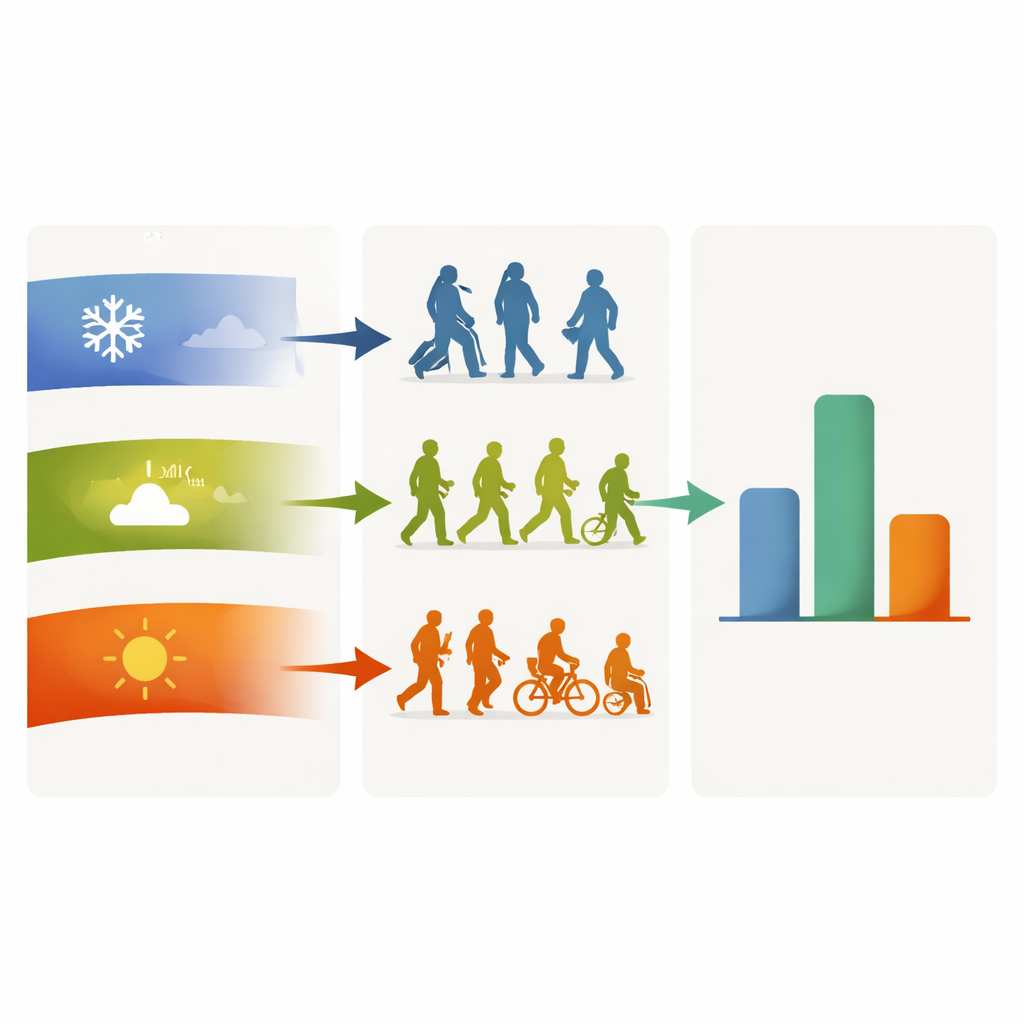
One clue stood out: more than two‑thirds of all back pain visits occurred on days when the weather felt thermally “neutral,” neither particularly hot nor cold. These are the kinds of days when people tend to be most active—working outdoors, exercising, traveling, or tackling home projects. More detailed modeling confirmed that only minimum and average daily temperatures had a small but statistically reliable link with case numbers, and even then, they explained only a tiny slice of the ups and downs over time. Other weather features, and even the sophisticated comfort scales, made little difference. Together, these findings point away from weather directly “attacking” the spine and toward an indirect pathway: pleasant conditions invite people to move more, lift more, and possibly overuse their backs.
What the Pandemic Revealed
The years of the COVID‑19 pandemic added an unexpected natural experiment. Between 2020 and 2022, the clinics recorded a marked drop in back pain visits, even though the region’s climate did not suddenly change. Instead, people’s lives did. Lockdowns, remote work, and reduced travel all meant less commuting, less heavy labor for many, and fewer trips to the doctor for non‑urgent problems. This broad decline supports the idea that behavior, work demands, and access to care are major drivers of how often back pain appears in clinic statistics, overshadowing any subtle effects of the day’s weather.
What This Means for Everyday Life
In the end, the study suggests that weather itself is not a powerful switch that turns low back pain on and off. Rather, it shapes how we live—how much we lift, bend, walk, and play—and those choices strain our backs. Warm, comfortable days may encourage exactly the kinds of activities that trigger pain episodes, while extreme heat or cold may keep people indoors and away from heavy tasks or medical visits. For patients and planners alike, the takeaway is practical: focus less on blaming the clouds and more on preparing for seasonal surges in activity. Good lifting technique, regular strengthening exercises, and timely access to care—especially in summer and early autumn—may do far more to protect the spine than watching the forecast.
Citation: Ochal, M., Lewczuk, K.G., Dragańska, E. et al. The impact of meteorological conditions on the occurrence of low back pain in a retrospective registry based population study. Sci Rep 16, 9911 (2026). https://doi.org/10.1038/s41598-026-40669-2
Keywords: low back pain, weather, seasonal patterns, physical activity, epidemiology