Clear Sky Science · en
Subcellular localization and differential expression provide insights into the putative function of the nematode resistance gene Hs4
Why hidden root defenders matter
Microscopic worms called nematodes silently sap yields from sugar beet fields around the world. Farmers have few options beyond pesticides and crop rotation, because today’s sugar beet varieties are highly vulnerable. In contrast, some wild beet relatives shrug off these pests completely. This study digs into the DNA and cell biology behind that natural immunity, focusing on a single gene called Hs4 that can turn a susceptible beet into a nematode-resistant one. Understanding how this gene works, and why similar genes in cultivated beets fail to protect, could open the door to hardier crops and more sustainable farming.
A tiny worm with a big impact
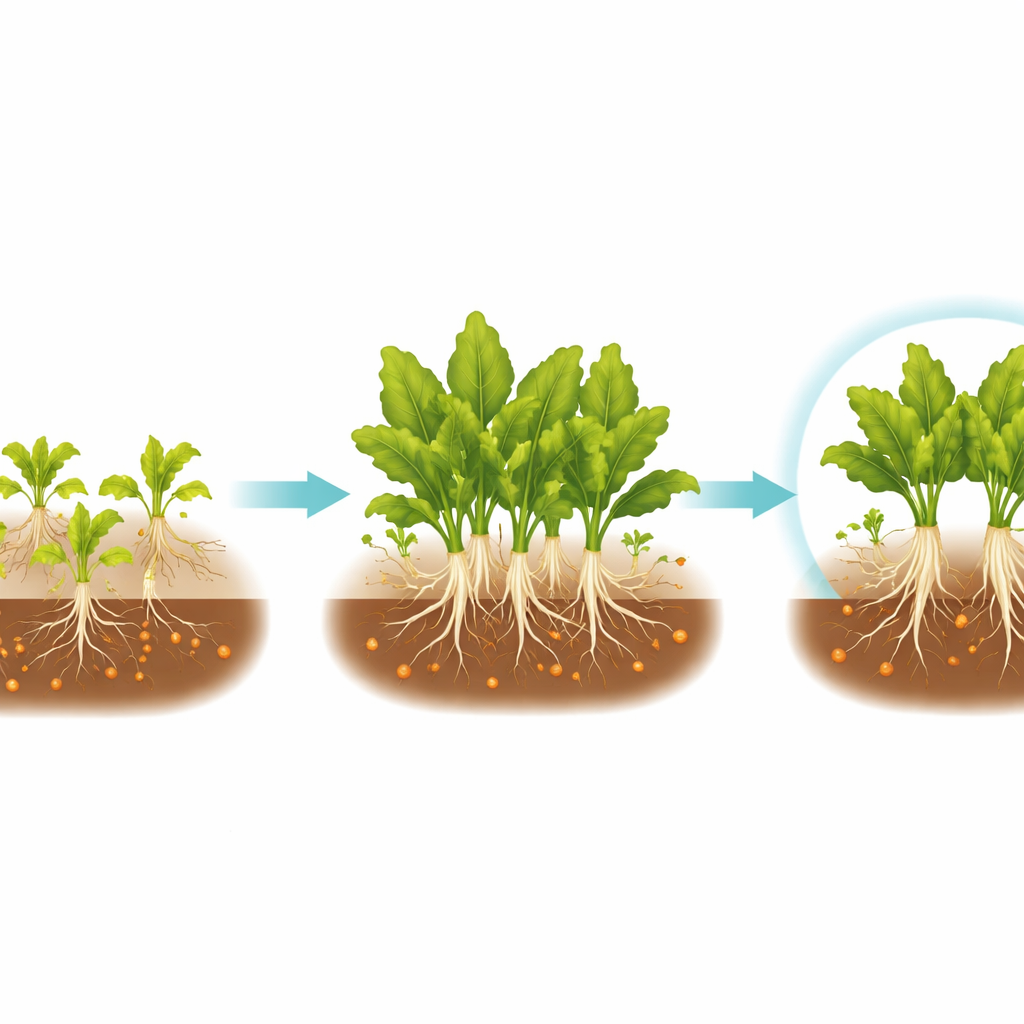
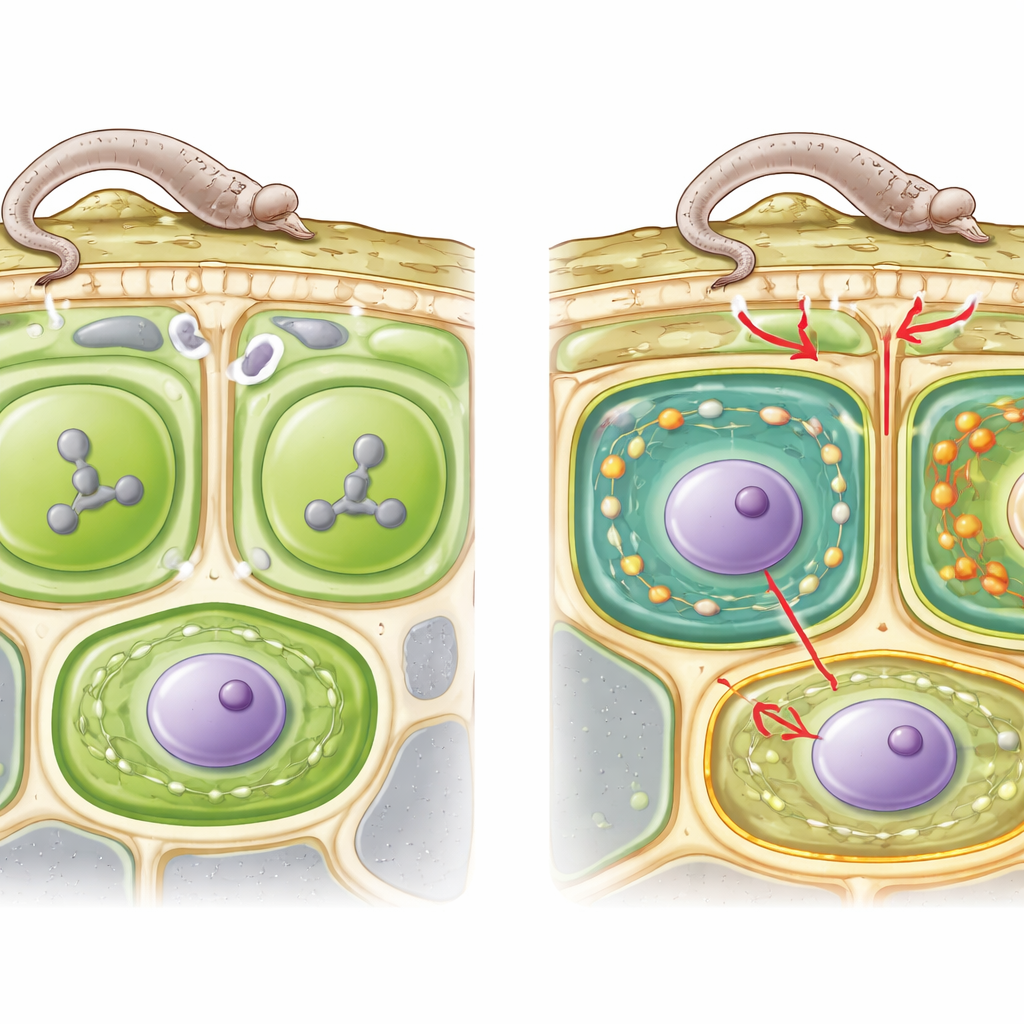
Sugar beet and its close cousins are key sources of sugar, animal feed, and leafy greens, yet they share a major underground enemy: the beet cyst nematode. These worms invade roots and force plant cells to fuse into a specialized feeding structure that nourishes the nematode through its life cycle. Once established, these feeding sites drain the plant’s resources, stunting growth and cutting yields. Within the cultivated beet genus Beta there is no fully effective genetic resistance. But in a separate, wild genus called Patellifolia, all three known species are completely resistant: nematodes cannot establish feeding sites at all. Earlier work showed that a single Patellifolia gene, Hs4, when moved into sugar beet, can provide complete resistance. The present study asks how widespread Hs4-like genes are across wild and cultivated beets, and why only some of them actually stop nematodes.
Comparing the protective gene across wild and crop relatives
The researchers first refined the structure of the Hs4 gene itself, showing it spans just under 5,000 DNA letters and encodes a small membrane-bound protein likely acting as a cutting enzyme (a protease). They then searched many accessions of Patellifolia and Beta for close variants of this gene. In all Patellifolia species, they found Hs4 versions that were almost identical, differing only by scattered single-letter changes and a few tiny insertions and deletions. These differences slightly altered the protein sequence—sometimes adding just one extra amino acid—but left the overall structure intact. By contrast, the closest Hs4-like gene in sugar beet, dubbed BvHs4, was longer, less similar in sequence, and carried extra segments at its front end. Across multiple Beta species, all BvHs4 relatives looked much more like each other than like the original Hs4, hinting that the wild and cultivated lineages have diverged not just in DNA sequence but in protein function.
Where the gene is and where it acts
Location inside the cell turned out to be crucial. Computer tools predicted that the Hs4 protein in wild Patellifolia plants sits in the membrane of the endoplasmic reticulum, a key internal network where proteins are processed and signaling events are coordinated. Tiny sequence tweaks in some Patellifolia variants did not change this predicted position. In sugar beet, however, the BvHs4 protein is predicted to be targeted mainly to plastids—green, chloroplast-like compartments best known for photosynthesis. This shift in address hints at a different role. The team then measured where in the plant these genes are most active. In resistant Patellifolia and in sugar beet lines that carry a Patellifolia chromosome fragment, Hs4 was strongly switched on in roots, the very place nematodes attack, and much less active in leaves. In all Beta species, the pattern was flipped: their BvHs4 genes were expressed mainly in leaves, not roots. Even after nematode infection, neither Hs4 nor BvHs4 showed a dramatic on–off response; instead, Hs4 simply remained consistently high in roots of resistant plants.
Evolution takes the gene down different paths
By building a family tree of related proteins from beets and other plants, the authors showed that Patellifolia versions of Hs4 form a distinct cluster, separate from the Beta proteins and from similar enzymes in quinoa, spinach, mung bean, and the model plant Arabidopsis. Within Beta, all BvHs4-like proteins grouped closely with each other and with these outgroups, reinforcing the idea that Hs4 in Patellifolia has taken on a new, specialized role. The Beta versions often carry extra protein segments and, in at least one case, an early stop signal that likely renders the protein nonfunctional. Together with their leaf-biased expression and plastid targeting, these features suggest that BvHs4 and its relatives no longer act as nematode-resistance genes, even though they share some ancestral similarity with Hs4.
What this means for future beet crops
For plant breeders, the message is clear: simply tinkering with the existing Hs4-like genes in sugar beet is unlikely to recreate the powerful resistance seen in wild relatives. Evolution has pushed the cultivated versions toward different tasks, in different tissues and organelles. Instead, the most promising route is to introduce a functional Hs4 gene from Patellifolia directly into sugar beet and fine-tune its activity so it is strongly and reliably expressed in roots. Although current resistant lines that carry large wild chromosome fragments suffer from poor yield and quality, targeted transfer and expression of Hs4 alone could deliver robust, long-lasting protection against beet cyst nematodes—helping secure sugar and feed production with fewer chemical inputs.
Citation: Schildberg, A., Dorn, K. & Jung, C. Subcellular localization and differential expression provide insights into the putative function of the nematode resistance gene Hs4. Sci Rep 16, 7830 (2026). https://doi.org/10.1038/s41598-026-40666-5
Keywords: sugar beet, nematode resistance, Hs4 gene, wild crop relatives, plant breeding