Clear Sky Science · en
Assessing the relationship between atmospheric aerosols and maximum surface air temperature over the Indian region
Why tiny particles in the air matter to daily heat
On many days across India, the sky looks hazy rather than clear blue. That haze is made of countless tiny particles called aerosols, released by dust storms, burning of crops and fuels, sea spray, and industry. These particles do more than dirty the air we breathe: they can change how hot it gets at the ground. This study asks a deceptively simple question with big consequences for health, farming, and power demand: do these particles tend to cool India’s afternoons, or make them hotter—and does the answer change with the seasons?
What was measured over India’s skies
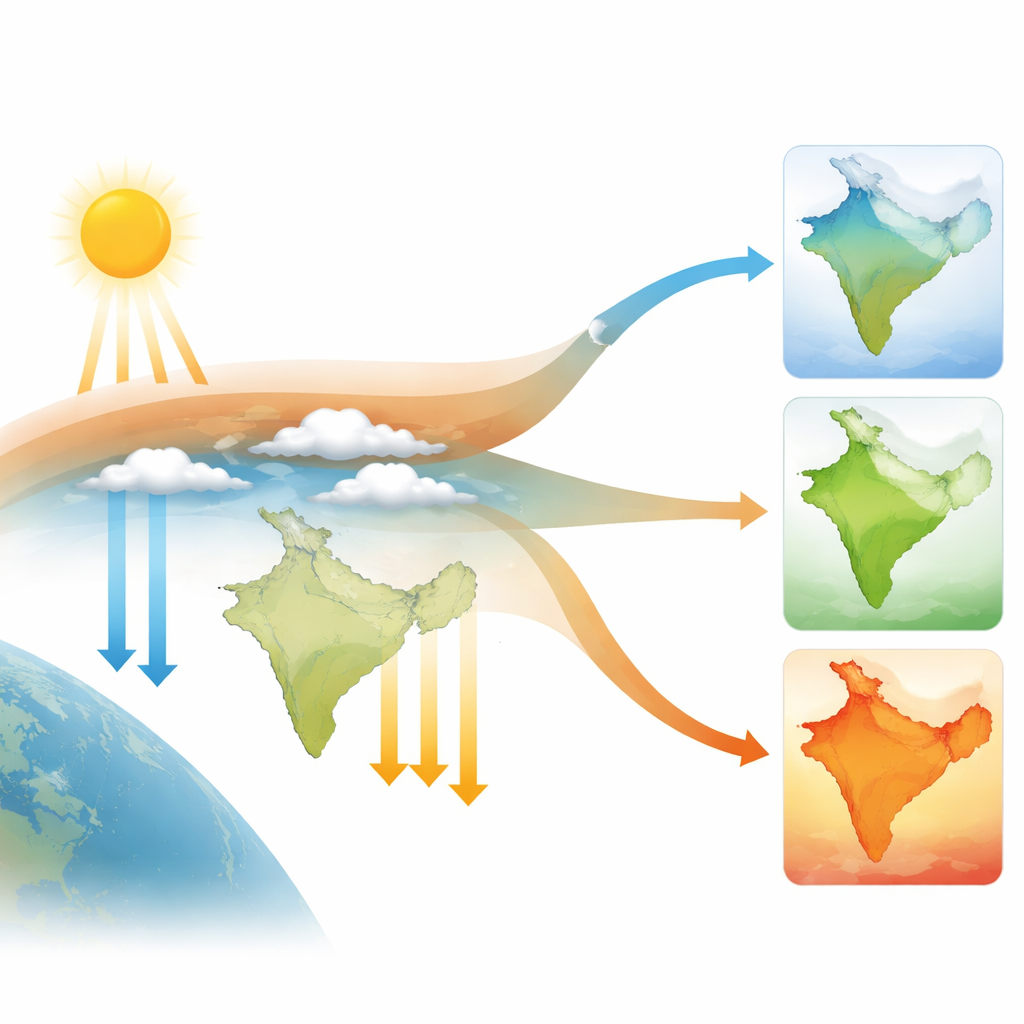
The researchers combined more than two decades of satellite observations with weather station records and climate model simulations. From space, instruments track how hazy the air is (a measure of aerosol amount), how cloudy the sky is, and how much water vapor is present. At the surface, India’s meteorological network records the daily maximum air temperature. The authors focused on the warmest part of the day, when the Sun is high and aerosols have their strongest effect on incoming sunlight. They also deliberately left out the rainy monsoon months, when clouds and rainfall make the picture more tangled.
Separating particle effects from clouds and humidity
A major challenge is that hazy days are often also cloudy or humid, and all three factors affect temperature. To untangle this, the team used a statistical method that looks at day‑to‑day differences rather than long‑term trends. At each grid point over India, they asked: when aerosol levels are higher than usual, but cloud cover and moisture are kept constant, how does the afternoon temperature typically change? This allowed them to estimate the specific impact of aerosols on maximum temperature, while treating clouds and water vapor as separate influences. They then repeated the analysis with a global weather “replay” dataset, which blends observations with models, to check whether both sources told the same story.
Seasonal flip: winter cooling, pre‑monsoon warming
The results reveal a striking seasonal flip. In winter and the post‑monsoon months, aerosols generally cool the land surface, with the strongest effects over northern and northwestern India. On average, winter maximum temperatures are a few tenths of a degree Celsius lower than they would be with clearer air. This may sound small, but spread over a country and many days it is a substantial energy change, and it can reinforce already stagnant winter conditions that trap pollution near the ground. After the monsoon, a weaker but still mostly cooling influence remains, consistent with reduced haze after heavy rains wash particles out of the air.
When smoky and dusty air makes days hotter
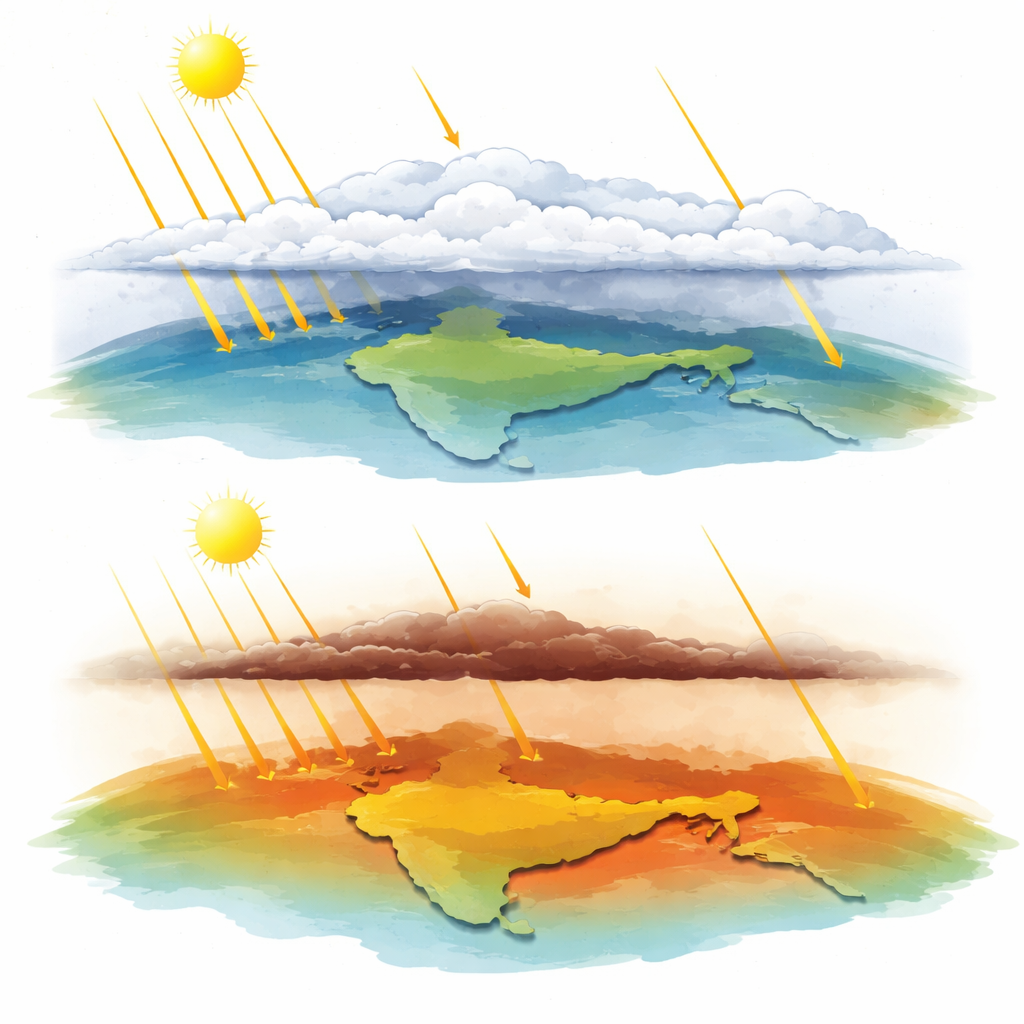
As India moves into the dry pre‑monsoon season, the sign of the effect reverses across much of the country: hazier air is linked to hotter afternoons. Northern India, in particular, experiences extra warming of several tenths of a degree, with some locations showing more than a degree of added heat during very hazy episodes. This happens even though aerosols block some sunlight, which would normally cool the surface. The authors trace this paradox to the types of particles and their impact on clouds. Darker particles like black carbon and mineral dust absorb sunlight aloft, heating the air layer they occupy. That heating can thin or “burn off” low, bright clouds that would otherwise reflect sunlight back to space. With fewer low clouds, more solar energy reaches the ground, and the net result is surface warming rather than cooling. The study finds that days and regions where aerosols warm the surface also tend to show fewer low‑cloud days, in both satellite data and regional climate model simulations.
How this matters for monsoons, health, and planning
These findings show that aerosols over India do not act as a simple “sunshade.” Depending on the season, where they sit in the atmosphere, and how they interact with clouds, the same haze can either cool winter days or intensify pre‑monsoon heat. Because the pre‑monsoon warming affects the land–sea temperature contrast that helps drive the Indian summer monsoon, such changes can ripple through rainfall patterns, water resources, and crop yields. Wintertime cooling, meanwhile, can worsen air‑quality episodes by strengthening stagnant, foggy conditions. By pinning down these patterns using real‑world observations and targeted model experiments, this study provides a clearer yardstick for testing climate models and planning for a future in which both greenhouse gases and air pollution are changing. For everyday life, it underscores that controlling aerosol pollution will influence not only the air we breathe but also how hot our hottest days become.
Citation: Sarin, T.S., Vinoj, V. Assessing the relationship between atmospheric aerosols and maximum surface air temperature over the Indian region. Sci Rep 16, 9483 (2026). https://doi.org/10.1038/s41598-026-40641-0
Keywords: aerosols, surface temperature, India climate, cloud cover, pre-monsoon warming