Clear Sky Science · en
Deterministic and probabilistic health risk assessment of heavy metals in liquid herbal cough formulations from Western Uganda
Why worry about herbs for a simple cough?
In many parts of the world, including Western Uganda, people often reach first for herbal cough syrups rather than pills from a factory. These plant-based remedies feel natural and familiar, but they can also hide invisible dangers: toxic metals picked up from soil, water, or processing equipment. This study asked a straightforward but crucial question: are popular liquid herbal cough formulations in Western Uganda contaminated with harmful levels of heavy metals, and what does that mean for the health of adults and children who drink them?
How metal pollution can sneak into herbal remedies
Heavy metals such as lead, cadmium, and nickel occur naturally in the environment, but farming, traffic, and industry can greatly increase their levels in soil and water. When medicinal plants grow in contaminated places, they can draw these metals up through their roots. Later, during harvesting, drying, and bottling, extra contamination can come from fertilizers, pesticides, machinery, or storage containers. Because herbal medicines are often prepared and sold outside of tightly controlled factory settings, there is a real concern that people—especially children—might unknowingly consume risky doses over time.
Collecting everyday cough syrups from real pharmacies
To find out what people are actually exposed to, the researchers bought twelve brands of registered liquid herbal cough formulations from reputable pharmacies across Western Uganda, choosing several batches of each brand. In the laboratory, they digested the samples with acid to break down the plant material and then used a precise technique called atomic absorption spectroscopy to measure six metals: cadmium, copper, iron, lead, nickel, and zinc. They also checked the reliability of their instruments to ensure that even very low concentrations would be detected accurately. The measured metal levels were then compared to safety limits recommended by the World Health Organization and other agencies.
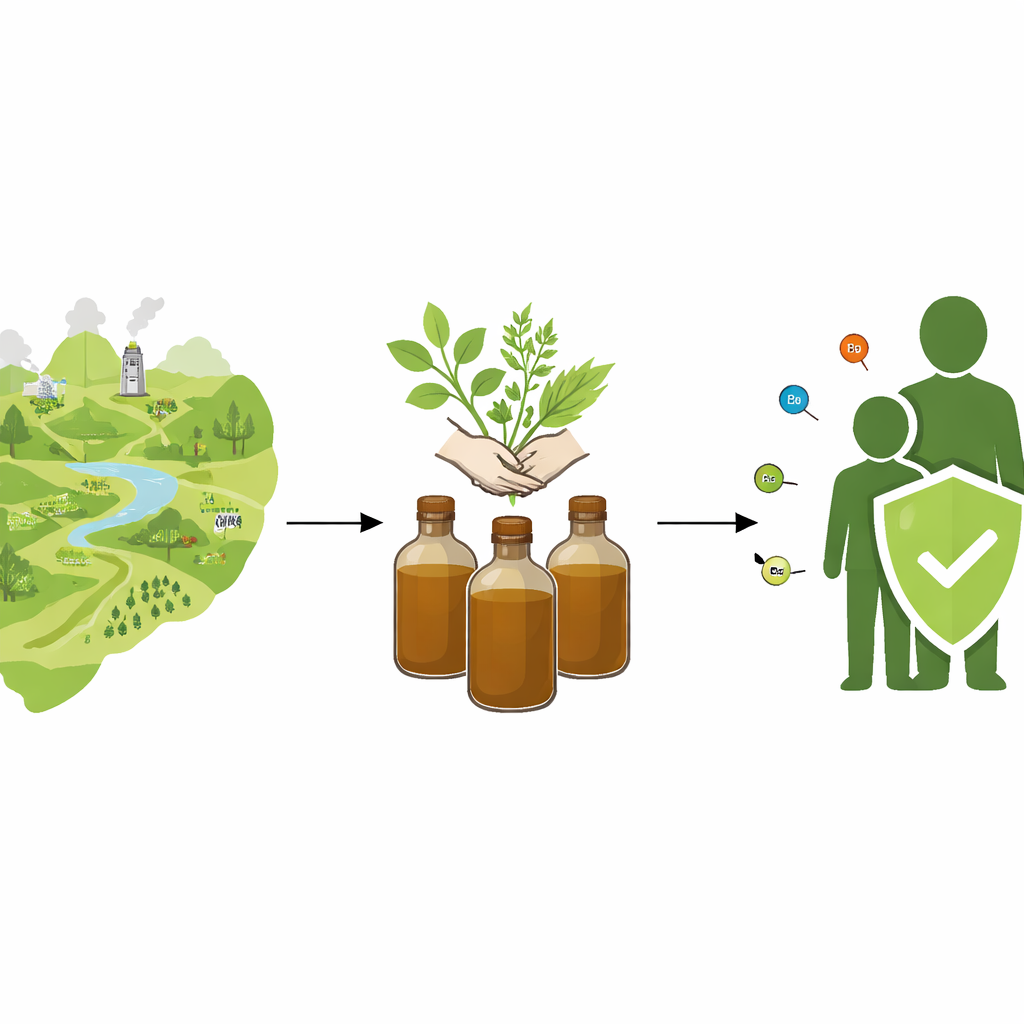
What the metal measurements revealed
The cough syrups did contain measurable amounts of all six metals, but at very low levels. Copper and iron showed the widest range between brands, while lead and cadmium were often barely detectable. All of the measured concentrations fell well below international safety thresholds for herbal medicines. Statistical analysis suggested that some metals—especially iron, nickel, cadmium, and zinc—tended to rise and fall together, pointing to shared environmental sources such as soil, fertilizers, or nearby waste. In contrast, copper and lead followed different patterns, hinting that they may enter the products through separate routes, like specific farming practices, processing tools, or water used during preparation.
Estimating health risks for children and adults
Measuring how much metal is in a bottle is only half the story; what matters most is how much a person actually takes into their body over time. The team estimated typical daily intake for both adults and children based on realistic amounts of cough syrup people might drink, along with average body weight and years of use. They then used two kinds of health-risk models. A deterministic approach plugged single “best estimate” values into standard formulas to calculate non-cancer risks (through a hazard index) and long-term cancer risks (through an incremental lifetime risk measure). A more advanced probabilistic approach used Monte Carlo simulations, running thousands of random scenarios to capture real-world variability in metal levels and consumption patterns.
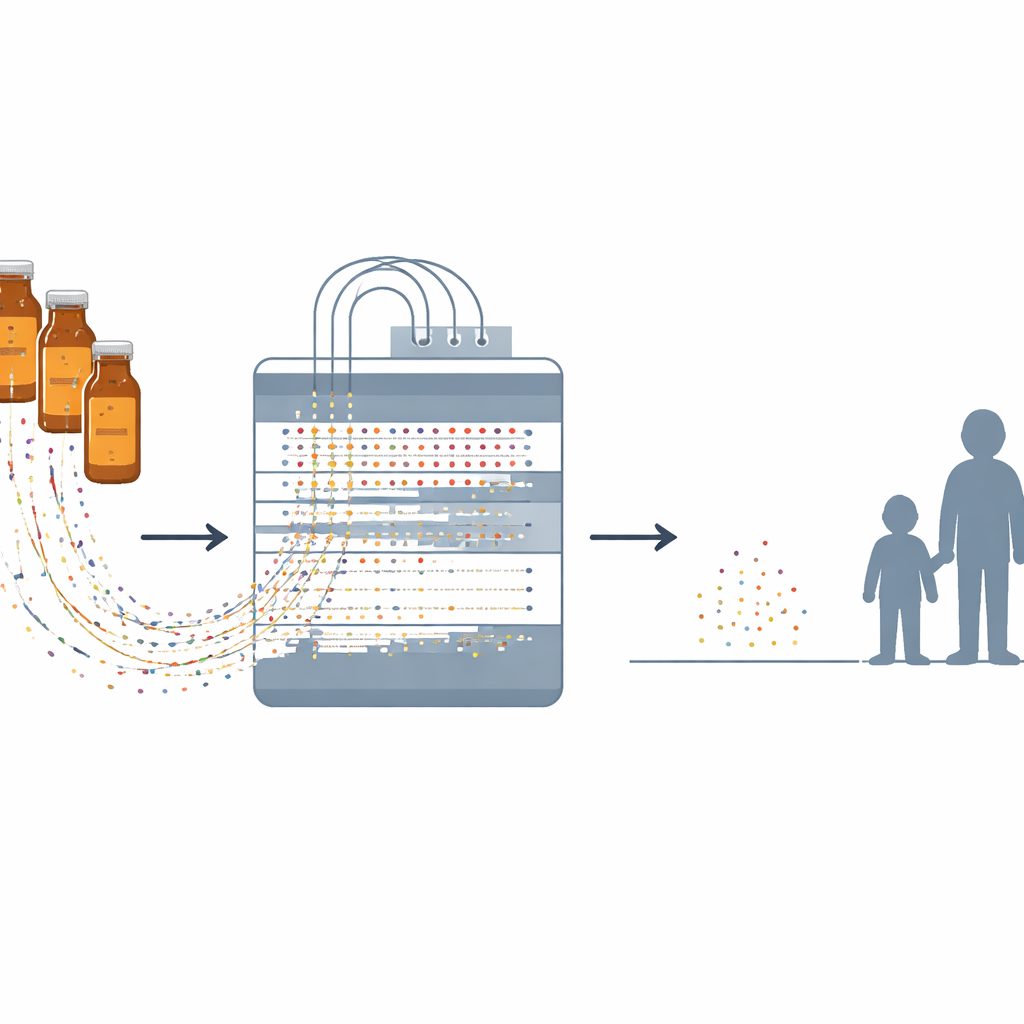
What the risk calculations mean in everyday terms
Across all twelve brands, both adults and children were far below the levels considered worrisome. The combined non-cancer hazard index for each product was much less than one, indicating that the odds of metal-related problems from normal use are extremely low. Likewise, the calculated lifetime cancer risks from nickel, cadmium, and lead exposure stayed comfortably under widely accepted safety thresholds. The simulations showed that there is less than a one-hundredth of a percent chance that lead or cadmium in any of these cough syrups would exceed recommended limits. In plain language, given how these products are normally used, they are not expected to harm consumers through heavy metal contamination.
Safe for now, but keep watching the details
This study offers reassuring news: the liquid herbal cough formulations commonly sold in Western Uganda contain heavy metals at levels that, under realistic patterns of use, are unlikely to pose health risks, even for children. At the same time, the clear links between several metals suggest shared contamination sources in the environment, reminding regulators and producers that conditions could change if farming or pollution patterns shift. The authors recommend ongoing monitoring and future work on other hazards such as microbes, mold toxins, and pesticide residues. For now, though, their findings support the idea that these particular herbal cough syrups are safe options when it comes to heavy metal exposure.
Citation: Ariyo, S., Sanusi, I.O., Veerabhadrappa, K. et al. Deterministic and probabilistic health risk assessment of heavy metals in liquid herbal cough formulations from Western Uganda. Sci Rep 16, 9487 (2026). https://doi.org/10.1038/s41598-026-40622-3
Keywords: herbal cough medicine, heavy metal contamination, health risk assessment, Monte Carlo simulation, Uganda